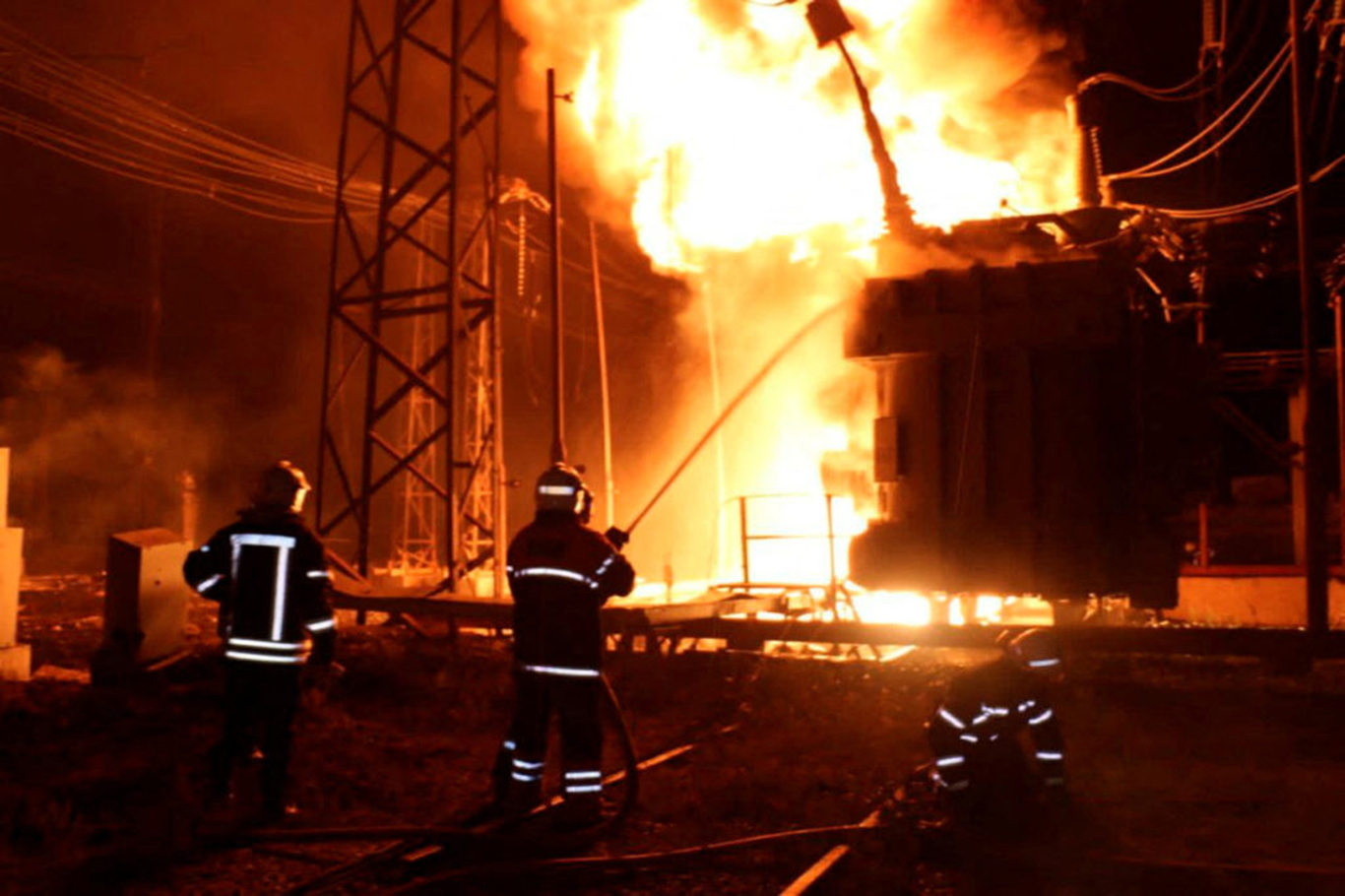
Zelenskyy: Every Ukrainian power plant has been hit by Russian attacks
 13 oC
13 oC 
Güneşli

Ukrainian President Volodymyr Zelenskyy delivered a forceful address at the Munich Security Conference, calling for stronger security guarantees for Ukraine and Europe as the war with Russia enters its fourth year.
Zelenskyy thanked European and American partners for sustained military and financial assistance, singling out Germany and other European allies for their leadership in providing air defense systems. He also praised NATO Secretary General Mark Rutte for promoting continued funding through the “PURL” program, which enables Ukraine to purchase Patriot missile systems and other air defense equipment from the United States.
Highlighting the scale of Russia’s aerial campaign, Zelenskyy described a recent single-night attack involving 24 ballistic missiles, more than 200 drones, and additional guided missiles targeting major cities including Kyiv, Dnipro, and Odesa. He said Ukraine faces hundreds of attack drones on many nights and has endured 1,451 days of full-scale war.
“There is not a single power plant left in Ukraine that has not been damaged,” he said, crediting Ukrainian energy workers and emergency crews for keeping the country’s electricity system running despite repeated strikes.
Zelenskyy emphasized that while Ukraine intercepts nearly 90 percent of incoming drones, continued support from allies is essential. He warned that weapons technology evolves faster than political decision-making, pointing to the development of Iranian-made Shahed drones used by Russia.
The Ukrainian leader stressed that unity among Western nations remains the most effective deterrent against Moscow’s ambitions. He urged stronger enforcement of sanctions, including action against Russia’s “shadow fleet” of oil tankers operating in European waters, arguing that cutting energy revenues would weaken the Kremlin’s ability to finance the war.
Zelenskyy also provided updated battlefield figures, stating that Russian forces suffer tens of thousands of casualties monthly, particularly in intense fighting on the Donetsk front. He maintained that sustained military pressure could influence Moscow’s calculations.
A central theme of the speech was the necessity of binding security guarantees before any agreement to end the war. Zelenskyy argued that Ukraine needs clear, enforceable commitments from its partners to prevent future aggression.
He questioned whether Europe is fully prepared for potential threats beyond Ukraine and suggested that closer integration between Ukraine’s military and European defense structures would strengthen the continent’s security architecture. While reiterating support for NATO, Zelenskyy emphasized that decisions about Ukraine’s future should not be dictated by Moscow.
Zelenskyy confirmed that Ukraine remains engaged in diplomatic efforts, including contacts with U.S. officials such as Marco Rubio and envoy Steve Witkoff. He expressed hope that upcoming trilateral meetings would be substantive and lead to “real security and real peace.”
However, he cautioned against concessions that could reward aggression or divide Ukraine, drawing historical parallels to past European appeasement policies. “Peace can only be built on clear security guarantees,” he said, warning that without a robust security framework, conflict could return.
Concluding his address, Zelenskyy called on international leaders to act decisively and maintain unity, arguing that Ukraine’s defense experience and resilience can contribute to a broader European security system.
“Please, pay attention to Ukraine,” he told delegates. “If that had happened earlier, this war would not have begun.” (ILKHA)
LEGAL WARNING: All rights of the published news, photos and videos are reserved by İlke Haber Ajansı Basın Yayın San. Trade A.Ş. Under no circumstances can all or part of the news, photos and videos be used without a written contract or subscription.
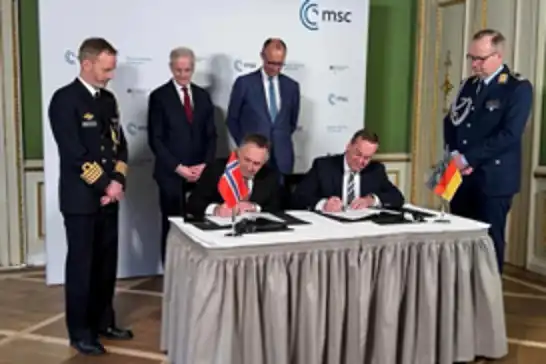
Norway and Germany have formalised a sweeping new defence partnership, known as the Hansa Arrangement, in a move both governments describe as a decisive step toward strengthening European security and reinforcing NATO’s collective defence posture.
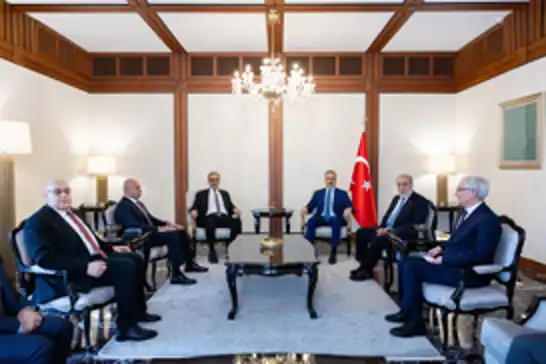
Türkiye’s Foreign Minister Hakan Fidan met with Ali Shaath, head of the National Committee for the Administration of Gaza (NCAG), Turkish diplomatic sources said, as efforts continue to stabilize and rebuild the war-torn enclave following the October ceasefire.
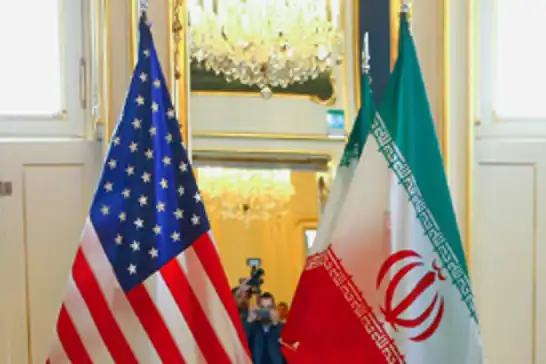
Switzerland announced Saturday that talks between the United States and Iran are set to resume next week in Geneva, as Washington continues efforts to reach an agreement with Tehran that would, among other objectives, limit Iran’s nuclear program.