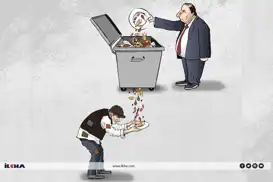
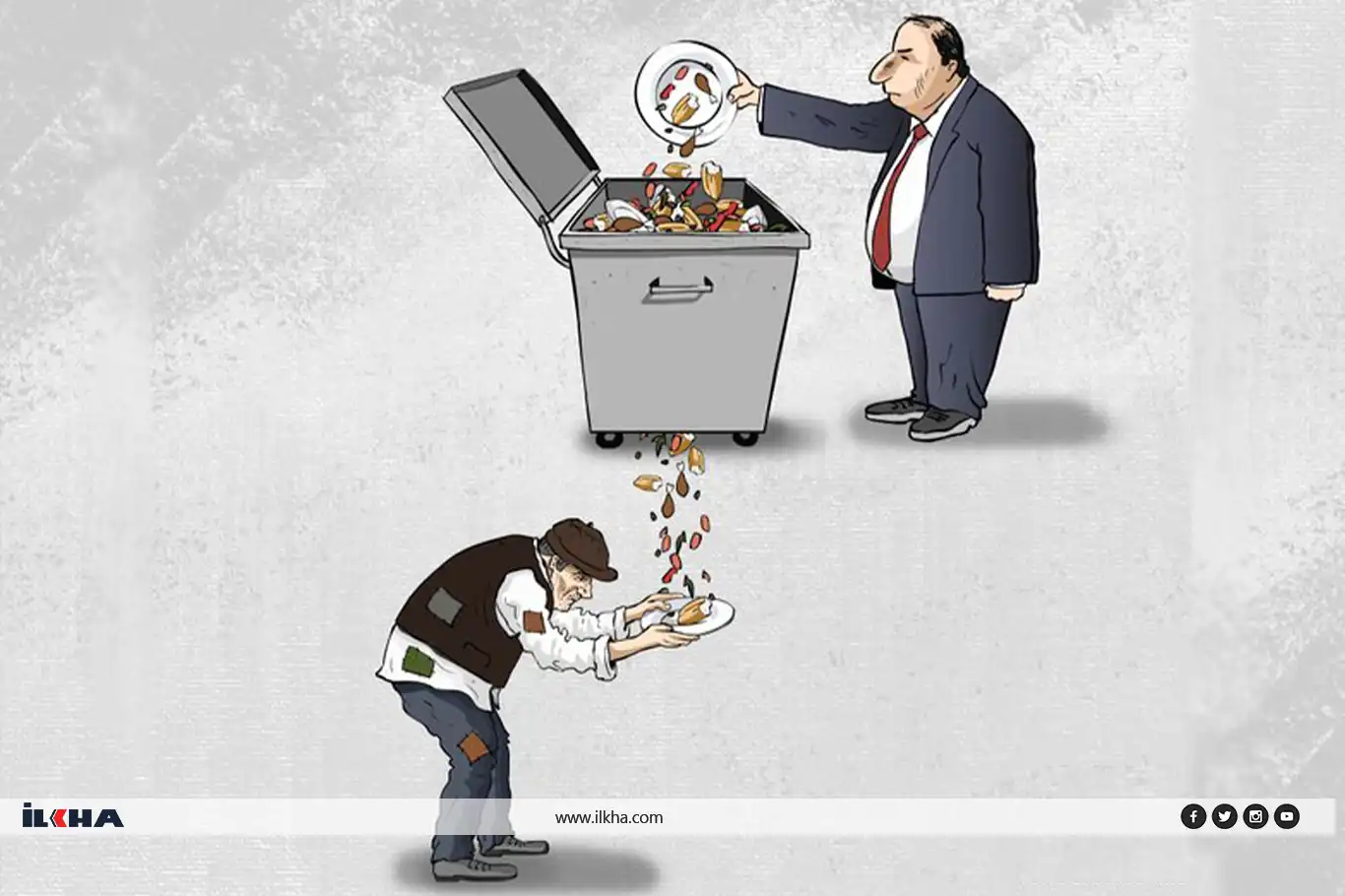
$1 trillion thrown away: Food waste deepens hunger and global injustice
 13 oC
13 oC 
Güneşli

Food waste has reached record levels worldwide, fueled by excessive consumption, luxury-driven lifestyles, and irresponsible production systems, according to GIMDES President Dr. Hüseyin Kami Büyüközer.
He warned that the issue has grown beyond an economic problem and now represents a deep moral and humanitarian crisis affecting all of humanity.
Citing the “2025 Waste Report” published by the Turkish Foundation for Waste Prevention (TİSVA), Dr. Büyüközer noted that nearly one-third of all food produced globally is wasted each year. The report estimates the annual economic cost of food waste at around $1 trillion, while the environmental toll continues to rise due to the misuse of land, water, and energy resources.
The situation in Türkiye mirrors the global trend. On average, 102 kilograms of food per person are thrown away every year, resulting in approximately 23 million tons of food waste nationwide. Fruits and vegetables account for the largest share of this loss, with nearly 35 percent wasted during harvesting, transportation, storage, and retail processes.
Experts emphasize that this waste occurs despite the enormous labor and resources invested in food production. Farmland is increasingly overexploited, water and energy are consumed at unsustainable rates, and yet millions of people around the world still struggle to access basic nutrition.
Global data further underscore the scale of the crisis. According to the UN World Food Programme, 343 million people in 74 countries experienced acute food insecurity in 2024, a 10 percent increase compared to the previous year. Meanwhile, the UN Environment Programme reports that around 1.5 billion tons of food are wasted annually worldwide—meaning that roughly one out of every five plates of food ends up in the trash.
This contradiction is even more striking when viewed alongside global hunger and overconsumption trends. More than 783 million people suffer from chronic hunger, while over 1 billion people are classified as obese and nearly 3 billion are overweight. One in every 11 people goes to sleep hungry each night, and more than 25,000 children die every day from hunger-related causes and malnutrition.
Dr. Büyüközer stressed that these realities cannot be explained solely by economic inequality. Instead, he described food waste as the result of a profound moral failure.
“This is not a problem limited to Muslims or to a specific region,” he said. “It is a crisis that concerns all of humanity. A consumption culture based on luxury and excess encourages people to eat beyond their needs and discard what remains. Waste has become normalized, and that normalization comes at a heavy cost for the poor, the vulnerable, and future generations.”
He described food waste as a form of injustice.
“When food produced through immense effort is thrown away, it means violating the rights of those who cannot access even the most basic nourishment,” he said. “Waste is not neutral. It directly fuels hunger, deepens inequality, and accelerates environmental destruction.”
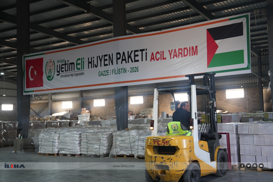
Turning to the humanitarian situation in Gaza, Dr. Büyüközer said food deprivation is being used deliberately as a tool of oppression.
“There is a severe famine in Gaza, and similar conditions exist in other parts of the world,” he said. “The planet produces enough food to feed everyone. But waste, along with political manipulation, prevents food from reaching those in need. In Gaza, people are not only suffering under bombardment—they are being systematically starved. Hunger is being used as a weapon.”
He emphasized that children are bearing the heaviest burden.
“Children are dying not because food does not exist, but because it is deliberately withheld,” he said. “Knowing this makes excessive consumption and indifference elsewhere morally indefensible. This contradiction is something humanity must confront honestly.”
Dr. Büyüközer argued that tackling food waste requires more than symbolic gestures or individual goodwill.
“Personal awareness matters, but it is not enough,” he said. “Corporations, institutions, and systems that profit from waste must be held accountable. Public pressure, conscious consumption, and boycotts are powerful tools. When society responds decisively, waste-driven models lose their legitimacy.”
He also highlighted the importance of ethical and faith-based principles in addressing the crisis.
“A production and consumption system guided by moral responsibility and divine values naturally restrains excess and injustice,” he said. “When food is seen as a trust rather than a tool for indulgence, waste decreases and social balance improves.”
Concluding his remarks, Dr. Büyüközer called for a new global mindset rooted in justice, moderation, and responsibility.
“What the world needs today is not more production, but more conscience,” he said. “A generation that values human dignity over luxury can change the course of this crisis. Waste is not inevitable—it is a choice. And humanity still has the chance to choose differently.” (ILKHA)
LEGAL WARNING: All rights of the published news, photos and videos are reserved by İlke Haber Ajansı Basın Yayın San. Trade A.Ş. Under no circumstances can all or part of the news, photos and videos be used without a written contract or subscription.

Türkiye's total economic turnover registered a powerful 37.5% increase in September 2025 compared to the same month last year, according to official data released on Tuesday.

In an exclusive interview with ILKHA, Sadiq al-Ruzayki, President of the Sudanese Journalists’ Union, revealed shocking details about the ongoing atrocities in Sudan, stating that more than 4,000 civilians were killed and over 5,000 were detained within just two days in the besieged city of El-Fashir, the capital of North Darfur.

It has been two years since the Al-Qassam Brigades launched “Al-Aqsa Flood” against the Israeli occupation, a decisive operation that drew international attention back to the Palestinian cause and challenged decades of global neglect.