European Parliament votes to allow deportation of migrants to third countries
 13 oC
13 oC 
Güneşli

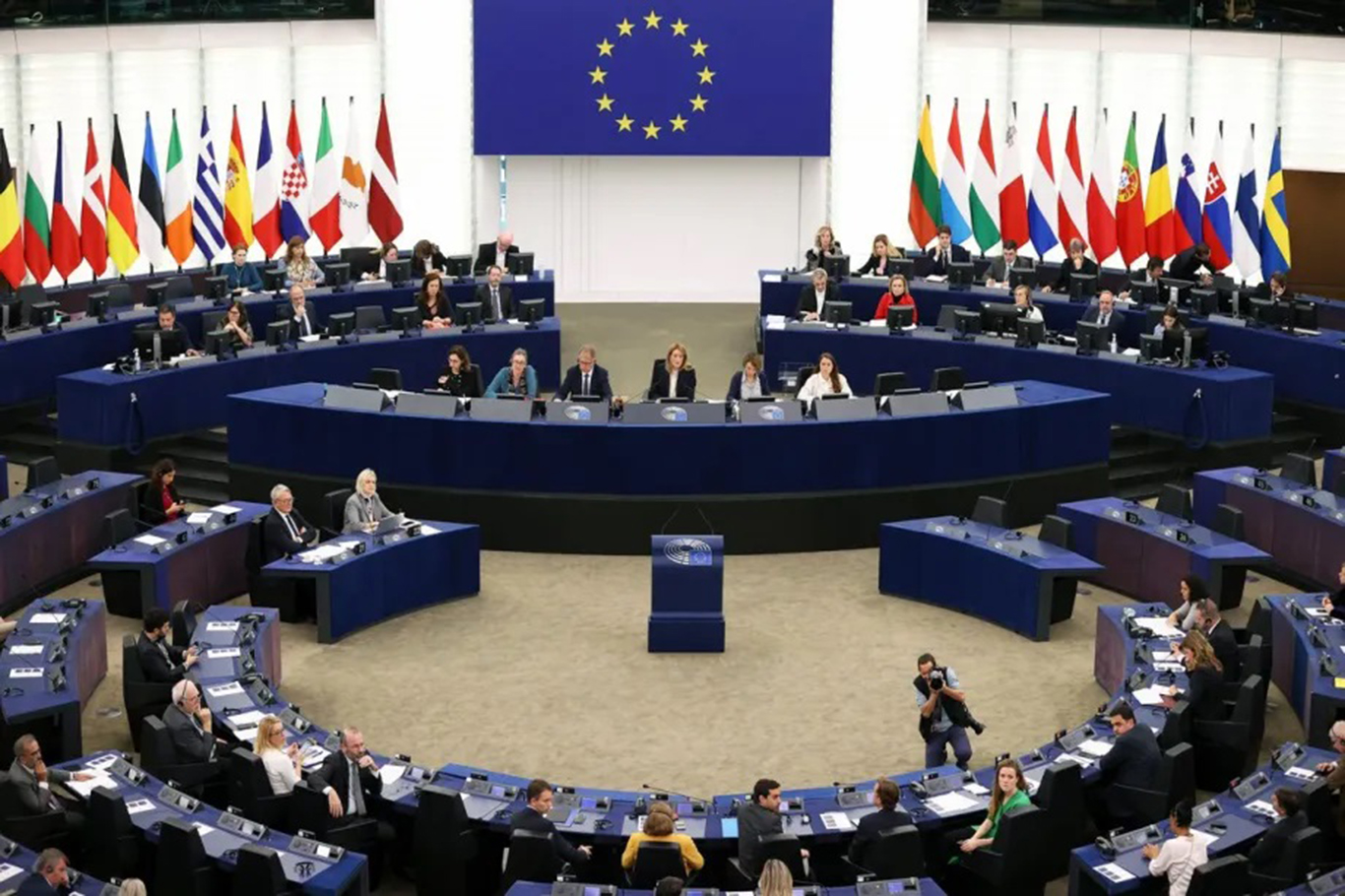
The European Parliament has approved a significant change to EU asylum rules that would allow member states to transfer asylum seekers to countries with which they have no prior connection, before their claims are examined.
The amendment, adopted on Tuesday as part of the Asylum Procedure Regulation (APR), revises the definition of a “safe third country” by removing the requirement that an asylum applicant must have a personal or territorial link to the country to which they are sent. Under the new rules, national authorities may transfer asylum seekers to states they have never visited, provided those countries are deemed “safe” and an agreement or arrangement exists with an EU member state.
The change opens the door for EU governments to strike deals with non-EU countries to host asylum seekers in exchange for financial or political incentives. The approach resembles the controversial plan pursued by the former UK government to send asylum seekers to Rwanda, a scheme that was ultimately blocked by the UK’s Supreme Court and later abandoned by the current government.
According to the regulation, transfers will be permitted only if the receiving country meets international protection standards. These include safeguards against persecution and serious harm, respect for the principle of non-refoulement, access to effective protection under the Geneva Refugee Convention, and the existence of a functioning asylum system. Transferred individuals must also be granted basic rights such as residence permits, access to education, and the right to work.
Unaccompanied minors are excluded from the new provision. Their asylum applications will continue to be processed either within the EU or in countries with which they have a clear connection, such as a transit country.
German MEP Lena Düpont, the rapporteur for the file, welcomed the vote, saying it would allow EU member states to make more effective use of cooperation with third countries. She argued that the revised rules are compatible with international law and would help prevent asylum claims from remaining unresolved within European asylum systems for extended periods.
The proposal, however, deeply divided the European Parliament. It was adopted with 396 votes in favour, 226 against, and 30 abstentions. The European People’s Party (EPP) backed the measure alongside the right-wing European Conservatives and Reformists (ECR) and far-right groups including Patriots for Europe (PfE) and Europe of Sovereign Nations (ESN). Most lawmakers from the Socialists and Democrats (S&D) and Renew Europe opposed the change, though there were some defections.
The vote further exposed fractures within the broad parliamentary coalition that supports European Commission President Ursula von der Leyen, a trend that has marked several migration-related decisions in the current legislature.
Left-wing and liberal lawmakers voiced strong concerns, with some submitting a formal “minority position” warning that removing the connection requirement could lead to the “instrumentalisation” of asylum seekers by third countries. Critics argued that the change undermines fundamental rights and could weaken democratic standards within the EU.
Civil society organisations have also raised alarms. The European Council on Refugees and Exiles (ECRE) questioned whether many third countries would genuinely offer adequate protection to asylum seekers, warning that the new rules could increase risks for vulnerable groups, including survivors of violence and LGBTQ+ individuals. ECRE also criticised the removal of the automatic suspensive effect on appeals, saying it could result in people being transferred out of the EU before courts have fully reviewed their cases.
In a separate vote on Tuesday, the European Parliament approved the EU’s first list of “safe countries of origin” for asylum purposes. The list includes Bangladesh, Colombia, Egypt, India, Kosovo, Morocco, and Tunisia, as well as all EU candidate countries except Ukraine. While distinct from the “safe third country” concept, the designation is similarly intended to accelerate asylum procedures, with applications from nationals of these countries processed through fast-track mechanisms.
Together, the measures mark a major shift in the EU’s approach to migration and asylum, reflecting growing political pressure to curb irregular arrivals while intensifying debate over legal safeguards and human rights obligations. (ILKHA)
LEGAL WARNING: All rights of the published news, photos and videos are reserved by İlke Haber Ajansı Basın Yayın San. Trade A.Ş. Under no circumstances can all or part of the news, photos and videos be used without a written contract or subscription.
Greek Prime Minister Kyriakos Mitsotakis is set to arrive in Ankara on Wednesday to attend the Sixth Meeting of the Türkiye–Greece High-Level Cooperation Council, held at the invitation of President Recep Tayyip Erdoğan.
The United States and Armenia have signed new agreements on unmanned aerial vehicles (UAVs) and nuclear cooperation during an official visit by US Vice President James David Vance to the Armenian capital, Yerevan, marking a significant expansion of bilateral ties.

A passenger aircraft in Somalia was forced to make an emergency landing in the Indian Ocean shortly after takeoff from the capital Mogadishu, following a reported mechanical failure, according to official statements and international media reports.