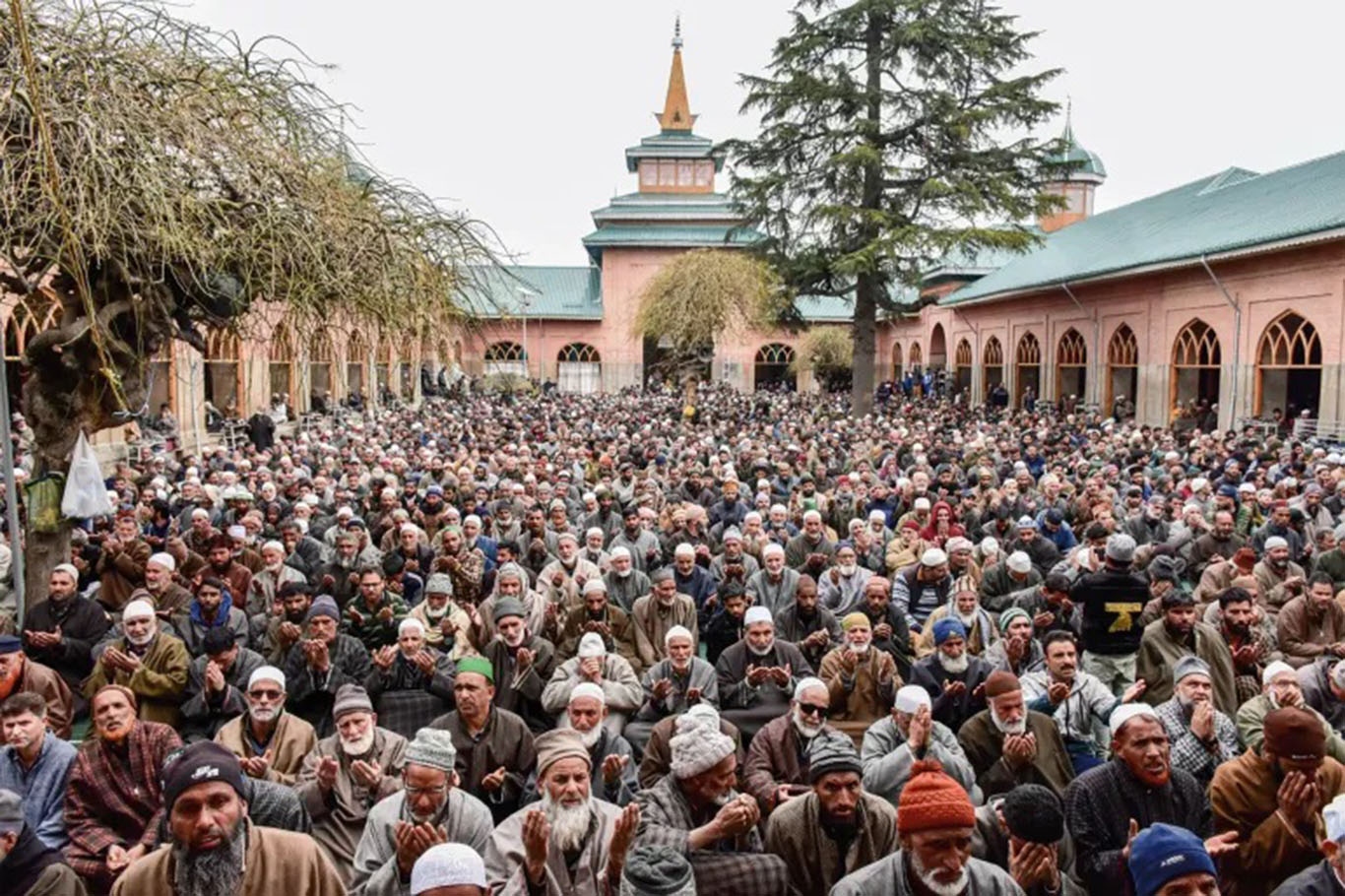
Kashmiri Muslims force withdrawal of uniform Friday sermon proposal
 13 oC
13 oC 
Güneşli

A proposal to introduce centrally coordinated Friday sermons in mosques across Indian-administered Jammu and Kashmir has been shelved following strong opposition from Muslim scholars, religious leaders and political figures, who described the move as interference in the religious affairs of the region's Muslim community.
Darakhshan Andrabi, chairperson of the Jammu and Kashmir Waqf Board and a member of India's ruling Bharatiya Janata Party (BJP), later clarified that no directive requiring uniform Friday sermons had been issued and said independent scholars, imams and preachers would remain free to determine the content of their sermons.
Muslim scholars reject centralized sermons
The controversy began after the Waqf Board announced a proposal aimed at introducing common Friday sermons across mosques in Jammu and Kashmir, a Muslim-majority region administered by India.
As part of the initiative, the board invited around 1,500 scholars and preachers to a meeting. While some attended in person, others from remote areas joined virtually.
A scholar from the Rajouri district, who participated online and requested anonymity due to security concerns, said participants were told that only pre-approved sermon texts prepared by a committee would be delivered during Friday prayers.
The scholar said participants were not informed who would serve on the proposed committee responsible for drafting the sermons.
According to his account, several scholars objected, warning that they would not accept any sermon that contradicted Islamic teachings. He said their concerns were dismissed and they were told the proposal had been under preparation for four years.
The proposal immediately sparked criticism from Muslim scholars, who argued that determining the content of Friday sermons is the responsibility of qualified Islamic scholars and mosque preachers rather than an administrative institution.
Religious and political leaders condemn proposal
Political leaders and religious authorities across Kashmir also opposed the plan.
Former Jammu and Kashmir Education Minister Naeem Akhtar said every preacher should remain free to address the issues affecting his congregation, stressing that freedom of religious expression is a fundamental principle protected by law.
Akhtar argued that the Waqf Board's responsibilities are limited to administering religious endowments and should not extend to directing what imams preach from the pulpit.
Mirwaiz Umar Farooq, one of Kashmir's leading Muslim religious figures, also warned that introducing standardized sermons would amount to direct interference in religious affairs.
The Muttahida Majlis-e-Ulema (MMU), an umbrella body representing Muslim scholars and religious organizations chaired by Farooq, said responsibility for determining Friday sermons belongs to Islamic scholars and not to administrative authorities.
Jammu and Kashmir Chief Minister Omar Abdullah also joined the criticism, describing the proposal as unacceptable interference in Muslim religious affairs.
Waqf Board backs away after backlash
Following widespread criticism, Andrabi clarified that the Waqf Board had not issued any mandatory order requiring uniform Friday sermons.
She said the proposed committee would consist of religious scholars rather than government officials and emphasized that imams, scholars and preachers would independently decide the subjects of their sermons.
Andrabi added that religious leaders could choose to address pressing social issues affecting society, including drug abuse, suicides, psychological trauma, family problems and challenges facing young people, but insisted that no political authority would dictate religious guidance.
Concerns over religious freedom continue
Despite the clarification, the controversy has renewed concerns among Kashmiri Muslims about increasing administrative oversight of religious institutions and the protection of religious freedoms.
The dispute comes against the backdrop of political changes introduced after India revoked Jammu and Kashmir's special constitutional status in 2019, expanding direct federal control over the region and affecting the administration of religious institutions.
Earlier this year, Muslim scholars also protested after police reportedly distributed forms seeking personal and biometric information from imams, muezzins and mosque preachers across the region.
The repeated closure of Srinagar's nearly 600-year-old Jamia Masjid during major religious occasions, including Eid prayers and Laylat al-Qadr, has also drawn criticism from Muslim leaders, who say such measures undermine freedom of worship.
Political analyst and historian Noor Ahmad Baba said the controversy reflected broader mistrust surrounding official involvement in religious affairs. He argued that while common sermon themes might not necessarily face opposition if proposed by widely respected Islamic scholars, resistance grows when such initiatives originate from politically connected administrative bodies. (ILKHA)
LEGAL WARNING: All rights of the published news, photos and videos are reserved by İlke Haber Ajansı Basın Yayın San. Trade A.Ş. Under no circumstances can all or part of the news, photos and videos be used without a written contract or subscription.

A judge on Brazil’s top electoral court has ordered Meta to take immediate measures to ensure equal treatment of presidential candidates Luiz Inácio Lula da Silva and Flávio Bolsonaro ahead of an October 25 runoff election.
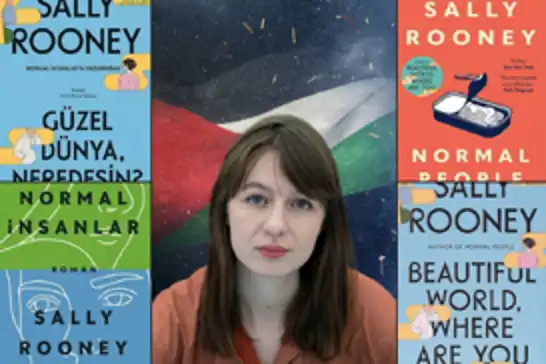
The distribution of books by Irish author Sally Rooney has been suspended in the United Kingdom after her decision to donate future royalties to the pro-Palestinian campaign group Palestine Action, reigniting debate over freedom of expression, anti-terrorism legislation and solidarity with Palestine.
Foreign ministers from 19 countries have strongly condemned Colombia’s inauguration of its embassy in occupied Jerusalem, denouncing the move as a violation of United Nations resolutions and a blow to international efforts to secure a just and lasting peace for the Palestinian people.