Iran announces closure of Strait of Hormuz in response to Israeli ceasefire violations in Lebanon
 13 oC
13 oC 
Güneşli

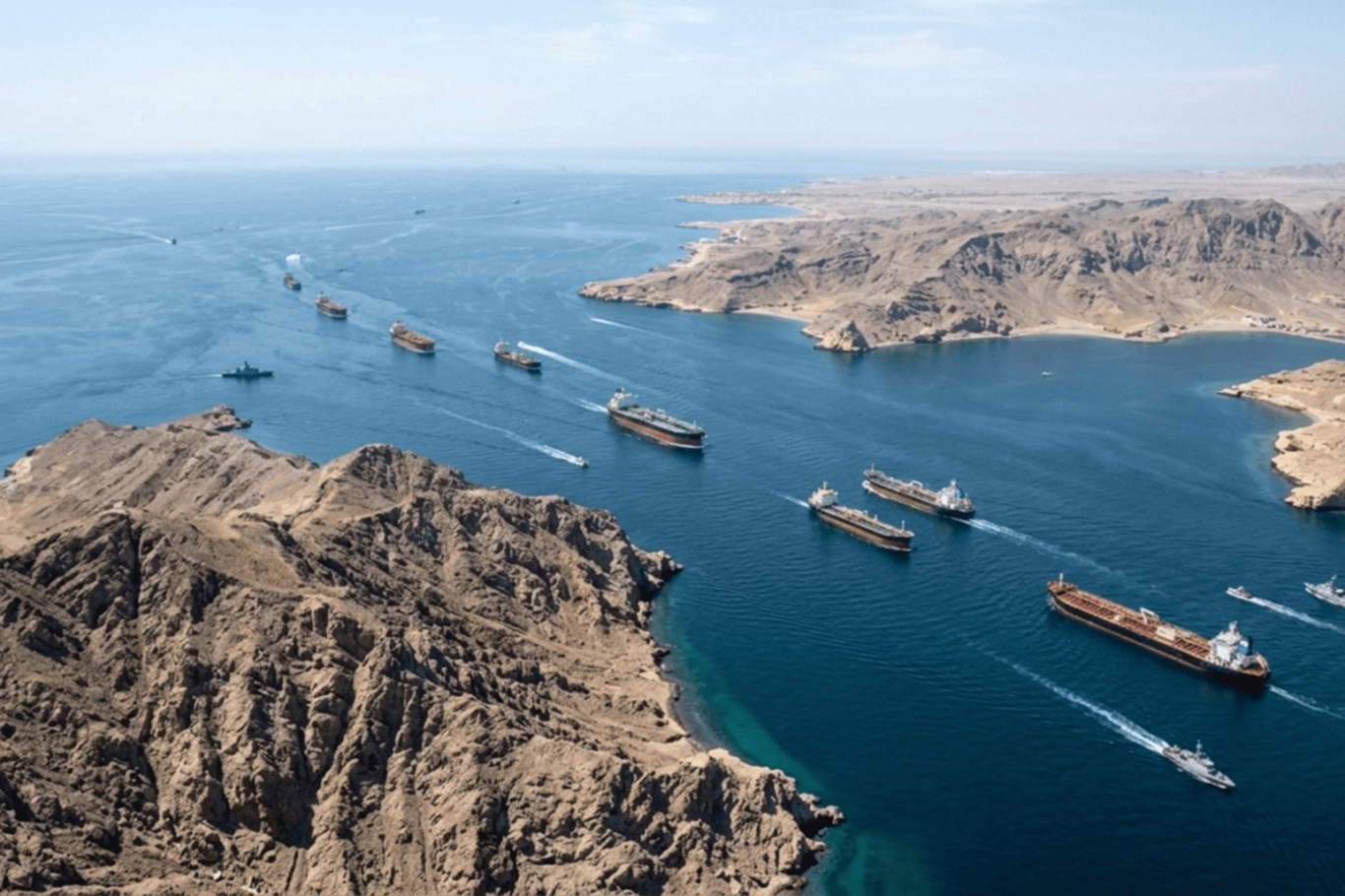
The Khatam al-Anbiya Central Headquarters announced in a statement carried by Iranian state television that the Strait of Hormuz would be closed to maritime navigation, citing what it described as continued Israeli military escalation in southern Lebanon and alleged violations of a ceasefire framework.
According to the statement, the decision comes in response to what it called “blatant violations” by the United States of a memorandum of understanding aimed at ending hostilities, as well as ongoing Israeli attacks in southern Lebanon, including civilian casualties, forced displacement, and continued military operations despite ceasefire claims.
The headquarters alleged that Israeli actions in Lebanon constitute a breach of international commitments and said the measure was a “first step” in response to what it described as escalating violations, warning that further actions could follow if hostilities continue.
The statement accused Israel of continuing strikes in southern Lebanon and failing to withdraw from Lebanese territory, while also alleging that civilian populations were being subjected to repeated attacks.
“In light of the United States’ violation of its commitments and the continued breaches of the ceasefire by the Israeli entity… it is hereby announced that the Strait of Hormuz will be closed to maritime navigation,” the statement said.
While the announcement has not yet been independently verified by international maritime authorities, it has already raised concerns over potential disruptions to global energy and shipping routes, as the Strait of Hormuz remains one of the world’s most critical oil transit chokepoints.
Meanwhile, Lebanese media and health authorities reported a major escalation in Israeli attacks across southern and eastern Lebanon, with at least 37 people killed in renewed strikes on Saturday morning alone.
In the Nabatieh region, at least 25 people were reported killed and 35 injured, according to the Civil Defense Operations Room of the Islamic Health Authority’s Jabal Amel II region. Rescue teams continue to search through rubble for missing persons, including civilians trapped under destroyed buildings.
Among the victims was reportedly a Lebanese Army soldier killed in a drone strike in Kfar Rumman.
In the Saida district, an Israeli strike on a residential building in Qennarit killed seven people, including women and children, and injured 13 others, according to Lebanon’s Ministry of Public Health.
In western Bekaa, five additional deaths were reported in Sohmor following multiple Israeli strikes, including a drone attack on a motorcycle and a separate strike on a house. Rescue operations are still underway, with reports indicating that a child remains trapped under the rubble.
Local media reported that Israeli forces carried out approximately 80 strikes across southern Lebanon and the western Bekaa in a single day, including 65 airstrikes and 15 drone attacks, alongside artillery shelling.
Multiple towns were heavily targeted, including Nabatieh al-Fawqa, Kfar Tebnit, Harouf, and surrounding areas, while drones struck several additional locations across the region. Artillery fire was also reported in multiple southern villages, further intensifying the destruction.
The latest wave of strikes follows an earlier escalation on Friday, when Israeli forces expanded their bombardment to additional southern villages and areas in the western Bekaa, including strikes near Baalbek and the Litani River region.
Reports indicated that attacks continued even as a previously announced ceasefire was said to have taken effect, with dozens of airstrikes recorded shortly after the declared truce time.
According to Lebanon’s Ministry of Public Health, at least 47 people were killed and 97 injured in Friday’s escalation alone. The ministry also reported that since early March, thousands of casualties have been recorded as a result of ongoing Israeli military operations in Lebanon.
The combination of escalating strikes in Lebanon and the Iranian announcement regarding the Strait of Hormuz has raised fears of a broader regional crisis, with potential implications for global shipping, energy markets, and regional security stability.
Observers warn that continued escalation could widen the conflict beyond Lebanon and Israel, drawing in regional powers and further destabilizing an already volatile situation.
As of now, neither international maritime authorities nor independent verification sources have confirmed the operational closure of the Strait of Hormuz, while military activity in Lebanon continues to intensify. (ILKHA)
(ILKHA)
LEGAL WARNING: All rights of the published news, photos and videos are reserved by İlke Haber Ajansı Basın Yayın San. Trade A.Ş. Under no circumstances can all or part of the news, photos and videos be used without a written contract or subscription.
An Iranian delegation has departed for Switzerland to follow up on the implementation of commitments contained in a recently signed memorandum of understanding (MoU), according to Iran's Foreign Ministry.

One person was killed after two freight trains collided on a railway bridge in the German city of Munich, causing derailed wagons to fall onto a road below, police said on Saturday.

Turkish Foreign Minister Hakan Fidan is set to visit Egypt on June 20-21 to participate in the fourth meeting of the foreign ministers of Türkiye, Egypt, Pakistan, and Saudi Arabia, according to a statement issued by the Turkish Foreign Ministry.