US, nine partners sign declaration to secure critical AI technologies and supply chains

 13 oC

Güneşli

The United States and nine partner countries have signed an agreement to strengthen the security of critical technologies and supply chains underpinning artificial intelligence (AI), as Washington seeks to reinforce its technological position amid intensifying global competition.
The San Francisco Declaration on the Secure Foundations of Enduring Prosperity was signed on Sunday, November 15, by the United States, Australia, India, Israel, Japan, South Korea, Qatar, Singapore, the United Arab Emirates and the United Kingdom, according to the US State Department.
The agreement was reached under the US-led Pax Silica initiative, which aims to build more secure and resilient supply chains for advanced technologies, including semiconductors, critical minerals, energy systems and AI infrastructure.
The declaration identifies sensitive technologies and critical infrastructure essential to the development and deployment of advanced AI systems. These include semiconductor components, manufacturing inputs, transportation networks, ports, logistics systems, digital platforms, communications networks and energy infrastructure.
It describes economic security as fundamental to national security and calls on participating countries to reduce excessive dependencies by developing diversified and trusted supply chains.
The signatories also agreed to establish five working groups to translate their commitments into practical cooperation. Their areas of focus include innovation-friendly policy frameworks, the adoption of advanced AI technologies across key sectors, supply-chain cooperation, investment and supply-chain security hubs, and technological security and resilience.
In its announcement, the State Department said the declaration established a common framework for protecting strategic technologies and infrastructure from theft, unauthorized transfers, hostile influence and disruptions.
"No nation can secure the foundations of the SI era alone," the department said, referring to superintelligence, a term used in the declaration to describe artificial intelligence.
US Under Secretary of State for Economic Affairs Jacob Helberg, who convened the Pax Silica Founders Retreat in San Francisco, said the agreement marked a new phase in cooperation among participating countries, bringing shared principles into a practical partnership.
The initiative, launched in December 2025, reflects Washington's broader efforts to strengthen its technological and economic position amid growing competition with China, particularly in semiconductor production, critical mineral supplies and advanced computing.
According to the Financial Times, Germany, Sweden, the Netherlands and the European Commission are also expected to join the declaration next week.
However, the proposed expansion has encountered some resistance in Europe. Several European governments have raised concerns over the broad definitions of sensitive technologies and critical infrastructure, as well as potential implications for their regulatory autonomy and existing AI legislation.
The European debate has also highlighted differences between Washington and Brussels over the terminology and regulatory approach surrounding advanced artificial intelligence.
The agreement comes as governments increasingly view control over semiconductor manufacturing, critical minerals, energy infrastructure and advanced computing capabilities as essential to both economic competitiveness and national security.
By coordinating investment, technology protection and supply-chain policies, Washington and its partners aim to reduce vulnerabilities in the interconnected systems supporting the next generation of artificial intelligence. (ILKHA)
LEGAL WARNING: All rights of the published news, photos and videos are reserved by İlke Haber Ajansı Basın Yayın San. Trade A.Ş. Under no circumstances can all or part of the news, photos and videos be used without a written contract or subscription.
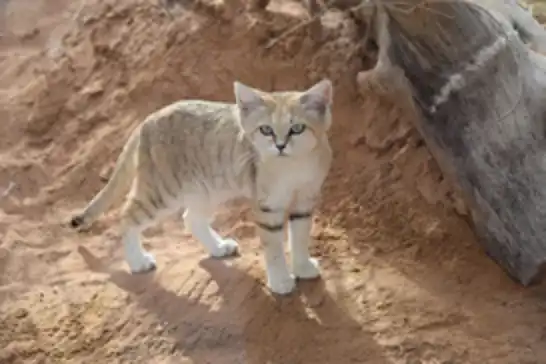
Scientists have confirmed the presence of the elusive sand cat (Felis margarita) in southwestern Tunisia for the first time in nearly a century, offering a rare glimpse of one of the desert’s most secretive wild felines.

Google has announced a $17 billion investment to build its first data centre in Wyoming, as the technology giant expands its digital infrastructure to meet growing demand for artificial intelligence and cloud computing.
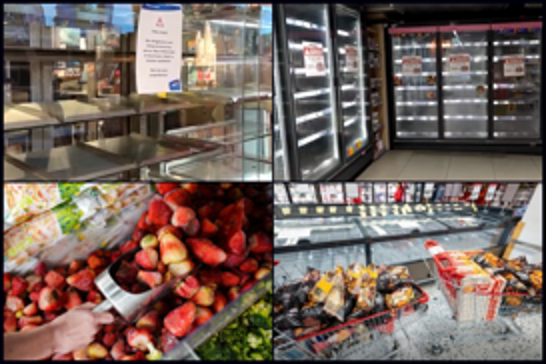
A wave of suspected cyberattacks targeting supermarket refrigeration systems has spread across Europe, disrupting food storage facilities, forcing retailers to discard large quantities of food and raising concerns about the security of the continent's food supply chains.