HÜDA PAR leader calls on Islamic scholars to lead Muslim revival and strengthen unity
 13 oC
13 oC 
Güneşli

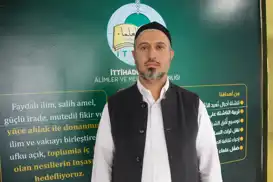
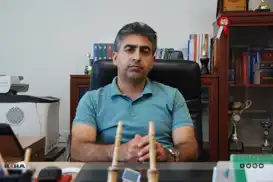
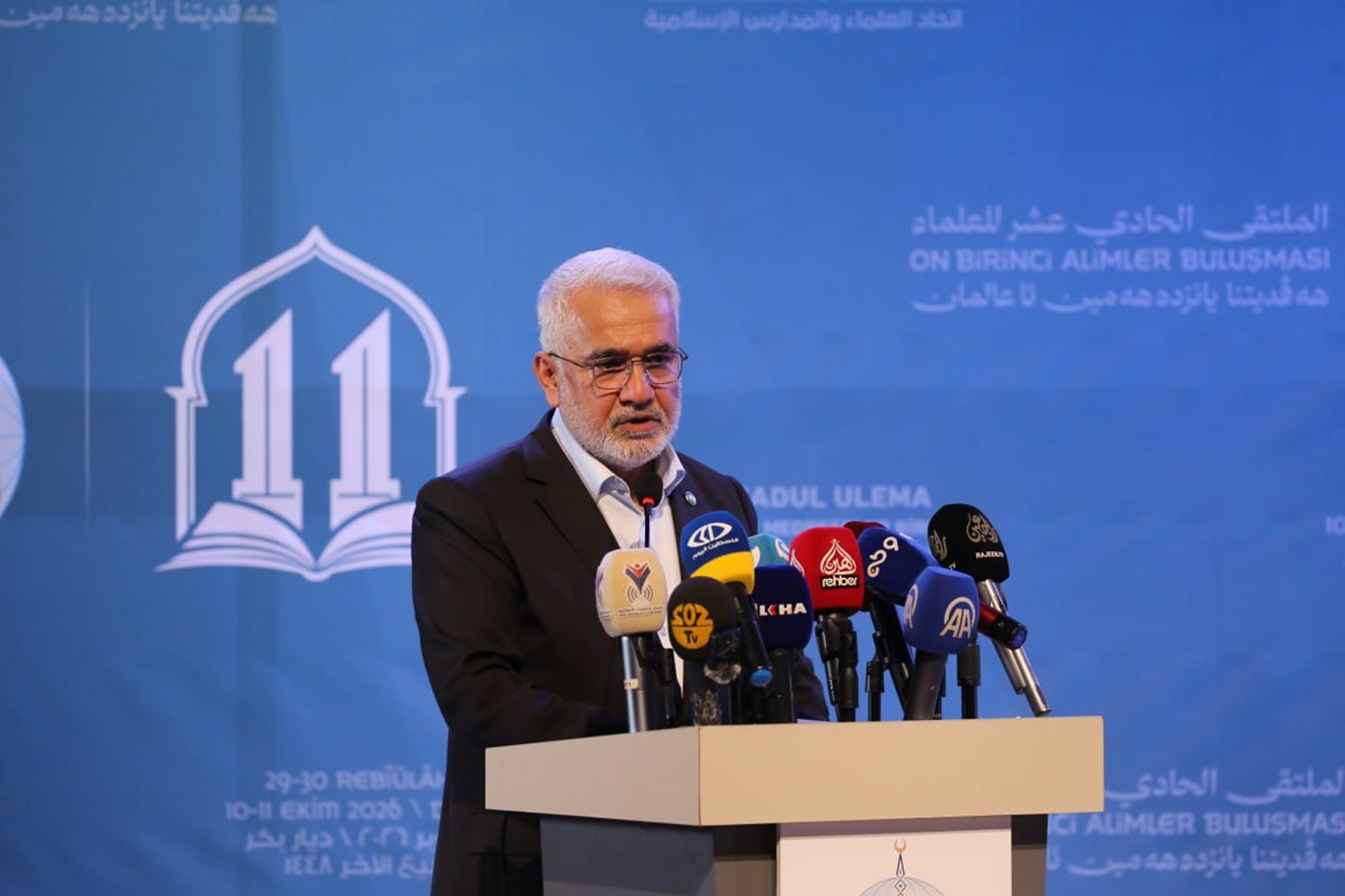
HÜDA PAR General President Zekeriya Yapıcıoğlu has called on Islamic scholars to lead a renewed movement of Islamic outreach, strengthen Muslim unity and confront the moral challenges of the digital age, saying that the liberation of Jerusalem and other occupied lands depends on solidarity across the Muslim world.
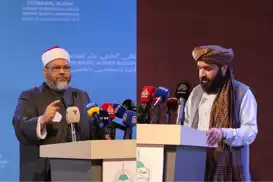
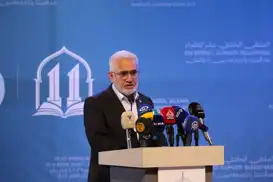
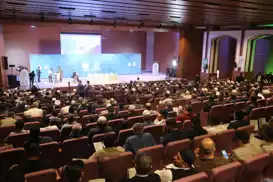
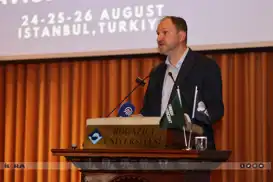
Speaking at the 11th Traditional Scholars’ Meeting organized by İTTİHADUL ULEMA in Diyarbakır under the theme “Method in Invitation and New Approaches,” Yapıcıoğlu said the Muslim world and humanity as a whole were passing through a historic period marked by severe trials, ideological challenges and a growing crisis of values.
He stressed that scholars must do more than preserve and transmit religious knowledge, arguing that they must provide guidance and practical solutions to contemporary problems in light of the Quran and Sunnah.
“We are the ummah of a Prophet who said, ‘Scholars are the heirs of the prophets,’” Yapıcıoğlu said. “A scholar is not merely a transmitter who carries the heritage of the past from dusty shelves to the present. A scholar is a guide who reads the spirit of the time and produces solutions to the problems of the age on the axis of the Quran and Sunnah.”
Referring to Turkish poet Mehmet Akif Ersoy’s call to draw inspiration directly from the Quran and make Islam speak to the understanding of the age, Yapıcıoğlu said Islamic teachings remained universal and relevant to every generation.
He emphasized that the responsibility of scholars was to uphold these principles while developing effective methods to communicate Islam's message in a rapidly changing world.
Digital age poses challenges to Islamic values and family life
Yapıcıoğlu warned that digitalization, artificial intelligence, algorithms and social media were transforming society while creating new challenges for religious education, family life and the moral development of younger generations.
Although digital technologies have made information more accessible, he said the constant flow of online content had also contributed to information pollution and the erosion of values.
“The world is undergoing a great transformation,” he said, noting that geographical borders had become less significant even as emotional and social distances between people continued to grow.
He observed that young people increasingly obtain information through short videos and social media platforms rather than traditional sources of religious knowledge, including books and sermons.
Yapıcıoğlu also warned that what he described as global networks of corruption were targeting the family institution and influencing young people through digital platforms.
“While we speak from the pulpits, our youth are being pulled into the whirlpools of the modern world; every young person whose heart we fail to win is slipping from our hands,” he said.
He called on Islamic scholars and religious institutions to develop more effective outreach strategies to engage younger generations, strengthen their connection with Islam and protect the family as a cornerstone of society.
Gaza awakens the global conscience
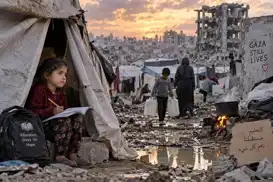
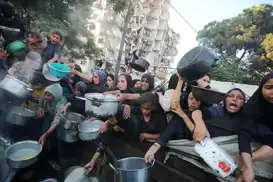
Turning to Palestine, Yapıcıoğlu said Gaza had become a powerful symbol of faith, perseverance and resistance in the face of the Israeli military campaign and the devastating humanitarian consequences for its population.
He argued that the steadfastness demonstrated by Palestinians had challenged the moral complacency of the international community and encouraged a broader search for spiritual meaning.
“Gaza, which the Zionist terror regime is trying to destroy through genocide, has, with the example of unshakable faith and submission it has displayed, scattered the fog clouds covering the global conscience,” he said.
Yapıcıoğlu pointed to pro-Palestinian solidarity and growing criticism of materialism and capitalism in various parts of the world, particularly in Europe, describing these developments as signs of a broader moral awakening.
He said Islamic scholars had a historic responsibility to guide people seeking meaning, justice and spiritual fulfillment toward Islam.
In this context, he called for a two-pronged approach to Islamic outreach: inviting non-Muslims who are searching for truth to embrace Islam while helping Muslims deepen their faith, strengthen their piety and renew their commitment to Islamic principles.
He stressed that da’wah, or inviting people to Islam, must respond to contemporary realities without compromising the fundamental teachings of the religion.
Yapıcıoğlu urges scholars to overcome internal divisions
The HÜDA PAR leader also called on Islamic scholars to preserve mutual respect and avoid allowing internal disagreements to undermine the broader interests of the Muslim community.
He expressed concern that sensitive religious questions, which he said should be examined carefully within scholarly circles, were increasingly becoming subjects of public controversy.
According to Yapıcıoğlu, such disputes damage the standing of religious scholars and weaken efforts to communicate Islam's message effectively.
“While we quarrel among ourselves, we are unfortunately unable to give a sufficiently strong and common response to the practical and intellectual attacks being carried out on a global scale against Islam and the sacred values of Muslims,” he said.
He urged scholars to approach disagreements with wisdom, uphold the dignity of Islamic scholarship and prioritize the unity and welfare of the Muslim ummah.
Yapıcıoğlu argued that stronger cooperation among scholars would enable Muslims to respond more effectively to ideological challenges, defend their religious values and address the crises affecting their communities.
Jerusalem's liberation requires Muslim solidarity
Recalling Salahuddin Ayyubi's recapture of Jerusalem in 1187, Yapıcıoğlu drew parallels between the political fragmentation of the Muslim world during the Crusader period and what he described as the divisions confronting Muslims today.
He said Salahuddin's determination and efforts to unite Muslims offered an important historical lesson for contemporary Islamic leaders and scholars.
Quoting a statement attributed to Salahuddin, Yapıcıoğlu said: “Those who busy themselves with their friends cannot fight their enemies.”
He argued that internal disputes weaken the Muslim world at a time when Palestinians and other Muslim communities face occupation and oppression.
“Today, the path to standing against the occupations surrounding the Islamic geography and to restoring freedom once again to Jerusalem and the oppressed lands is, taking inspiration from this historical experience, to re-establish the unity and solidarity of Muslims,” he said.
Yapıcıoğlu emphasized that Muslim unity should not be regarded merely as a political arrangement or a temporary alliance, but as a religious responsibility rooted in the Quran.
“Unity is not, for us, a political preference or a conjunctural alliance; it is an obligation of faith that our Lord has made obligatory upon us with the command, ‘Hold firmly together to the rope of Allah and do not be divided,’” he said.
He added that overcoming the suffering endured by Muslim communities for more than a century would require a shared vision and a commitment to unity among religious scholars and political leaders.
‘The path to dignity is a return to our Islamic roots’
Yapıcıoğlu also reiterated his criticism of efforts to imitate Western civilization in the name of modernization, arguing that Muslim societies had weakened their identities by abandoning their own cultural and religious foundations.
Recalling a message he delivered at the previous scholars' meeting, he said the salvation of Muslim peoples depended on reconnecting with their origins and reviving their civilization.
“The shirt that the Western civilization, which we tried to resemble in the name of modernization, tailored for us did not fit our body. Those who put on that shirt could neither become like them nor remain themselves,” he said.
He warned that societies that abandon their identities in pursuit of imitation risk losing both their dignity and their ability to defend their interests.
According to Yapıcıoğlu, divisions along ethnic and sectarian lines further weaken Muslim communities and undermine their collective strength.
He called for resolving disputes through justice, restoring the bonds of Islamic brotherhood and preventing foreign powers from exploiting internal disagreements.
‘We must unite and regain our honor’
Concluding his speech, Yapıcıoğlu said Muslims faced a decisive choice between accepting a position of weakness and division or returning to their religious principles and rebuilding unity.
He warned that continued ethnic and sectarian rivalries would leave Muslim societies vulnerable to external interference and prevent them from addressing their most pressing challenges.
“Either we will accept global humiliation and play the role imposed on us by the forces of evil,” he said, describing one path as continued division and the other as a return to Islamic values, justice and solidarity.
“Or we will return to our essence and become ourselves; we will solve our problems on the basis of justice without giving opportunity for the intervention of imperial powers, re-establish the law of brotherhood, and thus unite and regain honor once again,” he added.
Yapıcıoğlu concluded by urging Muslims to overcome the intellectual and emotional barriers separating them and to focus on a common path grounded in faith, justice and brotherhood.
His address placed Islamic outreach, the moral education of younger generations, support for Palestine and unity among Muslims at the center of the responsibilities facing contemporary Islamic scholars. (ILKHA)
LEGAL WARNING: All rights of the published news, photos and videos are reserved by İlke Haber Ajansı Basın Yayın San. Trade A.Ş. Under no circumstances can all or part of the news, photos and videos be used without a written contract or subscription.
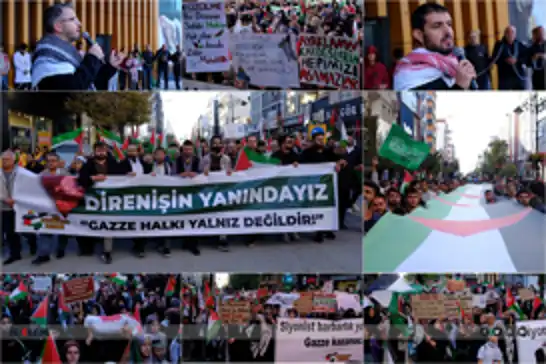
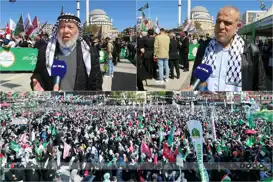
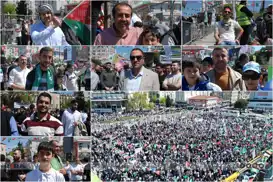
Thousands of people took to the streets in Van, eastern Türkiye, to mark the third anniversary of the Al-Aqsa Flood operation, reaffirming their solidarity with the Palestinian people and their support for the ongoing struggle against the Israeli occupation.
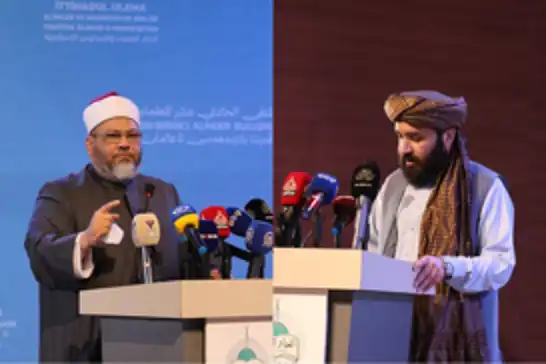
Islamic scholars from Türkiye and around the world have called for more effective methods of Islamic outreach, emphasizing the use of modern technology, the importance of exemplary Muslim character and the duty to support Palestinians in Gaza and defend Al-Aqsa Mosque.
Turkish President Recep Tayyip Erdoğan has stressed the importance of investing in younger generations, describing people as the country’s greatest treasure and well-raised youth as its most valuable legacy.
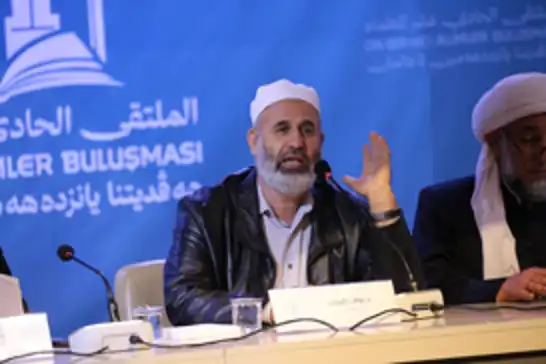
Palestinian scholar and writer Dr. Nawaf Takruri has described Gaza as a global center of Islamic outreach, saying the Palestinian people’s steadfastness, patience and faith amid Israel’s devastating military campaign have conveyed the message of Islam to people around the world.