Rubio says US law still blocks F-35 delivery to Türkiye until S-400 dispute resolved
 13 oC
13 oC 
Güneşli

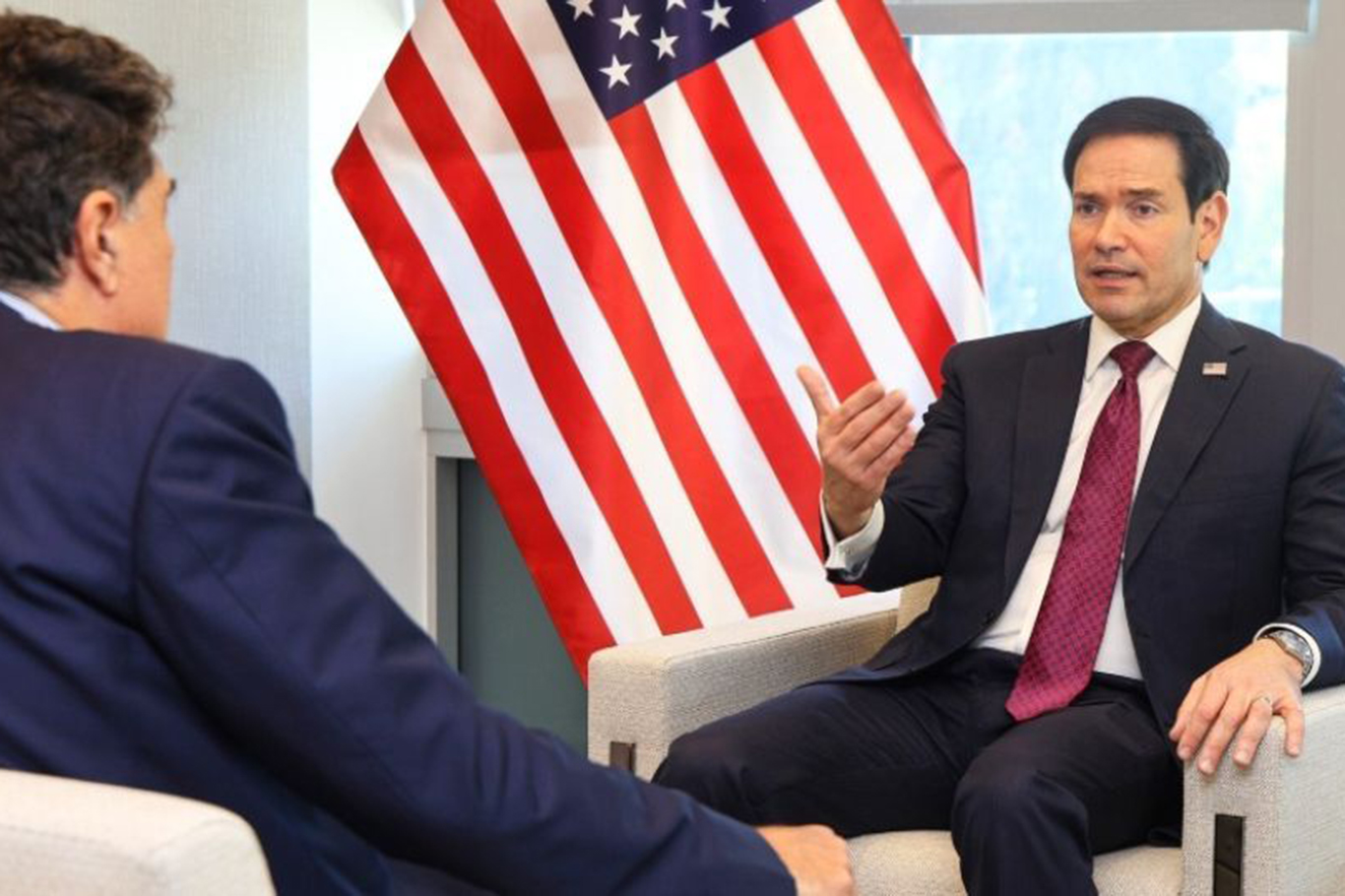
US Secretary of State Marco Rubio has said Washington cannot deliver F-35 fighter jets to Türkiye until the dispute over Ankara’s acquisition of Russian-made S-400 air defense systems is resolved, despite President Donald Trump’s desire to allow Türkiye to receive the aircraft.
In an interview with Greek newspaper Kathimerini during his visit to Athens, Rubio acknowledged that Türkiye is a NATO member and said Trump wants to facilitate the delivery of the fighter jets, for which Ankara has already made payments.
However, he stressed that existing US legislation prevents the transfer until the S-400 issue is settled.
“The S-400 system is the issue. So, that issue is not resolved right now, and legally, we cannot make that transfer until that issue is resolved,” Rubio said.
He added that there were several possible ways to address the dispute, but no final agreement had been reached.
The latest remarks highlight the legal and diplomatic obstacles facing Türkiye’s efforts to return to the F-35 programme, despite renewed political engagement between Ankara and Washington.
The United States removed Türkiye from the F-35 programme in 2019 following Ankara’s purchase of the Russian-made S-400 air defense systems, arguing that their deployment could compromise the security of the advanced fighter aircraft. Washington subsequently imposed sanctions on Türkiye’s defense procurement agency under the Countering America’s Adversaries Through Sanctions Act (CAATSA) in December 2020.
Ankara has maintained that its defense procurement decisions reflect its national security requirements and has sought a resolution that would address Washington’s concerns while safeguarding Türkiye’s strategic interests.
Under US legislation, including provisions of the National Defense Authorization Act, the transfer of F-35 aircraft to Türkiye remains subject to specific legal conditions related to the S-400 systems.
In July, the US State Department reiterated in a letter to Congress that Türkiye had not yet met the requirements necessary to receive the aircraft or rejoin the programme. The department said the existing legal restrictions remained in force.
Despite the continuing impasse, diplomatic efforts have raised hopes of resolving the dispute.
Türkiye’s Deputy Foreign Minister Levent Gümrükçü said in July that Ankara and Washington were closer to resolving the F-35 and CAATSA issues than they had been previously. He said a joint political and military working group had examined possible options to reconcile US legal requirements with Türkiye’s political and economic considerations.
Russian officials have also recently indicated that discussions concerning the S-400 systems are continuing. Kremlin spokesman Dmitry Peskov said on Sept. 30 that talks were taking place regarding the possible relocation of the systems to another country, although no final agreement has been announced.
Türkiye’s possible return to the F-35 programme remains an important issue in its defense relations with the United States. Ankara had participated in the multinational programme and contributed financially before its removal, and has continued to seek a resolution that would restore access to the fifth-generation aircraft.
Rubio’s latest comments suggest that, although the Trump administration has expressed political willingness to facilitate a deal, any delivery will depend on resolving the S-400 dispute and satisfying the applicable US legal requirements.
No final agreement on the issue has been announced. (ILKHA)
LEGAL WARNING: All rights of the published news, photos and videos are reserved by İlke Haber Ajansı Basın Yayın San. Trade A.Ş. Under no circumstances can all or part of the news, photos and videos be used without a written contract or subscription.
Russian President Vladimir Putin has described the ongoing situation in the Middle East as the region’s most pressing challenge, saying Moscow recognizes Iran’s efforts to bring the conflict to an end.
Iran's Atomic Energy Organization chief Mohammad Eslami said Tehran will not abandon its right to uranium enrichment, describing the country's nuclear industry as a driving force for scientific and technological advancement.
A Russian guided bomb strike on two passenger buses in the eastern Ukrainian city of Kramatorsk killed at least 33 people and injured 18 others on Thursday, Ukrainian authorities said.