France’s unrest exposes the crisis of Western materialism, sociologist says
 13 oC

Güneşli

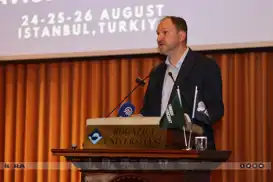
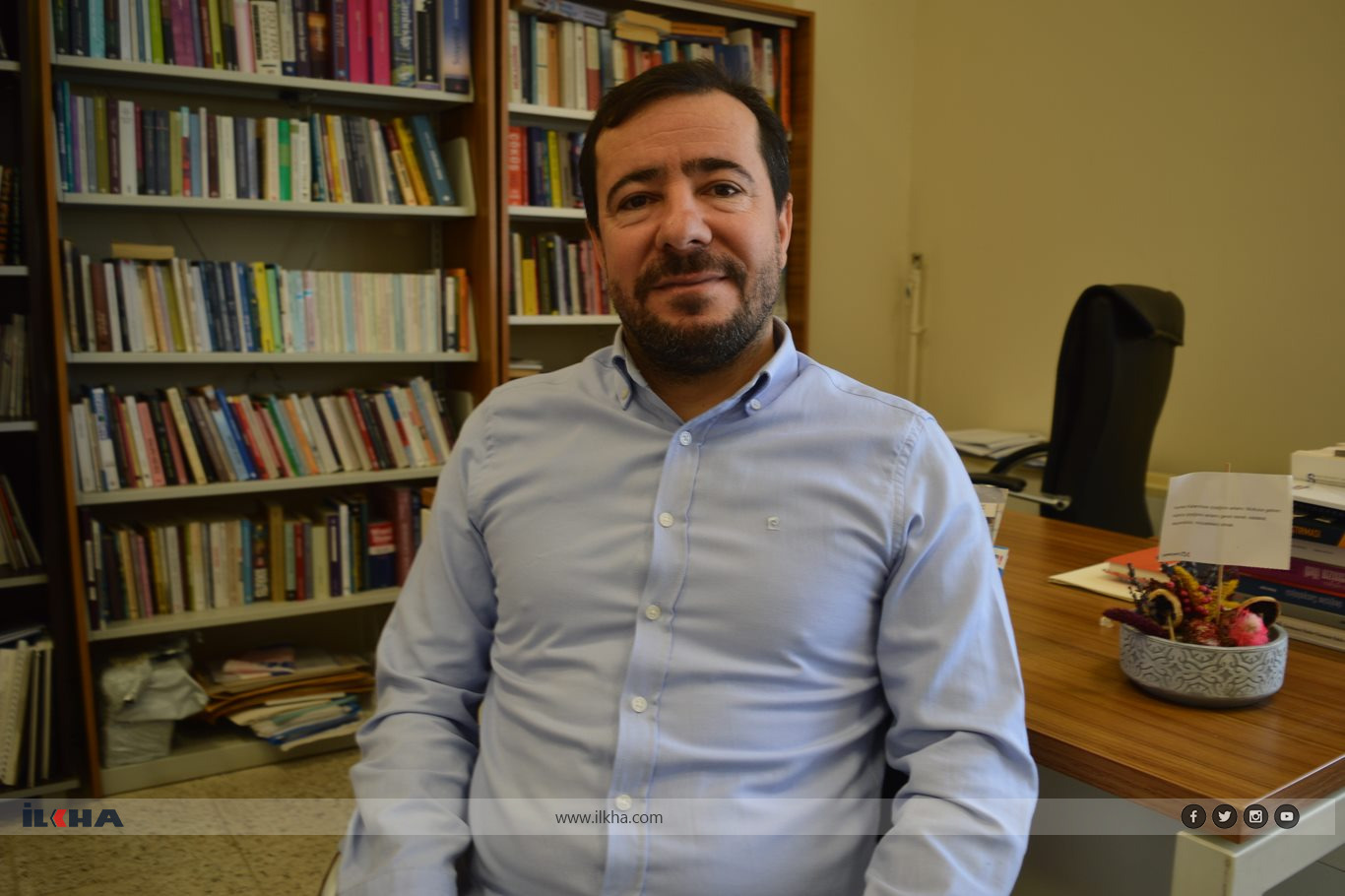
Sociologist Associate Professor Mehmet Tan has criticized the materialistic foundations of Western societies, arguing that France’s latest wave of protests reflects accumulated social grievances and the consequences of policies that have marginalized disadvantaged communities at home and abroad.
Tan, a faculty member at Siirt University in southeastern Türkiye, said the unrest was driven by a combination of economic hardship, government policies and long-standing social tensions, warning that suppressing demonstrations without addressing their root causes would only deepen the crisis.
He also contrasted the spiritual values associated with Islamic and Eastern societies, including patience and trust in Allah, with what he described as the West’s growing emphasis on material interests.
According to Tan, the protests, which began among young people before spreading to wider sections of society, cannot be understood solely through education-related grievances. Inflation, rising living costs and fuel price increases have also contributed to mounting public anger.
Economic hardship turns youth protests into a mass movement
Tan said the demonstrations that erupted in France on Oct. 17 initially centered on young people’s concerns about education but soon expanded as broader economic and social grievances came to the surface.
He noted that the Yellow Vests movement subsequently joined the protests, helping transform them into a wider expression of public discontent.
“When inflation, the high cost of living and fuel price increases all pile up, the demonstrations begin to turn into mass protests. What started as protests led by young people has now evolved into collective action encompassing all segments of society,” Tan said.
He warned that further demonstrations could emerge if the underlying problems remained unresolved.
Referring to French sociologist Pierre Bourdieu’s book The Weight of the World, Tan said the protests illustrated how the grievances of disadvantaged people could accumulate when their experiences and demands were ignored.
“We are witnessing the emergence of accumulated social resentment. There is a buildup of grievances,” he said.
Tan also pointed to France’s history, including the French Revolution, arguing that the country had a longstanding tradition of translating social discontent into collective action.
Suppressing protests will not resolve underlying grievances
Tan stressed the need to distinguish between peaceful demonstrators seeking to express their grievances and individuals who engage in violence or looting.
He argued that government policies and the failure to address social demands could contribute to the escalation of unrest.
“The protests are suppressed in one way or another, but this does not happen by addressing the grievances or acknowledging the demands of those affected. Such suppression is only a temporary solution. The fire eventually flares up again and, at a certain point, returns with even greater intensity,” he said.
Tan added that disadvantaged communities living in France’s suburban areas had repeatedly sought to make their voices heard, warning that a security-focused response would fail to deliver lasting stability.
He urged European governments to address the economic and social roots of the demonstrations through dialogue, democratic engagement and meaningful measures to meet public demands.
“If Europe intends to approach the matter on the basis of democracy, it must first ask what these groups are demanding, what rights they are seeking and what economic opportunities they want. These issues must be addressed through social dialogue and negotiation,” he said.
‘The West’s past policies have come back to haunt it’
Drawing on German sociologist Ulrich Beck’s concept of the “boomerang effect,” Tan argued that Western policies in North Africa and other regions had contributed to problems that were now affecting Western societies themselves.
He accused Western powers of exploiting the natural resources of less powerful countries, contributing to economic conditions that force people to leave their homelands in search of better opportunities.
“For years, everything they did in North Africa has come back to them like a boomerang. By appropriating the region’s natural resources for their own benefit, they have contributed to circumstances in which people are forced to leave their own countries. They come to France in search of better opportunities,” he said.
Tan argued that migration did not necessarily bring an end to hardship, as many migrants continued to face discrimination, unequal treatment and labor exploitation in their destination countries.
He said the situation reflected a cycle in which people were deprived of opportunities in their homelands and then confronted with further disadvantages after migrating.
The sociologist described this as an example of the boomerang effect, in which the consequences of policies pursued abroad eventually return to affect the societies that initiated them.
‘The West represents materialism, while the East represents the spirit’
Tan argued that the crisis in Western societies should also be examined through the relationship between material progress and spiritual values.
He referred to the ideas of Alija Izetbegović, the Bosnian Muslim thinker and former president, who emphasized the importance of preserving Islam’s spiritual essence while embracing scientific and technological advancement.
Tan said Westernization had long been presented as a model for developing societies, often placing material progress at the center of social development.
However, he argued that technological and economic advancement alone could not provide a sufficient foundation for a healthy society.
According to Tan, Izetbegović’s approach offered a different perspective: societies could benefit from scientific and technological progress without abandoning their religious identity and spiritual principles.
“Eastern societies, on the other hand, are represented by the spirit. The West has lost this spiritual dimension, and this is why these events are taking place today. Our societies have values that embody and nourish the spirit, such as patience and trust in God,” Tan said.
He argued that the growing prioritization of material interests over spiritual and moral values had contributed to serious social problems in the West.
Tan’s remarks highlight a broader debate about whether economic development and technological advancement can ensure social well-being without a strong moral foundation, and whether governments can achieve lasting stability without addressing inequality, discrimination and the grievances of marginalized communities. (ILKHA)
LEGAL WARNING: All rights of the published news, photos and videos are reserved by İlke Haber Ajansı Basın Yayın San. Trade A.Ş. Under no circumstances can all or part of the news, photos and videos be used without a written contract or subscription.

Russian attacks across Ukraine killed at least nine people and injured 56 others over the past 24 hours, as Moscow launched a large-scale combined missile and drone assault targeting Kyiv and several other regions, Ukrainian authorities said on Oct. 22.

French health authorities have confirmed the world's first documented human infection with the Shamonda virus after a severely immunocompromised patient died earlier this month, while stressing that there is currently no identified health risk to the general public. Investigations are continuing to determine whether the virus caused or contributed to the patient's death.

Iran's Islamic Revolutionary Guard Corps (IRGC) Navy has issued what it described as a "serious warning" to the United States, accusing the US military of encouraging vessels to transit a mined route and escalating maritime incidents in the Strait of Hormuz.