Nvidia halts AI server shipments to Asian countries amid new US export controls

 13 oC

Güneşli

US chipmaker Nvidia has instructed its manufacturing partners to suspend shipments of servers containing its advanced processors to Malaysia, Singapore, Thailand and Indonesia, as Washington tightens export restrictions aimed at preventing Chinese companies from accessing advanced artificial intelligence (AI) computing technology through third countries.
The Financial Times reported on Thursday, citing three people familiar with the matter, that manufacturing partners including Dell and Supermicro had informed customers in the four Southeast Asian countries that Nvidia would not authorize the delivery of their orders.
The reported suspension follows new US export controls that took effect on November 19, requiring licenses for shipments of advanced computing chips to several countries, including Malaysia, Singapore, Thailand and Indonesia.
The restrictions are part of Washington's broader efforts to close potential loopholes that Chinese technology companies are believed to have used to obtain access to advanced US-designed AI processors through overseas data centers.
It remains unclear whether Nvidia's decision represents a temporary suspension while the company and its manufacturing partners establish procedures to comply with the new regulations.
Under the new regulations introduced by the US Commerce Department's Bureau of Industry and Security (BIS), companies must obtain export licenses for certain advanced computing semiconductors shipped to Malaysia, Singapore, Thailand, Indonesia and Brazil.
The rules also extend restrictions to overseas data centers that provide substantial computing capacity to companies headquartered in China or other countries subject to US restrictions.
Washington says the measures are intended to prevent restricted entities from circumventing existing export controls by renting computing capacity from data centers located in third countries.
The regulations require exporters, chip manufacturers and data center operators to conduct additional checks on customers, ownership structures and the ultimate destinations of advanced computing equipment.
The new licensing requirements took effect on November 19, with the Commerce Department allowing a 90-day period for certain existing overseas data center arrangements to obtain the necessary authorizations.
The new restrictions could have significant implications for Southeast Asia, which has become an important hub for data centers, cloud computing services and AI infrastructure investments.
Malaysia and Indonesia have attracted billions of dollars in investments in data center construction, while Singapore has emerged as a major regional center for cloud computing and technology services.
Nvidia's business exposure to the region is substantial. The company recorded $104 billion in revenue through its Singapore subsidiary in 2025, a 72% increase from the previous year, although the figure also includes sales booked through Singapore for customers elsewhere.
The restrictions could therefore complicate investment plans, delay equipment deliveries and increase compliance costs for regional data center operators.
One reported case involves Singapore-based cloud computing company Aolani, which had planned to provide advanced computing capacity to ByteDance, the Chinese owner of TikTok. The Financial Times reported that financing arrangements worth approximately $500 million had been put on hold amid uncertainty over the new licensing requirements.
Beijing has criticized Washington's expanding technology restrictions, describing measures limiting Chinese companies' access to advanced computing resources through overseas data centers as economic coercion.
The restrictions are also expected to accelerate China's efforts to develop domestic semiconductor manufacturing and reduce its dependence on US-designed processors.
Chinese technology companies, including Alibaba and Tencent, have warned that tighter controls could affect their AI development plans and access to computing resources.
Tencent President Martin Lau said the restrictions would leave Chinese companies with less access to advanced computing capacity and could affect the development schedules of future AI models.
Alibaba, meanwhile, said it was assessing the potential impact of the measures on its international data center expansion.
The latest developments highlight the growing technological rivalry between Washington and Beijing, with advanced semiconductors and AI computing infrastructure increasingly at the center of their economic and national security competition.
Nvidia's reported suspension of shipments to four Southeast Asian countries illustrates how the dispute is extending beyond China and affecting regional technology markets, international supply chains and investment in the rapidly expanding AI industry. (ILKHA)
LEGAL WARNING: All rights of the published news, photos and videos are reserved by İlke Haber Ajansı Basın Yayın San. Trade A.Ş. Under no circumstances can all or part of the news, photos and videos be used without a written contract or subscription.
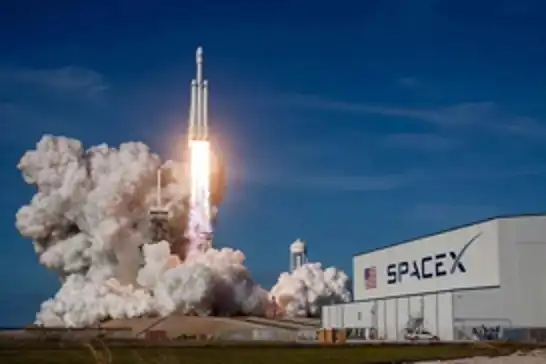
The US Federal Communications Commission (FCC) has authorized Elon Musk's SpaceX to deploy up to one million satellites in low-Earth orbit to establish space-based data centers, marking a major regulatory milestone in the company's effort to move artificial intelligence (AI) computing infrastructure beyond Earth.

A new survey by the Turkish Statistical Institute (TurkStat) has revealed that 92.7 per cent of children aged 6-17 use the internet, while 69.8 per cent use social media. The study also found that 63 per cent of children use generative artificial intelligence tools and 10.2 per cent have experienced cyberbullying.

The popular Tim Hortons mobile app is transmitting extensive information about users' devices to an Israeli-founded cybersecurity company, raising fresh concerns about digital privacy, data collection and the potential for device tracking, according to recent investigations.