HÜDA PAR MP Dinç calls for student-dentred education reform in Türkiye
 13 oC
13 oC 
Güneşli

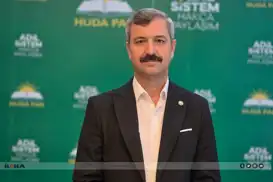
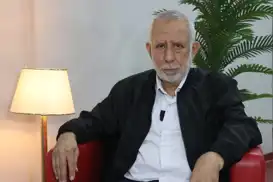
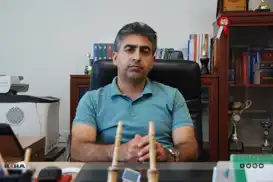
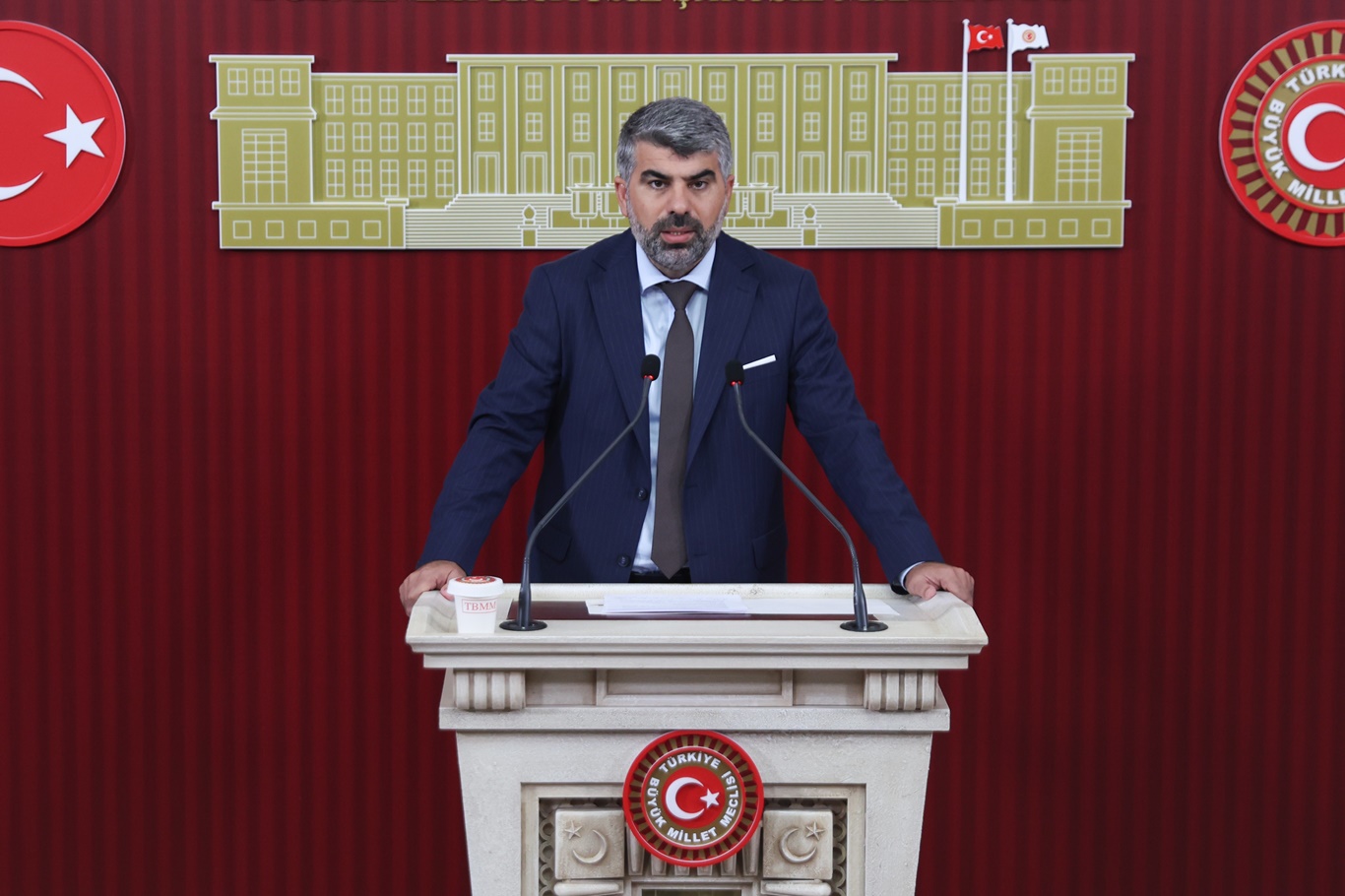
HÜDA PAR Deputy Chairman and Mersin MP Faruk Dinç has called for reforms to Türkiye’s education system, greater accountability in public administration and stronger protections for family values and religious freedoms.
He also condemned the International Criminal Court’s arrest warrant decision concerning leaders of Afghanistan’s Islamic Emirate, urged a diplomatic solution to the conflict in Yemen and criticised headscarf restrictions in Azerbaijan.
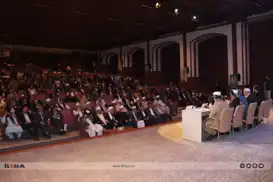
Speaking at a press conference at the Grand National Assembly of Türkiye, Dinç addressed a range of domestic and international issues, including the 12-year compulsory education system, a public fund crisis, the financial difficulties faced by Diyanet Academy trainees and what he described as growing threats to the family institution.
Dinç calls for an education system centred on quality and ability
Dinç said Türkiye’s 12-year compulsory education system should be reassessed in light of scientific evidence and social realities, arguing that education policy should prioritise quality, purpose and students’ individual abilities rather than the duration of schooling alone.
“Condemning every student to the same academic mold for the same duration means ignoring individual talents, learning differences, and professional inclinations,” he said.
He urged the Ministry of National Education to identify students’ talents and interests from an early age and provide a wider range of academic, vocational, technical and arts-based pathways.
Dinç stressed that reform should not distance children from education but create a system that better reflects their abilities while promoting moral development, responsibility, productivity and a sense of social belonging.
“Reform in education begins not by changing signs, but by abandoning persistence in what is wrong,” he said.
Public fund crisis highlights need for accountability
Turning to the public fund crisis, Dinç said the emergence of a financial controversy involving billions of Turkish lira, at a time when many households are struggling to make ends meet, raised serious questions about oversight and competence in public institutions.
He argued that pensioners, minimum-wage earners and other low-income citizens should not bear the cost of failures in public administration.
Dinç called for a comprehensive review of the responsibilities of the Capital Markets Board, the Financial Crimes Investigation Board, the Banking Regulation and Supervision Agency, the Treasury and Borsa Istanbul.
He also questioned why potential risks had not been addressed despite early warning mechanisms and called for a transparent investigation into the crisis, with anyone found responsible held accountable under the law.
“Merit rather than loyalty, effective oversight rather than silence, and justice rather than privilege must be essential,” he said.
Calls for financial support for Diyanet Academy trainees
Dinç also drew attention to the financial difficulties faced by candidates training to become imams and Qur’an course instructors through the Diyanet Academy.
He said training programmes lasting six to 10 months, depending on candidates’ educational backgrounds, placed an additional burden on people who had already received relevant university education.
The monthly allowance of around 8,500 Turkish lira was insufficient to cover basic expenses amid the rising cost of living, he said. Married trainees faced particular difficulties meeting rent, food, transport and other family expenses, especially when they could not stay in academy accommodation.
Dinç called for a review of the training programmes’ duration and content, higher allowances and rent or accommodation support for married candidates.
He said an institution responsible for preparing future religious educators should not leave its trainees struggling to meet their basic needs.
Dinç warns against threats to family values
Addressing family policy, Dinç criticised what he described as ideological messaging that devalues motherhood, domestic labour and responsibilities within the family.
He argued that family life depends on mutual responsibility, cooperation and a complementary division of duties between spouses, warning that approaches undermining these principles could fuel conflict and weaken family relationships.
Dinç called for greater recognition of women’s contributions to raising children and maintaining family life. He also proposed granting retirement rights to women who have been married for 25 years and called for a ban on broadcasts that belittle motherhood and women’s domestic work.
He said protecting the family institution and recognising the value of raising children should be central to social policy.
HÜDA PAR official condemns ICC decision on Afghanistan
Dinç described the International Criminal Court’s arrest warrant decision concerning leaders of Afghanistan’s Islamic Emirate as unacceptable, arguing that international institutions should not become instruments of powerful states or serve to legitimise policies driven by imperialist interests.
He said those responsible for the destruction caused by years of occupation should also be held accountable, drawing attention to the deaths of Afghan women and girls and the continuing economic hardship faced by the Afghan population.
Dinç further criticised sanctions and restrictions that he said had deepened poverty in Afghanistan, calling on international institutions to act impartially and uphold justice rather than serve the interests of powerful states.
Calls for diplomacy and lasting peace in Yemen
On Yemen, Dinç said military approaches pursued since 2015 had failed to deliver a lasting solution and had instead prolonged the suffering of civilians.
He urged Yemeni parties to pursue comprehensive reconciliation, renewed diplomatic engagement and a permanent peace agreement, warning that opening new fronts would only deepen the crisis.
Dinç said Türkiye and Pakistan had an important role to play in facilitating negotiations involving all parties. He called on both countries to use diplomatic channels and regional mechanisms, including the Mecca Alliance, to help bring the parties to the negotiating table.
He stressed that a sustainable solution required dialogue and reconciliation rather than further military escalation.
Dinç condemns headscarf restrictions in Azerbaijan
Dinç also criticised restrictions preventing students who wear headscarves for religious reasons from attending state schools in Azerbaijan, expressing concern that the practice had reportedly been extended to teachers.
He described the restrictions as violations of freedom of religion and conscience, as well as the rights to education and work.
“Fundamental human rights cannot be reduced to any state’s internal affairs,” he said, rejecting arguments that criticism of the restrictions amounted to interference in Azerbaijan’s domestic affairs.
Dinç called on the Azerbaijani authorities to end practices that discriminate against people because of their religious beliefs and to guarantee students’ access to education and teachers’ freedom to work.
He also urged the Turkish government to take a clear diplomatic stance, citing its historical, humanitarian and moral responsibilities towards the Azerbaijani people.
Dinç’s remarks addressed a broad range of domestic and international concerns, with an emphasis on social justice, accountable governance, the protection of religious freedoms, family values and peaceful solutions to conflicts affecting Muslim communities. (ILKHA)
LEGAL WARNING: All rights of the published news, photos and videos are reserved by İlke Haber Ajansı Basın Yayın San. Trade A.Ş. Under no circumstances can all or part of the news, photos and videos be used without a written contract or subscription.
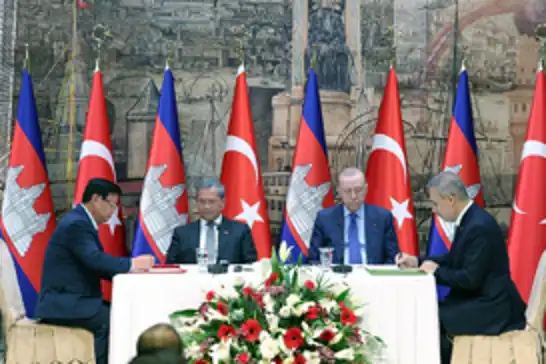
Turkish President Recep Tayyip Erdoğan and Cambodian Prime Minister Hun Manet have pledged to strengthen bilateral ties, with a focus on trade, defence, energy, education and cultural cooperation.
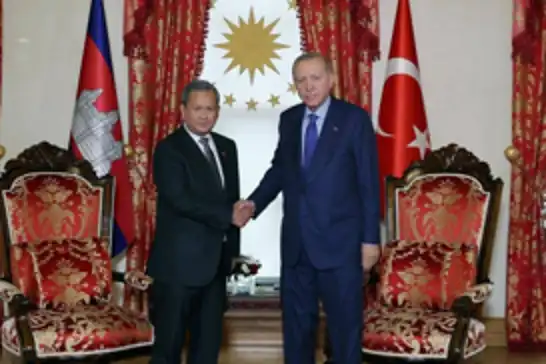
Turkish President Recep Tayyip Erdoğan met Cambodian Prime Minister Hun Manet in Istanbul on Friday during a visit to Türkiye at Erdoğan’s invitation.
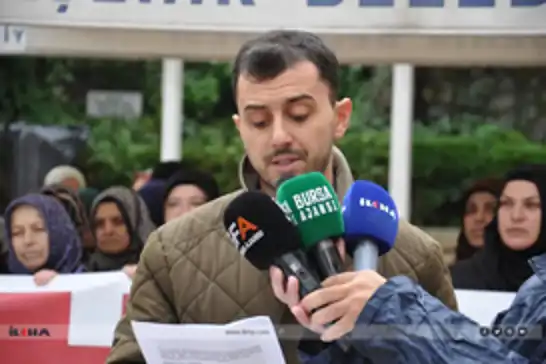
The Bursa Voluntary Organizations Platform has called on Azerbaijani authorities to immediately lift restrictions preventing students and teachers from entering educational institutions wearing headscarves, stressing that no Muslim woman should be forced to choose between her religious convictions and her right to education or work.