HÜDA PAR leader calls for ‘Interest-Free Türkiye,’ criticizes economic policies
 13 oC

Güneşli

Yapıcıoğlu says high interest rates are deepening economic hardship, urges justice-based resolution to Kurdish Question, and calls for stronger support for families and pensioners
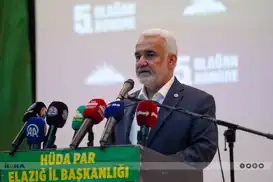
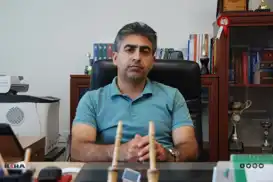
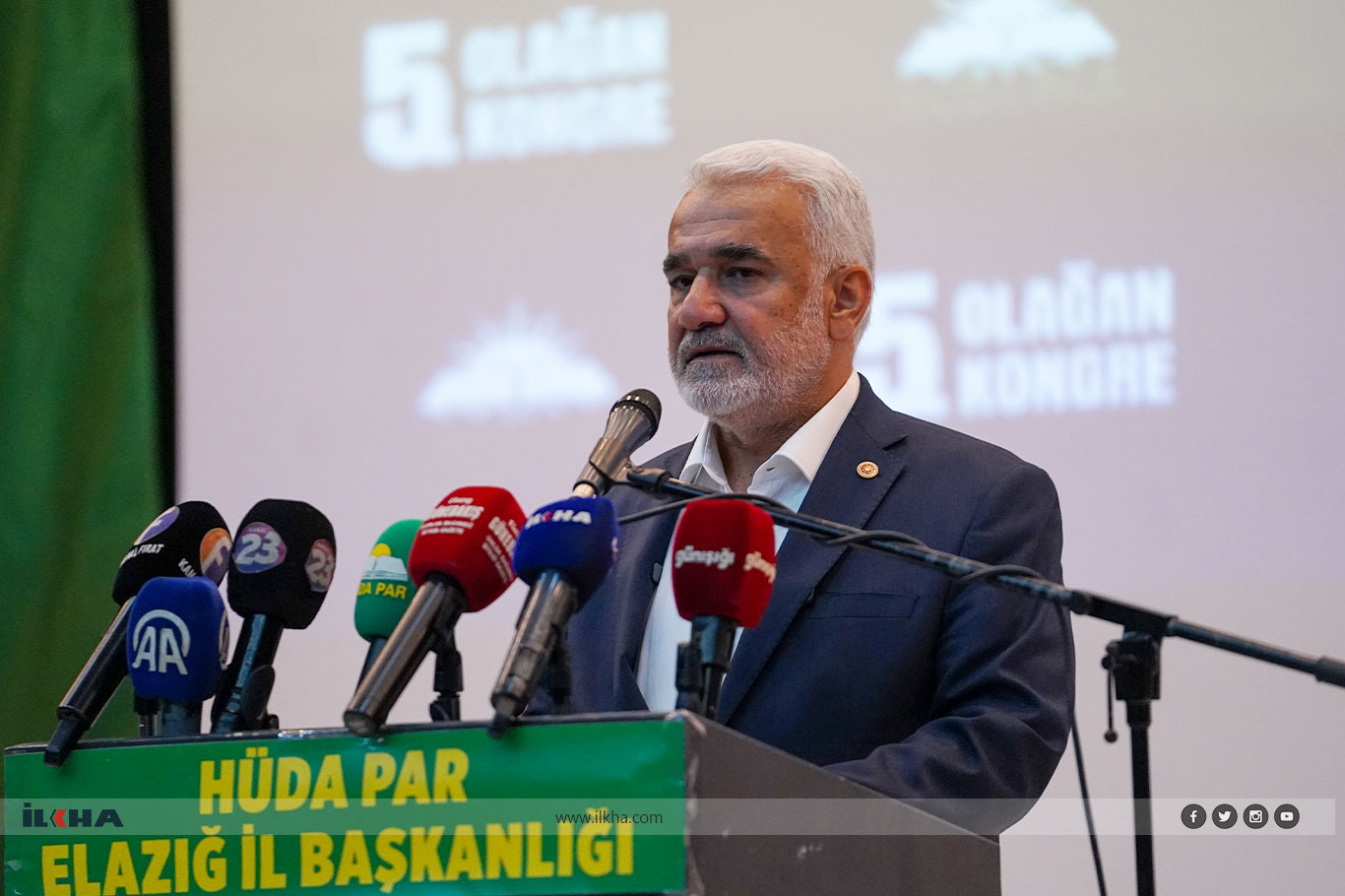
HÜDA PAR Chairman Zekeriya Yapıcıoğlu has called for an “Interest-Free Türkiye” initiative similar to the government’s “Terror-Free Türkiye” process, arguing that interest payments are contributing not only to inflation but also to unemployment, income inequality and social decay.
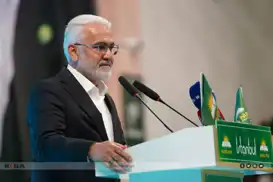
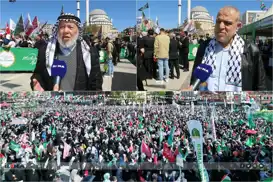
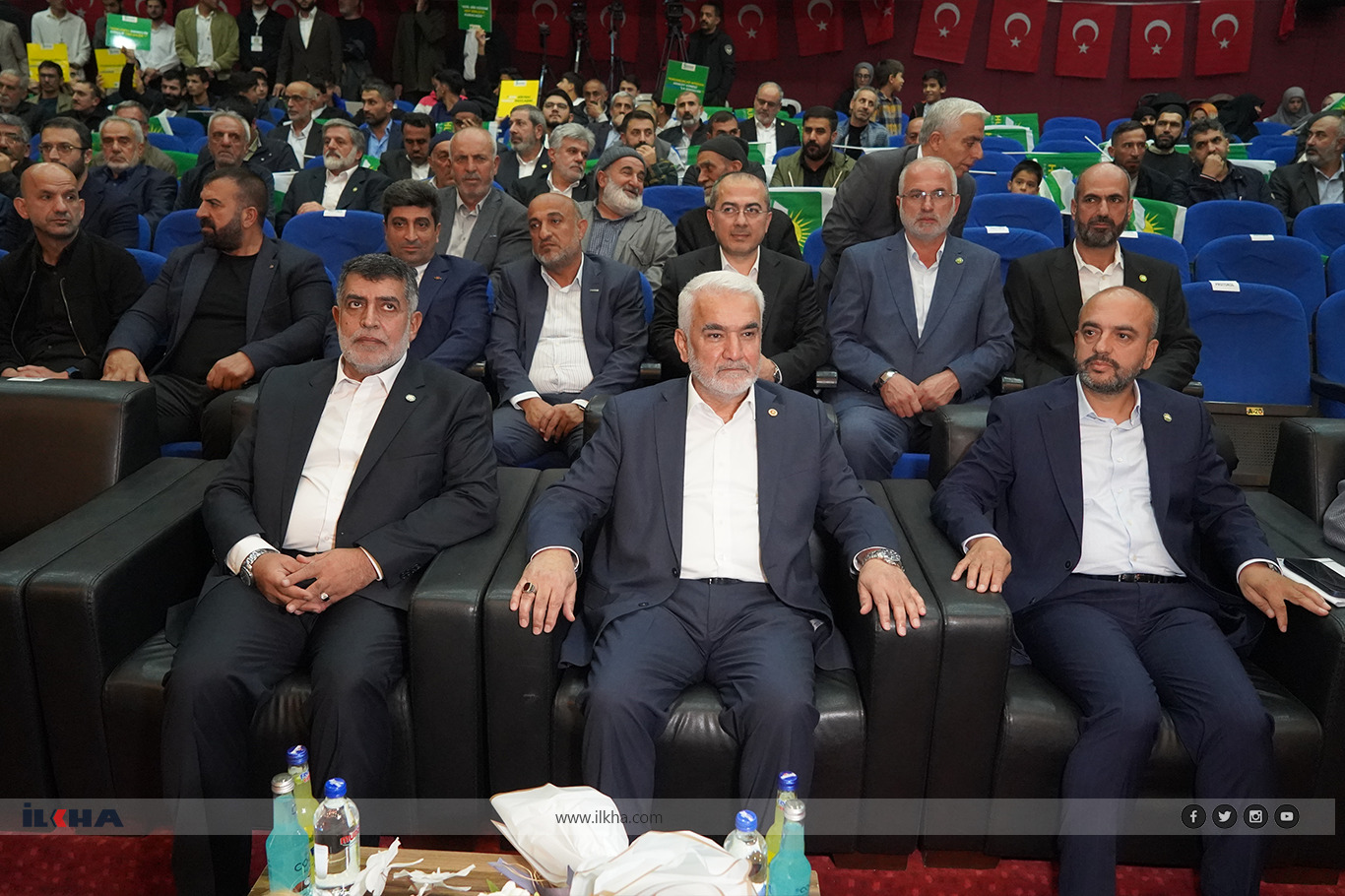
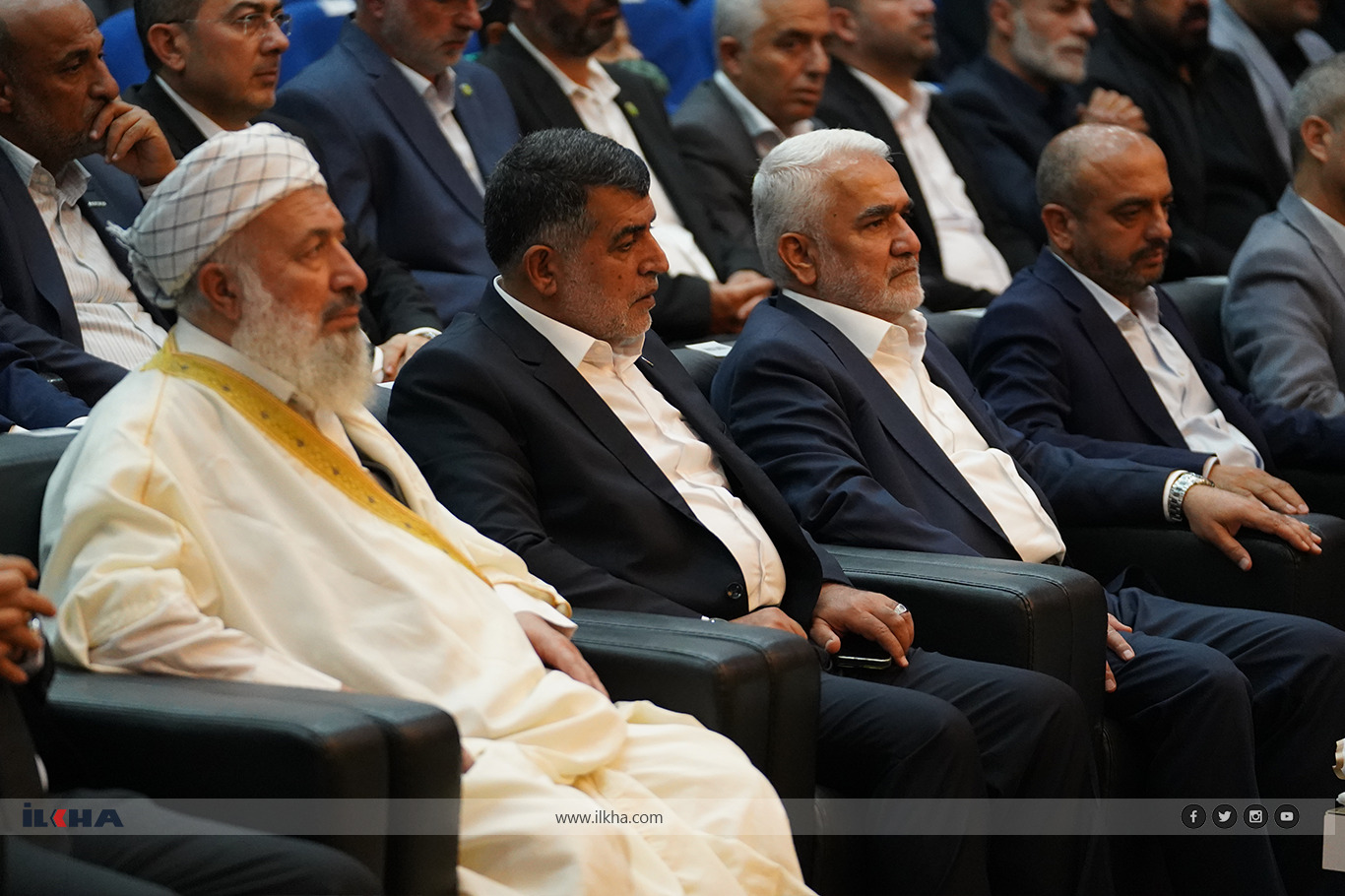
Speaking at his party’s 5th Ordinary Provincial Congress in Elazığ, held under the slogan “Honest Politics, True Justice,” Yapıcıoğlu criticized the government’s economic policies, saying high interest rates had tightened financial conditions, squeezed businesses and deepened the economic difficulties facing ordinary citizens.
He also addressed the Kurdish Question, pension payments, minimum-wage levels, family policies, constitutional reform and the humanitarian crisis in Gaza.
“The establishment of justice is our primary priority goal,” Yapıcıoğlu said, emphasizing that justice must guide political decisions and public policy.
‘Interest-Free Türkiye’ initiative
Yapıcıoğlu argued that interest payments were placing an excessive burden on the national budget and called for a fundamental change in the economic system.
He said interest expenditures were projected to reach approximately 4 trillion Turkish liras in the 2027 budget, compared with 2.742 trillion liras initially projected for 2026. He also cited estimates indicating that interest payments had totalled $743 billion over the previous 23 years.
“Interest is not only the cause of inflation; it is also the cause of unemployment, injustice in income distribution and social decay,” he said.
Calling for an “Interest-Free Türkiye” process alongside efforts to end terrorism, Yapıcıoğlu argued that raising interest rates had failed to ease the economic burden on businesses and households.
He said higher borrowing costs had placed pressure on tradespeople and manufacturers, contributing to payment difficulties, business restructuring and job losses.
According to Yapıcıoğlu, the underlying problem was not simply excess demand but also high production costs. He called for a departure from what he described as an exploitative economic system in which financial interests take precedence over productive activity.
 Higher pensions and a fairer minimum wage
Yapıcıoğlu said pensioners and low-income households were struggling to meet their basic needs, despite having contributed to the country throughout their working lives.
He cited a figure of 17.1 million pensioners in Türkiye and argued that the lowest pension should not fall below the minimum wage.
He also criticized the legal definition of the minimum wage for failing to account for workers’ family responsibilities.
“The minimum wage should not be below the hunger threshold,” he said, calling for wages sufficient to cover the food expenses of a family of four.
Yapıcıoğlu also urged the government to introduce stronger social support measures for young people seeking to marry, arguing that existing assistance was insufficient and that support offered in the form of loans could add to their financial burdens.
He proposed providing assistance as dowry grants rather than loans and called for housing and vehicle support for families with three or more children, including access to state-backed housing and exemptions from the special consumption tax on vehicle purchases.
Kurdish Question
Addressing the “Terror-Free Türkiye” process, Yapıcıoğlu said efforts to end violence must be accompanied by a comprehensive, justice-based approach to the longstanding Kurdish Question.
He recalled that the parliamentary commission established to address the process had held 21 meetings and heard more than 100 individuals and institutional representatives.
According to Yapıcıoğlu, HÜDA PAR’s report drew a clear distinction between the problem of violence and the Kurdish Question, arguing that the two should not be treated as identical issues.
He also referred to a 12-article framework law that he said had been passed by parliament with 467 votes.
“The centuries-old Kurdish Question will be resolved on the basis of justice and brotherhood,” he said, expressing hope that weapons would give way to political dialogue and that a lasting solution would emerge.
Yapıcıoğlu identified firm political will, courage and sincerity as the three essential conditions for progress. He said a genuine solution required addressing the issue as a whole rather than focusing only on aspects that suited individual political interests.
He also stressed that ending violence alone would not be sufficient.
“The goal is not only the end of violence, but the re-establishment of the law of brotherhood,” he said, arguing that justice and equal treatment were essential to strengthening social unity.
 Measures against drug trafficking and stronger family policies
Yapıcıoğlu also called for tougher measures against drug trafficking, particularly when public officials were involved.
He referred to several cases involving alleged drug use or trafficking among public employees and called for harsher penalties for officials involved in drug-related crimes. He also proposed that people struggling with drug addiction should not be assigned to public service until they had received treatment and recovered.
Turning to family policy, Yapıcıoğlu argued that more concrete measures were needed to help families remain together and ease the financial pressures facing young couples.
He proposed establishing a family arbitration mechanism to help resolve domestic disputes before they reached the courts, saying mediation could prevent some marriages from breaking down.
He also called for greater financial assistance for young people planning to marry and for families with three or more children.
A new civilian constitution
Yapıcıoğlu described Türkiye’s 1982 Constitution, drafted following the 1980 military coup, as outdated and called for a new civilian constitution reflecting the country’s values and social diversity.
He argued that the new constitution should protect citizens’ religious beliefs, identities and differences, adding that the state should not make people feel excluded because of their faith or identity.
“This nation needs a new constitution,” he said, calling for a constitutional framework that guarantees equal treatment and respects society’s values.
Gaza Genocide
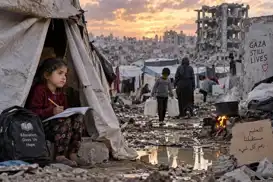
Yapıcıoğlu also condemned Israel’s actions in Gaza, arguing that the humanitarian crisis had continued despite ceasefire efforts and agreements.
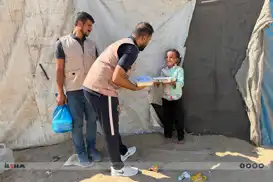
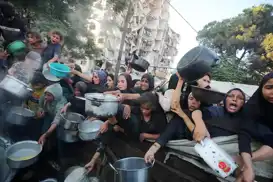
He highlighted widespread hunger and malnutrition, particularly among children, pregnant women and older people, and called for increased humanitarian assistance and unrestricted access to essential supplies.
He cited figures indicating that 158,000 children were suffering from acute malnutrition, including 28,000 in life-threatening condition. These figures were presented in his speech.
Yapıcıoğlu accused Israel of continuing attacks despite the ceasefire arrangements and criticized what he described as the failure to ensure the delivery of promised humanitarian aid.
He also called for the entry of construction materials and heavy machinery to enable reconstruction and the recovery of bodies trapped beneath destroyed buildings.
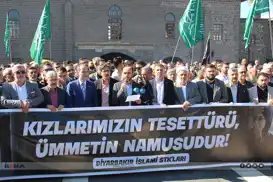
Describing Zionism as a global threat, Yapıcıoğlu urged the international community to take stronger action in response to the suffering of Palestinians.
He further called on Muslim-majority countries to strengthen cooperation and establish greater unity in confronting international injustice.
“The foundation of our belief is tawhid and justice,” he said, urging Islamic countries to expand cooperation and calling for the proposed Mecca Alliance to include all Islamic countries rather than remaining limited to three.
During his address, Yapıcıoğlu also highlighted his party’s electoral performance in Elazığ, saying its vote had increased fivefold compared with the 2014 local elections and approximately doubled compared with the 2018 parliamentary elections.
He thanked party members for their efforts and called for greater grassroots engagement, including door-to-door visits to listen to residents’ concerns.
He said HÜDA PAR intended to expand its activities beyond election periods and strengthen its connection with the public.
At the congress, current Elazığ Provincial Chairman Metin Suiçer was re-elected after receiving the votes of all delegates in a single-list election. (ILKHA)
LEGAL WARNING: All rights of the published news, photos and videos are reserved by İlke Haber Ajansı Basın Yayın San. Trade A.Ş. Under no circumstances can all or part of the news, photos and videos be used without a written contract or subscription.
Yemeni Foreign Minister and Expatriates Afrah Abdulaziz Al-Zouba will visit Türkiye on Saturday, the Turkish Foreign Ministry announced.
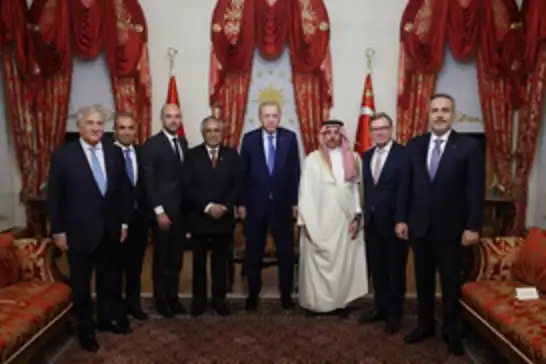
Turkish President Recep Tayyip Erdoğan received a group of foreign ministers attending the R4+E3 Foreign Ministers’ Meeting in Istanbul on Friday, including Italy’s top diplomat, at the Dolmabahçe Presidential Office.
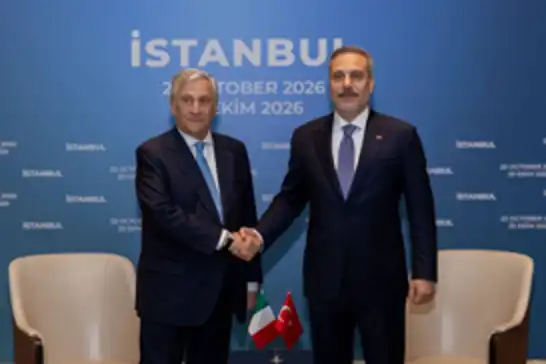
Turkish Foreign Minister Hakan Fidan held talks with Italian Deputy Prime Minister and Foreign Minister Antonio Tajani in Istanbul, discussing regional developments and diplomatic cooperation.