Islamic NGOs in Diyarbakır denounce hijab ban on female students in Azerbaijan
 13 oC

Güneşli

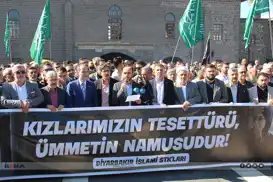
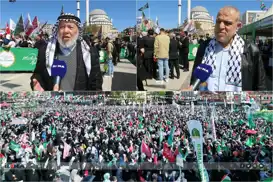
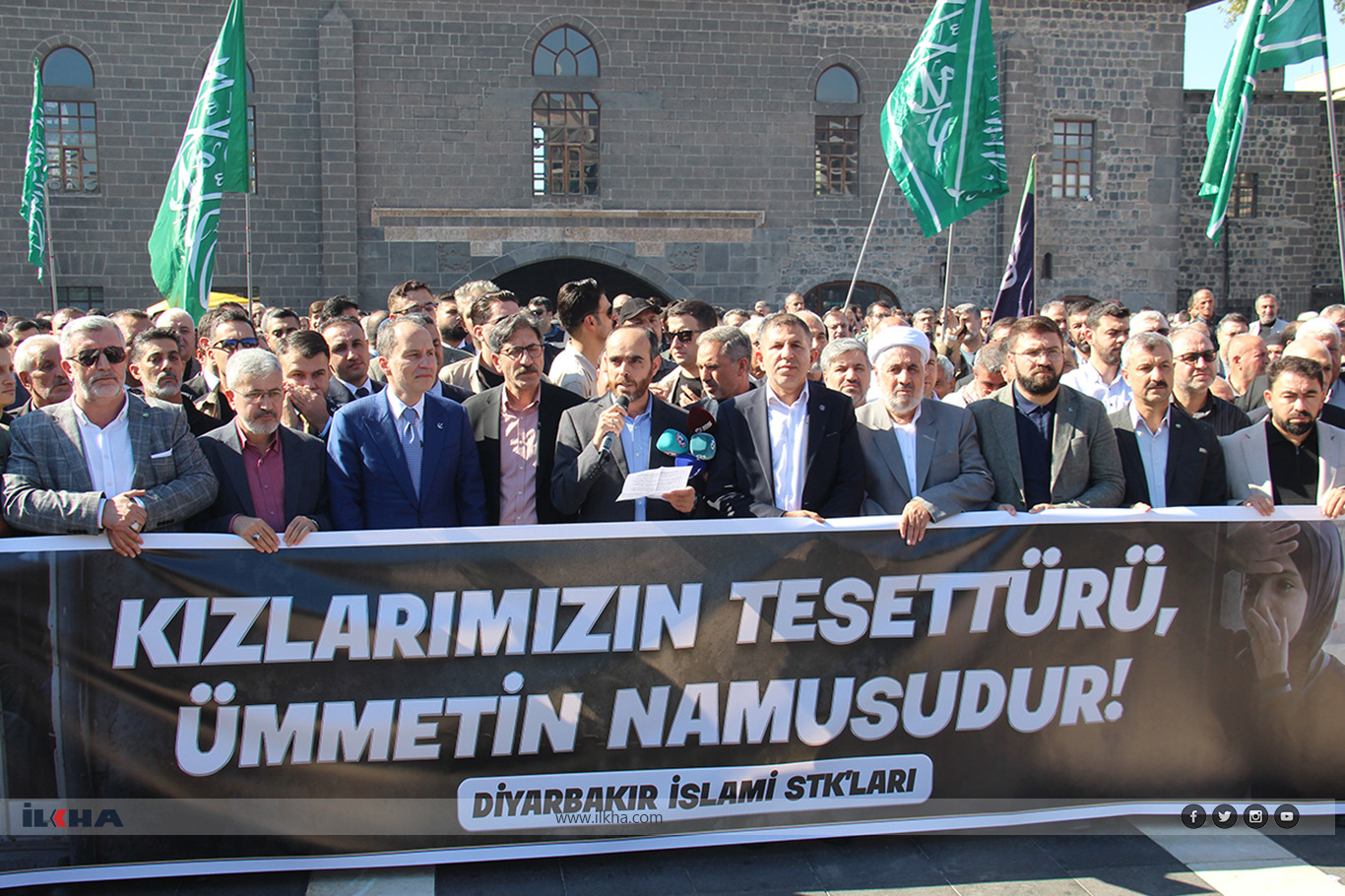
Islamic civil society organizations in southeastern Türkiye’s Diyarbakır province staged a rally outside the historic Grand Mosque (Ulu Cami) on Friday, condemning restrictions preventing headscarf-wearing female students from entering schools in Azerbaijan and calling for their right to education and freedom of religious expression to be respected.
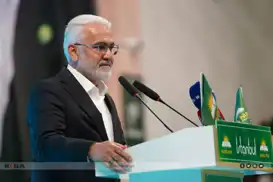
The rally, held after Friday prayers in the Sur district, was attended by Fatih Erbakan, chairman of the New Welfare Party (Yeniden Refah Party). A joint press statement on behalf of Diyarbakır’s Islamic civil society organizations was delivered by Fatih Taş, chairman of the Ideal Education Foundation.
Taş described reports of female students being barred from primary and secondary schools over their headscarves as deeply troubling, urging Azerbaijani authorities to end the restrictions and address the grievances of affected students and their families.
He stressed that freedom of belief and the right to education are fundamental rights recognized under international legal instruments, including the Universal Declaration of Human Rights and the UN Convention on the Rights of the Child.
“Depriving a student of the right to education because of the attire she chooses in accordance with her religious belief clearly contradicts the understanding of justice,” Taş said.
‘We have experienced this injustice before’
Drawing parallels with Türkiye’s history of restrictions on religious dress, Taş said the reported treatment of Muslim students in Azerbaijan had revived painful memories of the February 28 process, a period associated with severe restrictions on religious expression and the headscarf ban in Turkish educational institutions.
He recalled how female students in Türkiye were prevented from attending classes, faced pressure at school entrances and endured psychological distress because of their headscarves.
“As Muslims in Türkiye, whenever we hear the news of our young girls in Azerbaijan who are turned away from school doors because of their headscarves and torn from their desks under the pretext of ‘school uniforms,’ our hearts ache and we feel a deep pain,” he said.
“We are not unfamiliar with this film; we have lived this scenario before.”
Taş argued that Türkiye’s own experience should reinforce solidarity with Muslim women and girls facing restrictions on their religious freedom elsewhere.
‘Silence exposes double standards’
Taş criticized Azerbaijani officials who have reportedly characterized reactions to the restrictions as interference in the country's internal affairs, arguing that defending fundamental rights should not be dismissed as political interference.
He also accused international actors of applying double standards by raising concerns about girls’ education in Afghanistan while, in his view, failing to respond with comparable urgency to reports of headscarf-wearing students being excluded from schools in Azerbaijan.
“Today, the fact that global public opinion and some international organizations oppose the regulations made in educational institutions in Afghanistan, claim that girls are being deprived of the right to education, and bring this issue to the world agenda, while remaining in deep silence in the face of the exclusion of our headscarf-wearing daughter students from schools in Azerbaijan right next door, is pure global hypocrisy and double standards,” he said.
Taş emphasized that defending the rights of Muslim communities must be consistent, regardless of where violations occur.
He cited the suffering of Palestinians in Gaza, assimilation policies affecting Uyghurs in East Turkestan and the plight of oppressed communities in Syria and Afghanistan as examples of struggles that require international solidarity.
“Defending the belief and education rights of our Muslim brothers and sisters in Azerbaijan is also our conscientious duty,” he said.
Calls for Turkish government to intervene diplomatically
Highlighting the historical, religious and cultural ties between Türkiye and Azerbaijan, Taş urged Turkish President Recep Tayyip Erdoğan and government officials to use diplomatic channels to press for an end to the restrictions.
He called on Ankara to engage with Azerbaijani authorities in a spirit of brotherhood and mutual respect, emphasizing that the close relationship between the two countries should help resolve the issue.
The statement also called on Türkiye’s parliament and government to place freedom of the headscarf under explicit constitutional protection.
Taş warned that leaving the issue dependent on administrative decisions and regulations could expose the existing freedoms to arbitrary restrictions in the future.
He said constitutional safeguards were necessary to prevent the return of practices that had previously deprived Muslim women and girls of educational opportunities.
Concluding the statement, Taş urged Azerbaijani authorities to uphold universal human rights and international legal standards, immediately end practices that prevent female students from entering schools because of their headscarves, and remedy the grievances suffered by affected families.
“One cannot prosper through oppression,” he said, calling for the protection of religious freedom and equal access to education for all students.
Tighten the article for Reuters styleMake attribution more precise throughout. (ILKHA)
LEGAL WARNING: All rights of the published news, photos and videos are reserved by İlke Haber Ajansı Basın Yayın San. Trade A.Ş. Under no circumstances can all or part of the news, photos and videos be used without a written contract or subscription.
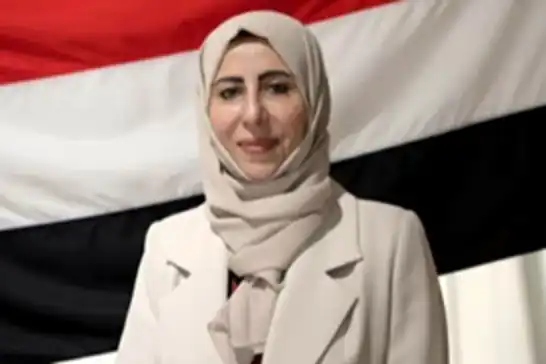
Yemeni Foreign Minister and Expatriates Afrah Abdulaziz Al-Zouba will visit Türkiye on Saturday, the Turkish Foreign Ministry announced.
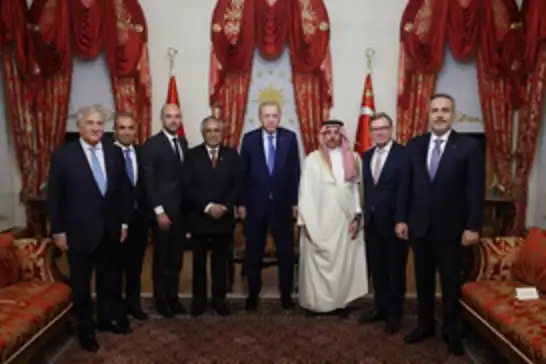
Turkish President Recep Tayyip Erdoğan received a group of foreign ministers attending the R4+E3 Foreign Ministers’ Meeting in Istanbul on Friday, including Italy’s top diplomat, at the Dolmabahçe Presidential Office.
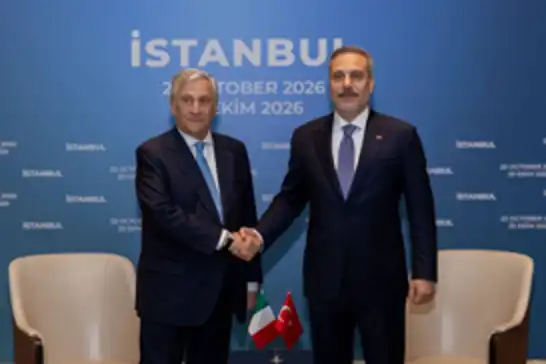
Turkish Foreign Minister Hakan Fidan held talks with Italian Deputy Prime Minister and Foreign Minister Antonio Tajani in Istanbul, discussing regional developments and diplomatic cooperation.
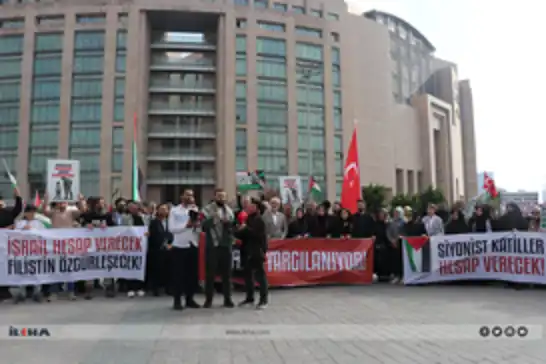
A Turkish court began proceedings on Friday against Israeli Prime Minister Benjamin Netanyahu and 34 other Israeli officials over alleged crimes committed during attacks on humanitarian aid flotillas attempting to break Israel’s blockade of Gaza, in a legal push to hold senior Israeli political and military figures accountable for alleged violations against civilian activists.