Uganda launches new phase of trials for Bundibugyo Ebola vaccine
 13 oC
13 oC 
Güneşli

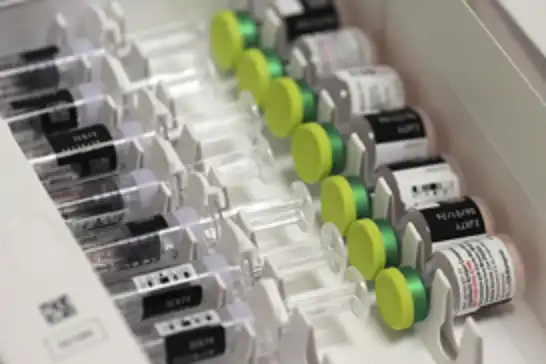
A candidate vaccine against the deadly Bundibugyo strain of Ebola has entered a new phase of clinical testing in Uganda, as health authorities accelerate efforts to develop effective vaccines against a virus that has caused one of the largest and fastest-growing Ebola outbreaks ever recorded in the Democratic Republic of the Congo (DRC).
Wessam Mankoula of the Africa Centers for Disease Control and Prevention (Africa CDC) said Thursday that Phase Ib trials of the Oxford-developed ChAdOx1 BDBV vaccine began in Uganda on Oct. 6, following the launch of Phase Ia trials in the United Kingdom in July.
A second candidate vaccine developed by Moderna also received ethical approval in Uganda on Oct. 7 to proceed to Phase Ib trials. Its Phase Ia trial began in Canada in early August, according to Mankoula.
The development of vaccines specifically targeting Bundibugyo virus is considered critical because no vaccine is currently licensed for Bundibugyo virus disease, unlike the Zaire Ebola virus for which the Ervebo vaccine is licensed. WHO says the effectiveness of Ervebo against Bundibugyo virus in humans remains unknown and recommends its use in the current outbreak only under research protocols.
Outbreak continues to expand
The vaccine trials are advancing as the outbreak in the DRC continues to spread geographically and claim lives at an alarming rate.
According to the latest WHO regional situation report, covering data through Oct. 4, the DRC had recorded 8,603 confirmed cases and 4,148 deaths, giving the outbreak a case-fatality ratio of 48.2%. The disease had spread to 64 health zones across seven provinces.
The outbreak has also crossed another international border. Kenya reported its first confirmed Bundibugyo Ebola case and associated death in a traveler arriving from the DRC, making Kenya the fourth country affected during the current outbreak after the DRC, Uganda and France. The cases in Uganda and France have since been controlled.
The US Centers for Disease Control and Prevention said Oct. 7 that the outbreak was spreading substantially faster than previous Ebola outbreaks and had become the second-largest Ebola outbreak on record. The CDC said the DRC had confirmed cases in seven provinces.
Ervebo being studied despite uncertainty
The DRC has received an initial allocation of 70,000 doses of Ervebo, the Ebola vaccine used against the Zaire species. Of those doses, 20,000 were allocated for a Phase 3 clinical trial designed to assess whether the vaccine provides protection against Bundibugyo virus, while 50,000 were intended for frontline and health workers.
The use of Ervebo reflects the urgent nature of the crisis, but health authorities have emphasized that its effectiveness against Bundibugyo virus has not been established. WHO's Strategic Advisory Group of Experts on Immunization has therefore recommended that it be used in the current outbreak within research protocols rather than as an established preventive measure.
Africa CDC said thousands of healthcare and frontline workers in the DRC have already received Ervebo under research and compassionate-use arrangements, while vaccination under one research program has been temporarily suspended because of supply shortages.
Experimental treatment also being tested
Vaccine development is taking place alongside trials of experimental treatments. WHO-backed researchers launched the PARTNERS clinical trial in July to evaluate potential treatments for Bundibugyo virus disease. The trial has been expanded to several treatment facilities in Ituri province and has enrolled hundreds of confirmed patients.
Another study is examining obeldesivir, an experimental antiviral developed by Gilead Sciences, as a post-exposure treatment for people at high risk of developing the disease after contact with infected patients.
The scale and speed of the outbreak have placed enormous pressure on health systems in affected areas, particularly in remote and conflict-affected parts of eastern DRC. WHO has warned that delayed detection, limited access to treatment and difficulties with contact tracing continue to fuel transmission.
Bundibugyo virus disease was first identified in Uganda in 2007. The current outbreak, declared in the DRC and Uganda in May, has developed into the largest Bundibugyo outbreak ever recorded and the largest Ebola outbreak recorded in the DRC regardless of Ebola species.
With transmission now reaching Kenya, health authorities are intensifying cross-border surveillance while researchers race to determine whether the new vaccine candidates can provide effective protection against a virus for which there is currently no licensed vaccine. (ILKHA)
LEGAL WARNING: All rights of the published news, photos and videos are reserved by İlke Haber Ajansı Basın Yayın San. Trade A.Ş. Under no circumstances can all or part of the news, photos and videos be used without a written contract or subscription.
More than 1,900 children have lost or been separated from one or both parents or primary caregivers since an Ebola outbreak was declared in the eastern Democratic Republic of the Congo (DRC) in May, UNICEF said.
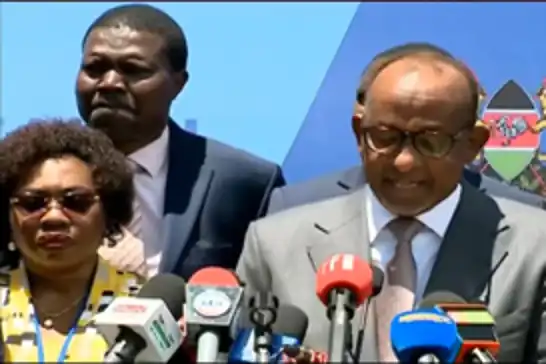
Kenya has confirmed its first Ebola case after a citizen who had been living in the Democratic Republic of Congo (DRC) died in Nairobi, prompting authorities to trace dozens of people who may have been exposed to the virus.
New York Governor Kathy Hochul declared a statewide disaster emergency on Monday over a measles outbreak, as the United States experiences its worst year for the disease in more than three decades.