CDC warns Ebola outbreak could rival West Africa’s deadliest epidemic

 13 oC
13 oC 
Güneşli

Health experts are warning that the ongoing Ebola outbreak in the Democratic Republic of Congo (DRC) and Uganda could become one of the largest Ebola epidemics in modern history unless urgent international intervention is expanded.
New analyses released by the U.S. Centers for Disease Control and Prevention (CDC) suggest that the outbreak could exceed 20,000 cases and cause thousands of deaths within the next three months if containment efforts fail to improve significantly.
The outbreak, caused by the rare Bundibugyo strain of Ebola, was declared a Public Health Emergency of International Concern (PHEIC) by the World Health Organization (WHO) in May after confirmed cross-border transmission between the DRC and Uganda. Unlike the more familiar Zaire strain, there is currently no approved vaccine or specific treatment for the Bundibugyo virus, increasing concerns among global health officials.
CDC Projects Worst-Case Scenario
According to CDC researchers, the trajectory of the outbreak depends heavily on the speed with which infected individuals are identified and isolated.
Modeling conducted by the CDC's Center for Forecasting and Outbreak Analytics indicates that if only 20 percent of infected individuals are isolated within two days of developing symptoms, the outbreak could surpass 20,000 cases within three months. Health officials warn that continued transmission beyond that period could push the epidemic beyond the scale of the devastating 2014–2016 West African Ebola outbreak, which infected approximately 28,000 people.
Researchers stress that rapid isolation, contact tracing, community engagement, and strengthened healthcare responses remain the most effective tools for slowing transmission.
Cases Continue to Rise
Recent figures from the WHO indicate that the outbreak continues to expand across eastern Congo, particularly in Ituri Province, while additional cases have been detected in neighboring Uganda. WHO reported more than 320 confirmed cases in the DRC and over 100 additional suspected cases under investigation. Uganda has confirmed multiple infections linked to cross-border transmission.
Uganda's Ministry of Health recently confirmed six new Ebola cases, bringing the country's total number of confirmed infections to 15. One death has been recorded, while several patients remain under medical care.
WHO officials have also warned that the outbreak may have begun months before it was formally identified. According to the organization, evidence suggests transmission could have started as early as January, giving the virus a significant head start before public health authorities recognized the scale of the crisis.
Conflict and Displacement Complicate Response
Health workers face significant obstacles in containing the outbreak. The affected regions of eastern Congo are plagued by armed conflict, population displacement, weak healthcare infrastructure, and difficult terrain.
WHO and humanitarian organizations have warned that insecurity is hampering contact tracing and surveillance efforts. In some communities, mistrust of authorities and resistance to public health measures have complicated containment operations, while attacks on healthcare facilities have further disrupted response efforts.
The International Organization for Migration has also cautioned that border closures could unintentionally increase transmission risks by pushing travelers toward informal and unmonitored crossing points between the DRC and Uganda.
International Community Urged to Act
Public health experts are calling for a large-scale international response similar to the effort mounted during the West African Ebola crisis more than a decade ago.
Jennifer Nuzzo, director of the Pandemic Center at Brown University School of Public Health, said the CDC's findings confirm fears that the outbreak is moving in a dangerous direction and could worsen dramatically without stronger intervention.
Other epidemiologists caution that while the worst-case projections are not inevitable, the possibility of major urban outbreaks remains a serious concern. Eastern Africa's dense population centers and extensive transportation networks could allow the virus to spread more rapidly if containment measures fail.
Risk Beyond Africa Remains Low
Despite the alarming projections, health authorities emphasize that the immediate risk to countries outside the affected region remains limited.
The CDC and WHO continue to assess the risk to the United States and Europe as low because Ebola spreads through direct contact with infected bodily fluids rather than through the air. However, officials acknowledge that the risk could increase if transmission reaches major international transport hubs.
Both organizations continue to support surveillance, laboratory testing, treatment centers, and cross-border preparedness efforts in the DRC and Uganda.
“We've responded to Ebola outbreaks before. We know how to end this,” CDC officials said, emphasizing that rapid action remains the key to preventing the current epidemic from becoming one of the worst Ebola outbreaks ever recorded. (ILKHA)
LEGAL WARNING: All rights of the published news, photos and videos are reserved by İlke Haber Ajansı Basın Yayın San. Trade A.Ş. Under no circumstances can all or part of the news, photos and videos be used without a written contract or subscription.

Obesity rates in Türkiye have continued to rise, with new official data showing that more than one in five adults is now classified as obese, while physical inactivity remains widespread and tobacco consumption is increasing.
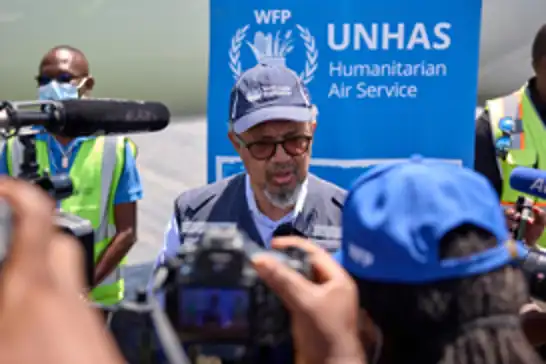
World Health Organization Director-General Dr. Tedros Adhanom Ghebreyesus has called on countries imposing travel restrictions and border closures in response to the ongoing Ebola outbreak to reconsider their measures, warning that such actions could undermine transparency and global solidarity efforts.
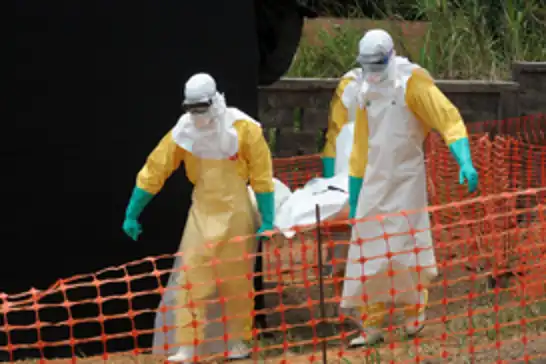
A rapidly expanding Ebola outbreak utilizing a rare, vaccine-resistant strain has surpassed 1,000 suspected cases across the Democratic Republic of the Congo (DRC) and neighboring Uganda, triggering a massive international containment effort.