World Bank reports 2.7% GDP growth in Afghanistan amid economic resilience
 13 oC
13 oC 
Güneşli

Afghanistan has achieved an average Gross Domestic Product (GDP) growth of 2.7%, according to the World Bank's latest report, highlighting moderate economic progress despite ongoing challenges.
Sakhi Ahmad Paiman, First Deputy of the Afghanistan Chamber of Industries and Mines, expressed optimism about the country's economic trajectory. “There were significant concerns initially regarding Afghanistan’s economy. However, we have reached a stage where GDP growth is positive, monetary stability is maintained, and inflation has decreased,” Paiman stated, pointing to these factors as signs of economic stability.
Abdul Latif Nazari, Deputy Minister of Economy, credited several government initiatives for the improvement. These include efforts to eradicate corruption and implement large-scale economic and employment-focused projects. “These measures have been crucial in reducing poverty and improving livelihoods,” Nazari emphasized.
Over the past three years, Afghanistan has bolstered its trade relations with neighboring countries. This has resulted in a significant increase in both exports and imports, reinforcing the resilience of Afghanistan’s economy despite its challenging circumstances.
The World Bank's report and officials' statements underline a cautious but hopeful outlook for Afghanistan’s economic future, with key measures in place to sustain progress and foster long-term stability. (ILKHA)
LEGAL WARNING: All rights of the published news, photos and videos are reserved by İlke Haber Ajansı Basın Yayın San. Trade A.Ş. Under no circumstances can all or part of the news, photos and videos be used without a written contract or subscription.
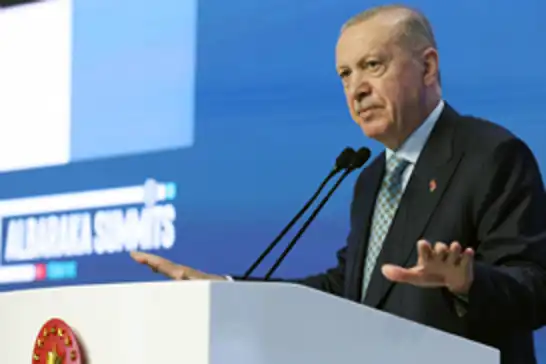
Turkish President Recep Tayyip Erdoğan has said that participation finance represents a more just and secure economic model not only for Muslim countries but for the global financial system as a whole.

Türkiye's Treasury and Finance Minister Mehmet Şimşek said inflation continued its downward trend in May, with consumer prices rising 1.7 percent on a monthly basis and 32.6 percent annually, according to the latest official data.

Turkish annual inflation rose to 32.61% in May, while monthly consumer prices increased by 1.71%, data from the Turkish Statistical Institute showed on Friday.

Türkiye’s trade deficit narrowed to its lowest level in nine months in May, as a sharper decline in imports offset weaker export performance, according to data released by the Ministry of Trade.