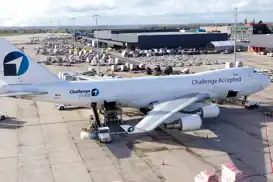
Türkiye’s trade deficit falls to nine-month low in May as import slowdown outpaces exports decline
 13 oC
13 oC 
Güneşli

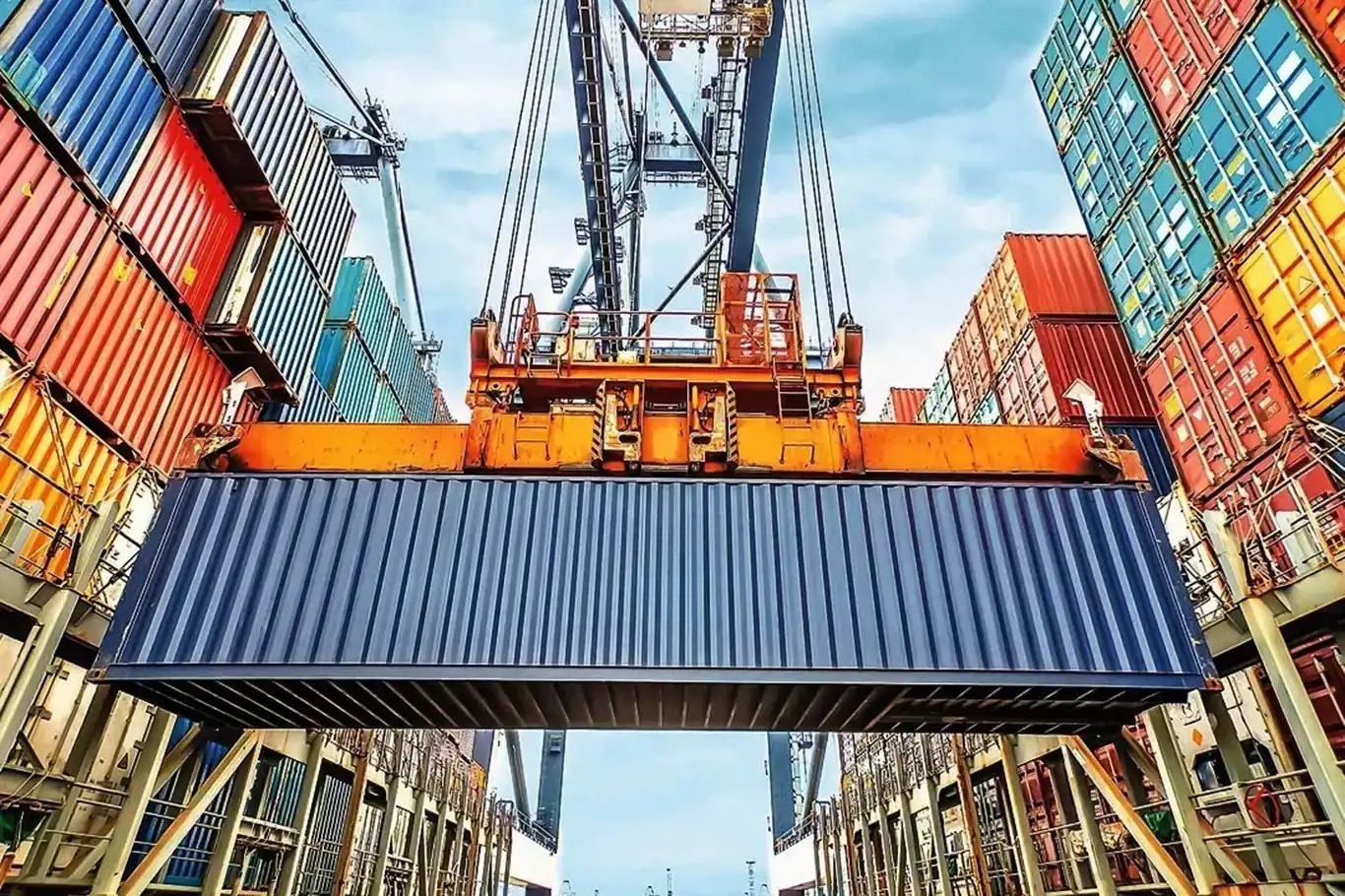
Türkiye’s trade deficit narrowed to its lowest level in nine months in May, as a sharper decline in imports offset weaker export performance, according to data released by the Ministry of Trade.
Exports stood at $22.5 billion in May, while imports totaled $28.1 billion, resulting in a monthly trade deficit of $5.6 billion. The export-to-import coverage ratio rose to 80.1 percent, marking its highest level in the last 20 months and signaling an improvement in external trade balance indicators.
Despite having six fewer working days compared to the same month last year, Türkiye’s exports declined by 9.3 percent year-on-year to $22.504 billion, making it the third-highest May export performance on record. Officials also highlighted that daily exports reached an all-time high of $2.4 billion on May 22.
Annualized goods and services exports reached $396 billion as of May, reflecting Ankara’s continued efforts to maintain export momentum despite slowing global demand and regional economic uncertainties.
Trade deficit continues narrowing
Imports recorded a sharper decline than exports, falling 10.7 percent year-on-year to $28.103 billion.
As a result, the trade deficit contracted by 15.7 percent, declining from $6.64 billion in the same month last year to $5.6 billion. The improvement pushed the export coverage ratio higher from 78.9 percent to 80.1 percent.
When energy and gold imports are excluded, the export coverage ratio climbed to 97.6 percent, indicating a significantly stronger underlying trade balance.
Exports exceed $111 billion in first five months
Between January and May, exports increased modestly by 0.3 percent to reach $111.2 billion.
Imports during the same period rose 1.2 percent to $153.9 billion, pushing the cumulative trade deficit to $42.7 billion — a 3.6 percent increase compared to the same period last year.
The export-to-import coverage ratio for the first five months stood at 72.2 percent.
Annual trade volume surpasses $640 billion
Data covering the June 2025–May 2026 period showed annualized exports rising 3 percent to $273.5 billion, while imports increased 4.2 percent to $367.2 billion.
As a result, Türkiye’s total foreign trade volume exceeded $640 billion, reaching $640.7 billion over the twelve-month period. However, the annual trade deficit widened by 7.8 percent to $93.6 billion, highlighting continuing structural imbalances despite recent monthly improvements.
Germany remained Türkiye’s largest export destination in May with $1.7 billion in shipments, followed by the United States at $1.5 billion and Italy at $1.2 billion.
Manufacturing retained the largest share of exports at $21.3 billion, while agriculture, forestry, fishing, mining, and quarrying sectors contributed smaller but significant shares to overall trade performance.
Economists note that the recent narrowing in the trade deficit could support macroeconomic stabilization efforts, although sustaining improvements may depend on export competitiveness, energy costs, and global demand conditions in the coming months. (ILKHA)
LEGAL WARNING: All rights of the published news, photos and videos are reserved by İlke Haber Ajansı Basın Yayın San. Trade A.Ş. Under no circumstances can all or part of the news, photos and videos be used without a written contract or subscription.
President Recep Tayyip Erdoğan has said that reducing foreign dependency in energy remains one of Türkiye’s top priorities, emphasizing that the country is accelerating its transition toward domestic and renewable energy resources.

The Elazığ branch of the Association of Independent Industrialists and Businessmen (HAKSİAD) has called on local entrepreneurs, industrialists, and investors to participate in the 6th Traditional HAKSİAD Business World Summit, scheduled to take place in Ankara's Kızılcahamam district between June 25 and 28.

Türkiye’s state energy company BOTAŞ and Azerbaijan’s SOCAR have signed a long-term natural gas supply agreement that will deliver 33 billion cubic meters (bcm) of Azerbaijani gas to Türkiye over 15 years, beginning in 2029.