China’s Muslims: A centuries-old civilisation facing assimilation pressures
 13 oC

Güneşli

For more than fourteen centuries, Muslims in China have been an important part of the country’s historical, scientific, commercial and cultural landscape. From the ancient trade routes of the Silk Road to imperial courts, from maritime expeditions to centres of Islamic scholarship, Muslim communities have left a lasting mark on Chinese civilisation.
Today, however, this centuries-old presence faces increasing debates over cultural identity, religious practices and the preservation of traditions amid policies critics describe as assimilation efforts.
China’s Muslim population is estimated differently by official and independent sources, with independent estimates generally placing the number higher than official figures. The country is home to several Muslim communities, including Uyghurs, Hui, Kazakhs, Kyrgyz, Tatars and other ethnic groups.
The Chinese government says its policies aim to promote national unity, social stability and economic development, while international organisations and human rights groups argue that some practices have placed significant restrictions on religious expression, cultural traditions and minority identities.
Islam’s fourteen-century journey in China
Islam’s arrival in China dates back to the early centuries of Islam. Historical sources record that during the Tang Dynasty, Muslim envoys and merchants reached China through both land and maritime trade routes, establishing one of the earliest long-term connections between Islamic civilisation and Chinese society.
Arab and Persian merchants settled in major port cities such as Guangzhou, Quanzhou and Hangzhou, where they established communities, mosques and commercial networks. The Huaisheng Mosque in Guangzhou and the Great Mosque of Xi’an remain among the most recognised symbols of this historical presence.
Over centuries, Muslims contributed to China’s scientific, administrative and cultural development. During the Yuan Dynasty (1271-1368), Muslim scholars, administrators and scientists played important roles in government institutions, particularly in fields such as astronomy, medicine and finance.
During the Ming Dynasty (1368-1644), Chinese Muslim communities developed a unique cultural synthesis between Islamic traditions and Chinese civilisation. Muslim scholar-officials produced works known as “Han Kitab”, combining Islamic thought with Chinese philosophical concepts.
The famous Muslim admiral Zheng He, who led large maritime expeditions during the early 15th century, became one of the most prominent figures associated with China’s Muslim heritage.
From historical integration to modern identity debates
For centuries, Muslim communities in China experienced different levels of integration with the wider society. However, political changes, particularly during the Qing Dynasty and later ideological transformations in the 20th century, created new challenges for religious and ethnic minorities.
After the establishment of the People’s Republic of China in 1949, religious institutions were placed under state control. During the Cultural Revolution (1966-1976), many religious sites were closed or damaged, while religious practices faced severe restrictions.
Following economic reforms after 1978, some religious activities resumed and many mosques were restored. However, since the 2010s, policies centred around national security, ethnic unity and the “Sinicization of religion” have increased discussions about the future of Muslim identity in China.
Under the Sinicization policy, Chinese authorities have sought to ensure that religious practices conform to what they describe as Chinese cultural and social values. Critics argue that these measures have affected religious expression, mosque architecture and cultural traditions.
Uyghurs and the situation in Xinjiang
The most internationally debated aspect of China’s Muslim policies concerns the Xinjiang Uyghur Autonomous Region, known by many Uyghurs as East Turkestan.
Uyghurs are a Turkic-speaking Muslim community with deep historical ties to Central Asian Islamic civilisation. Cities such as Kashgar, Hotan and Turpan were historically important centres of trade, scholarship and religious learning.
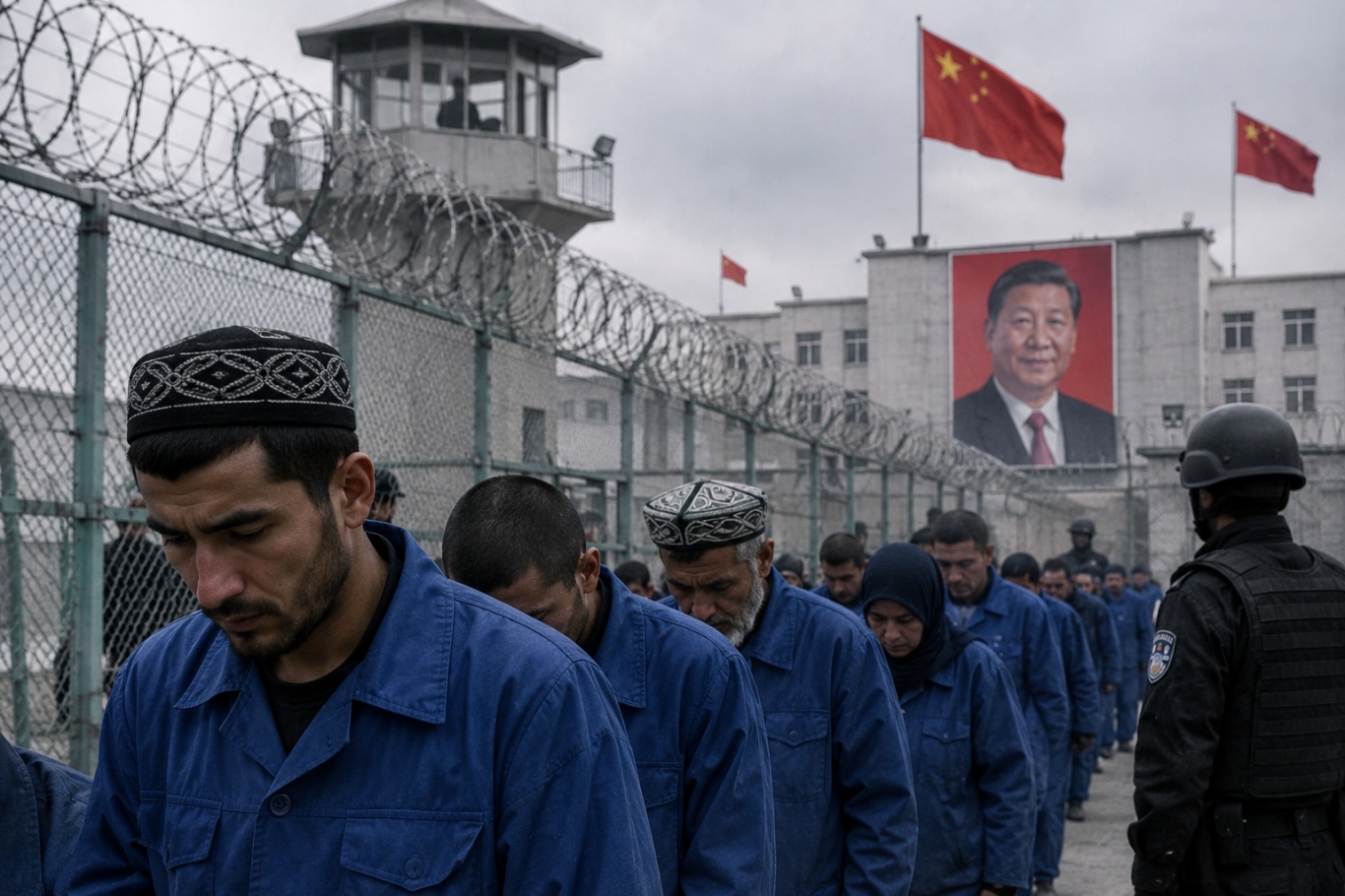
Since 2017, Chinese authorities have implemented extensive security measures in Xinjiang under the stated objectives of combating terrorism and extremism. International organisations and human rights groups have reported mass detention campaigns, surveillance practices and restrictions affecting religious and cultural life. China rejects allegations of human rights abuses and says the measures are necessary for security and development.
The United Nations human rights office has documented serious concerns regarding allegations of violations against Uyghurs and other predominantly Muslim communities in Xinjiang, including issues related to arbitrary detention, cultural rights and religious practices.
Reports by international organisations have also raised concerns over the use of advanced surveillance systems, biometric data collection and restrictions affecting language and cultural practices.
One of the most discussed issues has been the detention of large numbers of Uyghurs and other Muslim minorities in facilities described by Chinese authorities as vocational education and training centres. International reports have cited estimates of more than one million people detained, while Beijing rejects these claims and says such programmes are aimed at preventing extremism and improving employment opportunities.
Hui Muslims and the expansion of Sinicization policies
While the situation of Uyghur Muslims in Xinjiang has received the greatest international attention, Hui Muslims, who represent one of China’s largest Muslim communities, have also become part of discussions surrounding religious regulation and cultural transformation.
Unlike Uyghurs, Hui Muslims are generally Chinese-speaking and have historically lived more integrated within broader Chinese society. Concentrated mainly in regions such as the Ningxia Hui Autonomous Region, Gansu, Qinghai and Yunnan, Hui communities have maintained Islamic traditions while developing a distinctive cultural identity shaped by centuries of interaction with Chinese civilisation.
However, in recent years, policies linked to the “Sinicization of religion” have also affected Hui communities. International reports have pointed to measures including changes to mosque architecture, removal of some Islamic symbols and increased administrative control over religious activities.
The transformation of mosque structures has become one of the most visible aspects of these policies. In some regions, domes, minarets and Arabic inscriptions have been removed or altered, with authorities promoting architectural styles described as reflecting Chinese characteristics. Supporters of the policy argue that religious sites should reflect local culture, while critics say such measures weaken the historical identity of Islamic communities.
Religious education and the role of Islamic institutions have also faced tighter regulations. Reports indicate that religious officials are subject to greater oversight, while religious activities are required to comply with state-defined frameworks on social values and national identity.
Labour programmes and the debate over economic transformation
Economic policies and employment programmes have become another important dimension of discussions surrounding China’s approach toward Muslim communities, particularly in Xinjiang.
Chinese authorities describe labour transfer programmes as part of poverty reduction and regional development efforts. Beijing says these initiatives provide employment opportunities, increase household incomes and help modernise rural areas by connecting workers with factories and industrial sectors. Chinese officials have repeatedly rejected allegations of forced labour, stating that employment transfers are based on voluntary participation and aimed at improving living standards.
However, international researchers, human rights organisations and several governments have raised concerns over the implementation of these programmes, arguing that some labour transfers in Xinjiang have taken place within a broader environment of strict social control, surveillance and pressure on ethnic minority communities. Reports have highlighted concerns particularly regarding Uyghurs and other Muslim minorities working in sectors such as cotton, textiles, agriculture and manufacturing.
Studies examining Xinjiang’s labour policies have pointed to programmes in which rural populations were transferred to industrial workplaces, sometimes through government-organised mechanisms involving local authorities and companies. Critics argue that these practices have affected traditional livelihoods, weakened community structures and increased state influence over economic and social life.
The textile and cotton industries have become among the most internationally discussed areas in this debate. Xinjiang is one of the world’s major cotton-producing regions, and concerns over labour conditions have led some countries and companies to review supply chains linked to the region. China rejects accusations of systematic exploitation and argues that economic development programmes have helped reduce poverty and create new opportunities for local communities.
Beyond economic concerns, critics argue that employment policies cannot be separated from wider debates over cultural identity, language preservation and religious life. They claim that moving communities into state-managed industrial systems may contribute to deeper social transformation. Chinese authorities, however, maintain that such policies are focused on development, stability and improving living standards.
The debate over labour programmes therefore remains one of the most contested aspects of China’s policies in Xinjiang, reflecting a broader disagreement between Beijing’s emphasis on development and security and international criticism over minority rights and cultural preservation.
Technology, surveillance and changing social structures
The use of advanced technology has become another major point of discussion regarding governance in Xinjiang.
International reports have described extensive surveillance systems, including widespread camera networks, biometric data collection and digital monitoring practices, which critics say have created an environment of intense state control. Chinese authorities, however, maintain that security measures are necessary to combat terrorism, extremism and threats to public order.
The expansion of digital monitoring has raised questions about the balance between security policies and individual freedoms. Critics argue that technologies originally developed for urban management and public safety have become tools that deeply affect everyday life, religious practices and community relations.
The issue of education has also attracted international attention. Reports have raised concerns over policies affecting Uyghur language education and the relationship between children and their cultural heritage, while Chinese authorities say their education policies aim to improve opportunities and promote national unity.
China’s global rise and the debate over minority rights
China’s emergence as a global economic and technological power has brought renewed attention to how the country manages ethnic and religious diversity at home.
Beijing presents its policies as efforts to maintain stability, prevent extremism and promote development across all regions. The Chinese government rejects accusations that its policies target Islam or Muslim communities, arguing that all religions must adapt to China’s national conditions.
However, international critics argue that measures affecting Uyghurs and other Muslim communities have gone beyond security concerns and have created pressure on religious expression, cultural traditions and ethnic identities.
The debate reflects a broader question facing modern China: how a country seeking a stronger global role balances national unity policies with the preservation of diverse historical and cultural identities.
A centuries-old heritage facing a new era of challenges
The history of Muslims in China represents a long journey of interaction, contribution and cultural exchange. From Silk Road merchants to scholars, administrators and explorers, Muslim communities have played a significant role in China’s historical development.
Today, millions of Muslims continue to live across China, preserving religious traditions and cultural identities shaped over centuries. At the same time, policies aimed at strengthening national integration have created intense debates over the future of Muslim heritage in the country.
The future of China’s Muslim communities will depend on how Beijing balances security policies, national integration goals and the preservation of the historical and cultural identities of millions of Muslims living across the country.(ILKHA)
LEGAL WARNING: All rights of the published news, photos and videos are reserved by İlke Haber Ajansı Basın Yayın San. Trade A.Ş. Under no circumstances can all or part of the news, photos and videos be used without a written contract or subscription.
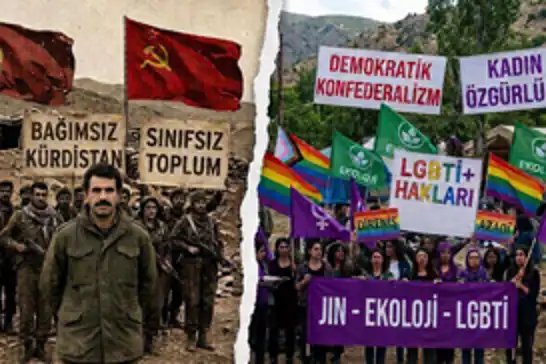
The PKK's shift from Marxist-Leninist national liberation to feminism and LGBTQ+ activism raises questions about its departure from founding objectives and the growing disconnect between its ideological agenda and the religious, cultural and social values of conservative Kurdish society.
As the occupation regime continues to violate the ceasefire and intensify its attacks on the Gaza Strip, Palestinians remain trapped in an ever-deepening humanitarian catastrophe marked by bombardment, hunger, displacement and collapsing living conditions.
Renewed calls for a comprehensive political ethics law have brought transparency, accountability and merit-based governance back to the centre of Türkiye’s political debate, following recent remarks by MHP leader Devlet Bahçeli.