Trump envoys meet Putin in Moscow after Ukraine peace talks end without breakthrough
 13 oC

Güneşli

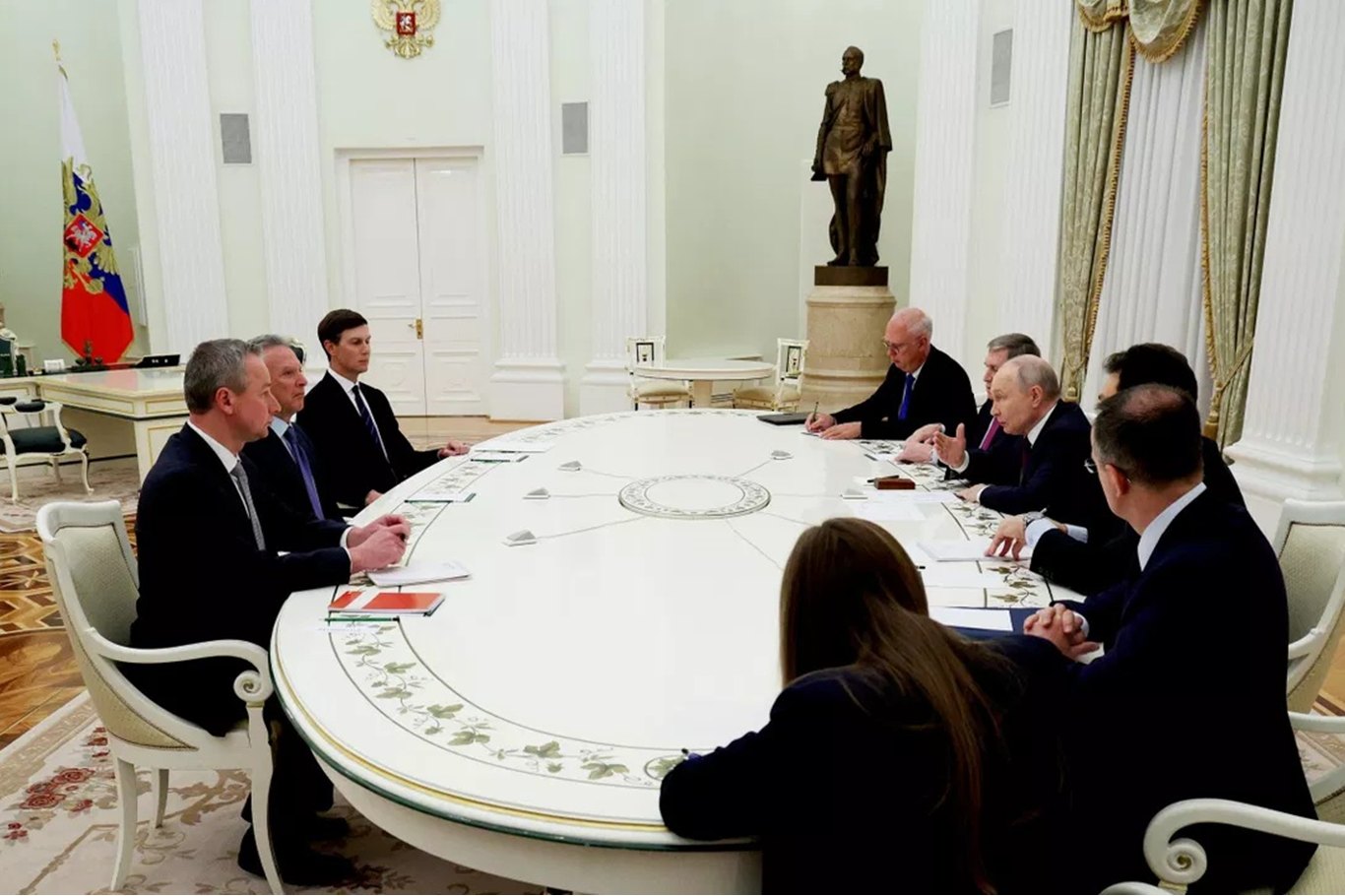
US President Donald Trump's special envoys Jared Kushner and Steve Witkoff met Russian President Vladimir Putin in Moscow on Thursday, seeking to revive negotiations to end the war in Ukraine after two days of US-mediated talks in Abu Dhabi failed to produce a major breakthrough.
The Kremlin meeting followed the first direct trilateral negotiations between Russian, Ukrainian and US representatives in nine months. Although the discussions resulted in an agreement on a large-scale prisoner-of-war exchange, major disagreements over territorial control and post-war security arrangements remain unresolved.
Russian presidential aides Yuri Ushakov, Kirill Dmitriev and Vladimir Medinsky were also involved in the Moscow meeting, according to Russian state media reports.
Speaking to reporters ahead of the talks, Kushner said Washington saw "some openings and some opportunities" for progress. He said the envoys would brief Putin on the Abu Dhabi discussions before travelling to Dublin to meet Ukrainian President Volodymyr Zelenskyy.
Kushner said one of Washington's objectives was to secure Moscow's approval for European representatives to participate in future negotiations, particularly those addressing Europe's broader security arrangements.
Prisoner exchange offers limited progress
The Abu Dhabi negotiations, held on November 10–11, produced an agreement in principle on a major prisoner-of-war exchange, although the exact number of detainees and the timing of the swap were still being finalised.
Rustem Umerov, head of Ukraine's negotiating delegation, said the discussions covered possible steps toward a broader peace agreement and Ukraine's post-war reconstruction.
"The first step — to end the war and ensure security guarantees for Ukraine," Umerov said in a post on X.
Kushner described the negotiations as serious and productive but acknowledged that significant differences remained between the parties.
The most difficult issues include the future of Russian-occupied Ukrainian territories, security guarantees for Kyiv and the broader European security framework.
Moscow continues to demand that Ukraine withdraw from parts of the eastern Donbas region still under Kyiv's control, a condition Ukrainian authorities have rejected. Russia has also opposed the deployment of European troops in Ukraine as part of any future security arrangement.
Moscow rejects European military presence
Following the Abu Dhabi discussions, Russian officials signalled that Moscow remained unwilling to accept key elements of the security arrangements sought by Ukraine and its European partners.
During Thursday's meeting, Putin reiterated Russia's opposition to European military forces being deployed in Ukraine, warning that Moscow would consider them legitimate targets.
The Russian president also reaffirmed Moscow's claims over four Ukrainian regions it declared annexed in 2022, although Russian forces have never fully controlled all the territories claimed by the Kremlin.
The United States and Ukraine, meanwhile, have called for greater European participation in negotiations, arguing that any lasting settlement must address the continent's wider security concerns.
Zelenskyy awaits US envoys in Dublin
Following their Moscow visit, Kushner and Witkoff are expected to travel to Dublin to brief Zelenskyy on their discussions with Putin.
The Ukrainian president, who is attending the European Political Community gathering in Ireland, said he hoped the US delegation would return with concrete proposals.
Zelenskyy described recent political developments in the United States and Europe as a possible "window of opportunity" for advancing a peace agreement but reiterated that Ukraine would not surrender its occupied territories in exchange for a settlement.
NATO Secretary-General Mark Rutte also stressed that security guarantees for Ukraine had to be addressed, while warning that a peace agreement or at least a ceasefire was still needed.
Meanwhile, fighting and aerial attacks have continued despite renewed diplomatic efforts. Ukrainian authorities reported fresh Russian missile and drone attacks, with strikes hitting multiple locations as the country prepares for another difficult winter.
Russia's ongoing attacks on Ukrainian energy infrastructure have raised concerns over access to electricity, heating and water supplies, adding to the humanitarian and economic pressures facing civilians.
The latest diplomatic initiative has reopened direct communication between Moscow and Kyiv after months without trilateral negotiations, but the deep divisions over territory, security guarantees and Europe's role remain major obstacles to a comprehensive peace settlement. (ILKHA)
LEGAL WARNING: All rights of the published news, photos and videos are reserved by İlke Haber Ajansı Basın Yayın San. Trade A.Ş. Under no circumstances can all or part of the news, photos and videos be used without a written contract or subscription.
Ecuadorian President Daniel Noboa has extended the state of emergency for 30 days in eight provinces, citing "serious internal unrest" as the country continues to confront escalating gang violence and a prolonged security crisis.
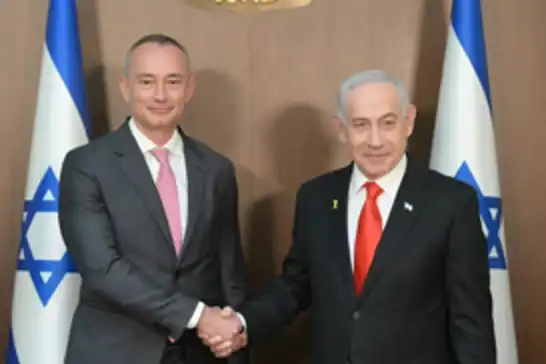
Hamas has held the Board of Peace and its envoy, Nickolay Mladenov, responsible for Israel's continued violations in the Gaza Strip, accusing them of providing political cover for the Israeli occupation and allowing its crimes against Palestinians to continue without accountability.
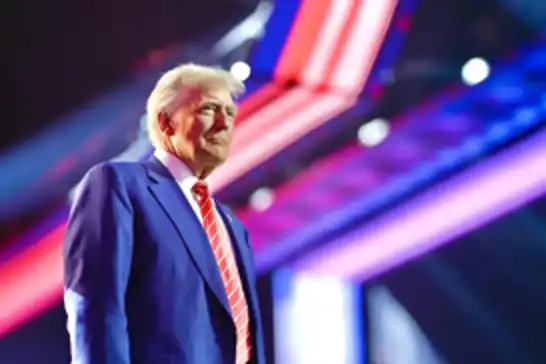
US President Donald Trump has threatened to immediately double tariffs on Mexican imports unless Mexico stops a group of more than 1,000 migrants heading north toward the United States, escalating his administration's pressure on neighbouring countries to enforce Washington's increasingly restrictive migration policies.