Rights groups warn EU return plan could lead to “detention-driven” migration system

 13 oC
13 oC 
Güneşli

A new European Union agreement on migration returns has sparked serious concern among human rights groups, as it introduces expanded detention powers, stricter deportation rules, and the possibility of transferring migrants to so-called “return hubs” outside EU territory.
The European Parliament and the Council of the EU have reached a political agreement on legislation aimed at speeding up expulsions of irregular migrants and increasing return rates across member states. EU officials argue the reform will improve migration management and strengthen control over who enters and remains in the bloc.
“With the new rules, we have more control over who can enter the EU, who can stay, and who needs to leave,” said EU Commissioner for Home Affairs Magnus Brunner.
However, rights organisations and migration advocates warn that the reforms mark a significant shift toward a more punitive and restrictive system, with weakened safeguards for vulnerable groups, including children.
Expanded detention and enforcement obligations
Under the new framework, individuals issued with return orders will be legally required to cooperate with authorities, including providing personal information and assisting in identification procedures. Failure to comply could lead to reduced access to benefits, withdrawal of incentives for voluntary return, and in some cases criminal penalties under national law.
The legislation also broadens the grounds for detention pending deportation, allowing authorities to detain individuals deemed at risk of absconding or non-cooperation. Detention periods could reach up to 24 months, with the possibility of extension in certain circumstances, and may restart if a person moves between EU member states.
While alternatives such as reporting requirements, residence restrictions, financial guarantees, and electronic monitoring are included, critics say detention will remain a central tool of enforcement.
Particularly controversial is the provision allowing detention of families with children and unaccompanied minors in “last resort” situations. Human rights organisations warn that even limited detention of children raises serious concerns under international child protection standards.
“Return hubs” outside the EU
One of the most disputed elements of the reform is the creation of “return hubs” in third countries. These facilities would allow EU states to transfer individuals who have already received final deportation orders to centres outside the Union while awaiting removal to their countries of origin or another destination.
Although the agreement stipulates that partner countries must respect human rights and the principle of non-refoulement, legal experts and rights groups warn that oversight and enforcement of such guarantees may be difficult in practice.
Critics also point to the risk that migrants could be transferred to countries with weaker human rights protections, raising concerns about transparency, accountability, and potential abuses.
The model draws partial inspiration from arrangements such as Italy’s migration deal with Albania, which has already faced scrutiny over conditions and legal uncertainties.
EU-wide deportation system and increased surveillance
The reform also introduces a unified “European Return Order” intended to ensure that deportation decisions are recognised more consistently across the Schengen area. Authorities say this will prevent individuals from moving between member states to avoid removal.
However, rights groups warn that the measure could further restrict freedom of movement and expand surveillance systems across Europe, particularly through integration with the Schengen Information System.
Additional provisions give authorities expanded powers to search homes and premises, collect biometric data, confiscate belongings, and impose long-term or even indefinite entry bans for individuals deemed a security risk.
Human rights groups warn of “detention-driven system”
Civil society organisations have strongly criticised the agreement, arguing that it prioritises enforcement over protection and risks normalising large-scale detention and deportation practices.
Silvia Carta of the Platform for International Cooperation on Undocumented Migrants described the proposal as “a draconian detention and deportation machine,” warning that it could erode fundamental rights protections across the EU migration system.
Other critics say the reform reflects a broader political shift toward externalising migration control and increasing reliance on third countries to manage people seeking protection or a better life in Europe.
Debate over Europe’s migration direction
While EU institutions defend the reform as necessary to address low return rates—currently estimated at around 20 percent of deportation orders being carried out—opponents argue that the solution focuses on coercion rather than addressing the root causes of migration or ensuring fair asylum procedures.
The agreement still requires formal approval before it becomes law, but it has already intensified debate over the future of Europe’s migration policy and the balance between border control and human rights obligations. (ILKHA)
LEGAL WARNING: All rights of the published news, photos and videos are reserved by İlke Haber Ajansı Basın Yayın San. Trade A.Ş. Under no circumstances can all or part of the news, photos and videos be used without a written contract or subscription.

Six Palestinian civilians, including two women, were killed and at least 15 others injured on Saturday evening after an Israeli airstrike targeted a tent sheltering displaced families in western Gaza City, according to local and medical sources.

A young Palestinian man was martyred in an Israeli attack on southern Gaza in the early hours of Saturday, only hours before he was due to celebrate what should have been one of the happiest days of his life.

The Pentagon has reportedly elevated its counterintelligence threat assessment concerning Israeli intelligence activities, reflecting growing unease within the US defense establishment amid widening policy disagreements between Washington and Tel Aviv over Iran and broader developments in West Asia.
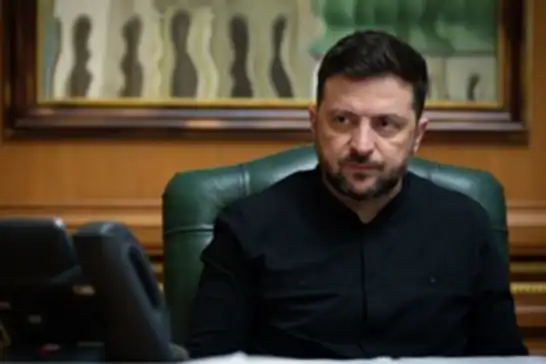
Ukrainian President Volodymyr Zelensky has accused Russian President Vladimir Putin of having no genuine interest in resuming peace negotiations, following Moscow's rejection of a proposal for a direct meeting between the two leaders.