Putin’s party secures record majority in Russia’s first wartime State Duma election
 13 oC
13 oC 
Güneşli

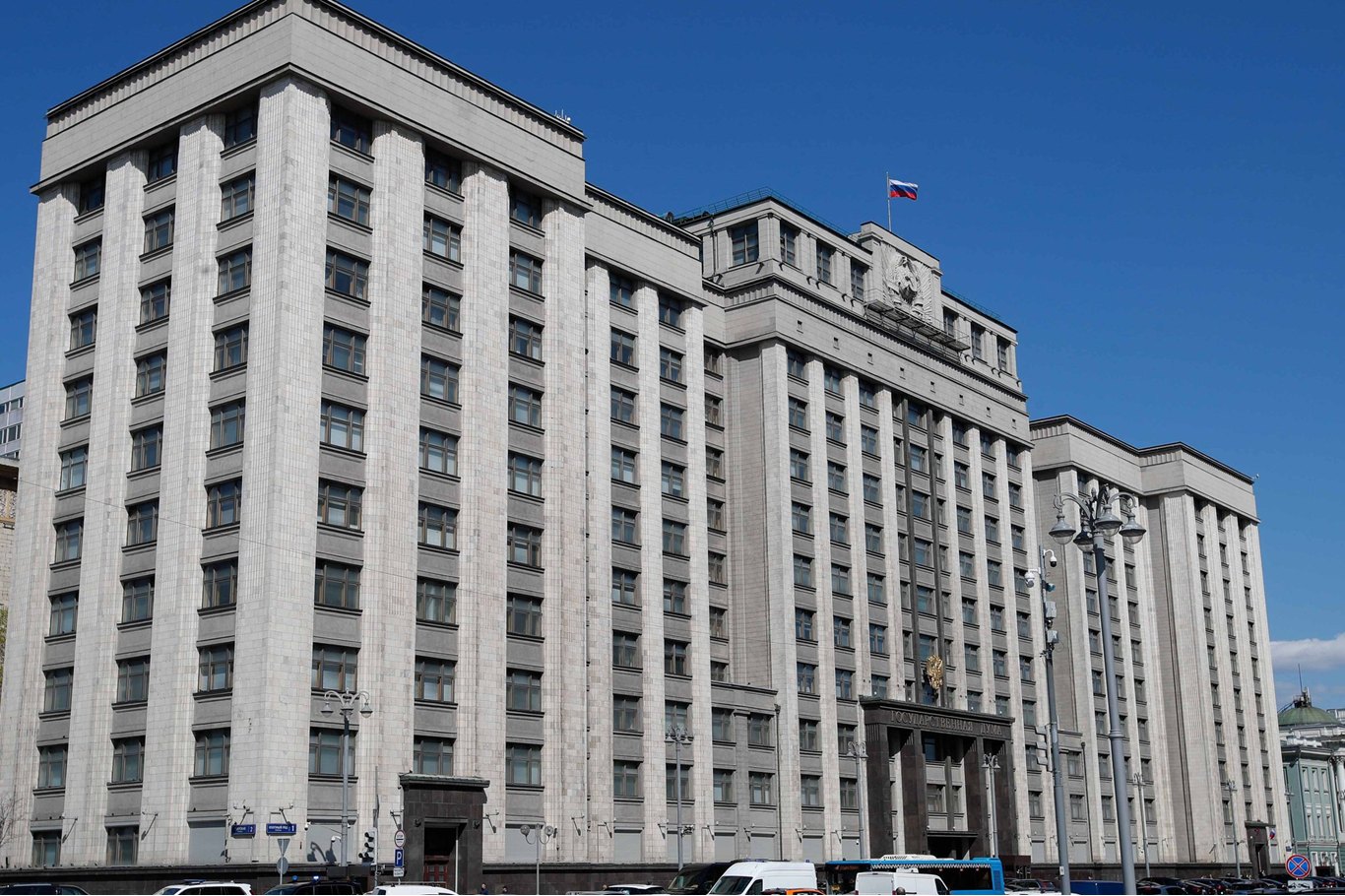
Russia’s ruling United Russia party has secured a record 349 seats in the 450-member State Duma, election officials said Friday, cementing the Kremlin’s dominance of parliament following the country’s first lower-house elections since the full-scale war in Ukraine began.
Central Election Commission Chair Ella Pamfilova announced the final results, saying United Russia had surpassed its previous record of 343 seats, set in the 2016 parliamentary election.
The Communist Party won 37 seats, while the Liberal Democratic Party secured 23, New People took 19 and A Just Russia won 17 seats, according to the final distribution announced by the election authorities.
The result leaves United Russia with a commanding majority in the lower house and reinforces its position as the main political vehicle supporting President Vladimir Putin and his government.
The elections were held from Sept. 18-20 and were the first parliamentary vote since Russia launched its full-scale invasion of Ukraine in February 2022. Preliminary results earlier in the week had put United Russia at 355 seats, before the final distribution was completed.
The new State Duma will also include dozens of veterans of Russia’s war in Ukraine.
Pamfilova said 46 veterans who had participated in the war were elected to parliament. Putin has repeatedly promoted former soldiers as part of what he calls Russia’s “new elite,” and the Kremlin welcomed their election.
“This is excellent. The experience of our heroes is in high demand,” Kremlin spokesman Dmitry Peskov said, according to Russian media.
The growing presence of wartime veterans in political institutions reflects a broader effort by the Kremlin to integrate military personnel into civilian political and administrative structures.
Independent Russian media have also reported allegations concerning some newly elected veterans, including accusations of war crimes in Ukraine. Such allegations have not been independently established in every case and have been disputed by those accused.
The Central Election Commission put nationwide turnout at 59.8%, including votes cast in Ukrainian territories that Moscow claims to have annexed.
Pamfilova described the turnout as evidence of what she called a high level of civic responsibility despite what she characterized as security threats, sanctions and drone attacks.
More than 280,000 Russian citizens also voted abroad at 333 polling stations in 152 countries, according to the CEC. Pamfilova said United Russia received 58% of the votes cast outside Russia.
The election took place against the backdrop of continuing Russian military operations in Ukraine and repeated Ukrainian drone attacks on Russian territory.
The election was conducted in a political environment in which major opposition figures and anti-war organizations have faced imprisonment, exile, legal restrictions or exclusion from electoral politics.
The liberal Yabloko party, which had campaigned against the war, was removed from the federal ballot after Russia’s Supreme Court canceled its registration in August. The court cited alleged violations including the use of copyrighted material and issues surrounding campaign financing. Yabloko disputed the ruling and subsequently challenged it.
Human Rights Watch described the exclusion of Yabloko as a restriction on political participation and freedom of expression, while Russian authorities maintained that the party had violated electoral and campaign rules.
Western governments and independent observers have also questioned the competitiveness of the election, pointing to the absence of prominent anti-Kremlin candidates and restrictions on political activity.
The Associated Press and Reuters previously reported that the election environment was tightly controlled and that parties openly critical of Putin or the war were not represented on the national ballot.
The Kremlin has portrayed the election as confirmation of continued public support for Putin and his political course.
Peskov said the election of wartime veterans demonstrated that their experience was valued by Russian society and that they could make a significant contribution to parliamentary work.
The government has also emphasized the turnout as evidence of political participation despite the security situation.
Critics, however, have argued that the absence of meaningful anti-war competition makes it difficult to assess the results as a conventional measure of public opinion. Independent Russian outlets and Western governments have questioned the fairness and competitiveness of the vote.
The new State Duma is scheduled to hold its first session on Sept. 30.
United Russia’s record parliamentary presence will give the Kremlin-aligned party a dominant position in the legislature as Russia continues to prosecute the war in Ukraine and faces ongoing Western sanctions.
The composition of the new parliament also places a greater number of war veterans inside Russia’s political establishment, while the exclusion of major anti-war forces means the next Duma will continue to operate within a political system where opposition to the Kremlin faces significant legal and institutional constraints.
The election therefore marks not only a change in the composition of Russia’s legislature but also another stage in the transformation of the country’s political system during wartime. (ILKHA)
LEGAL WARNING: All rights of the published news, photos and videos are reserved by İlke Haber Ajansı Basın Yayın San. Trade A.Ş. Under no circumstances can all or part of the news, photos and videos be used without a written contract or subscription.
Najaf International Airport suspended all flights to and from Iran on Friday, September 25, amid growing disruption to Iranian international air links following an intensified US sanctions campaign targeting the country’s aviation sector.
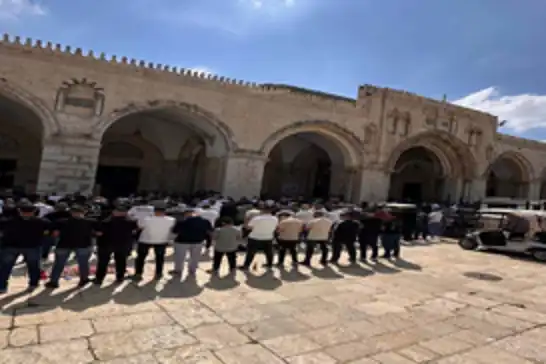
Tens of thousands of Palestinians gathered at Al-Aqsa Mosque in occupied East Jerusalem for Friday prayers despite heightened Israeli security measures and restrictions imposed on Palestinians seeking to reach the holy site.
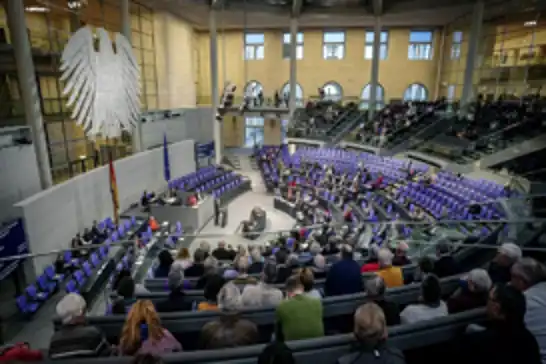
Germany's Bundestag has approved amendments to the Federal Police Act granting broader powers to the Federal Police in efforts to combat what authorities describe as extremism and migrant smuggling.