Poland’s judicial crisis deepens as riot police guard constitutional court
 13 oC

Güneşli

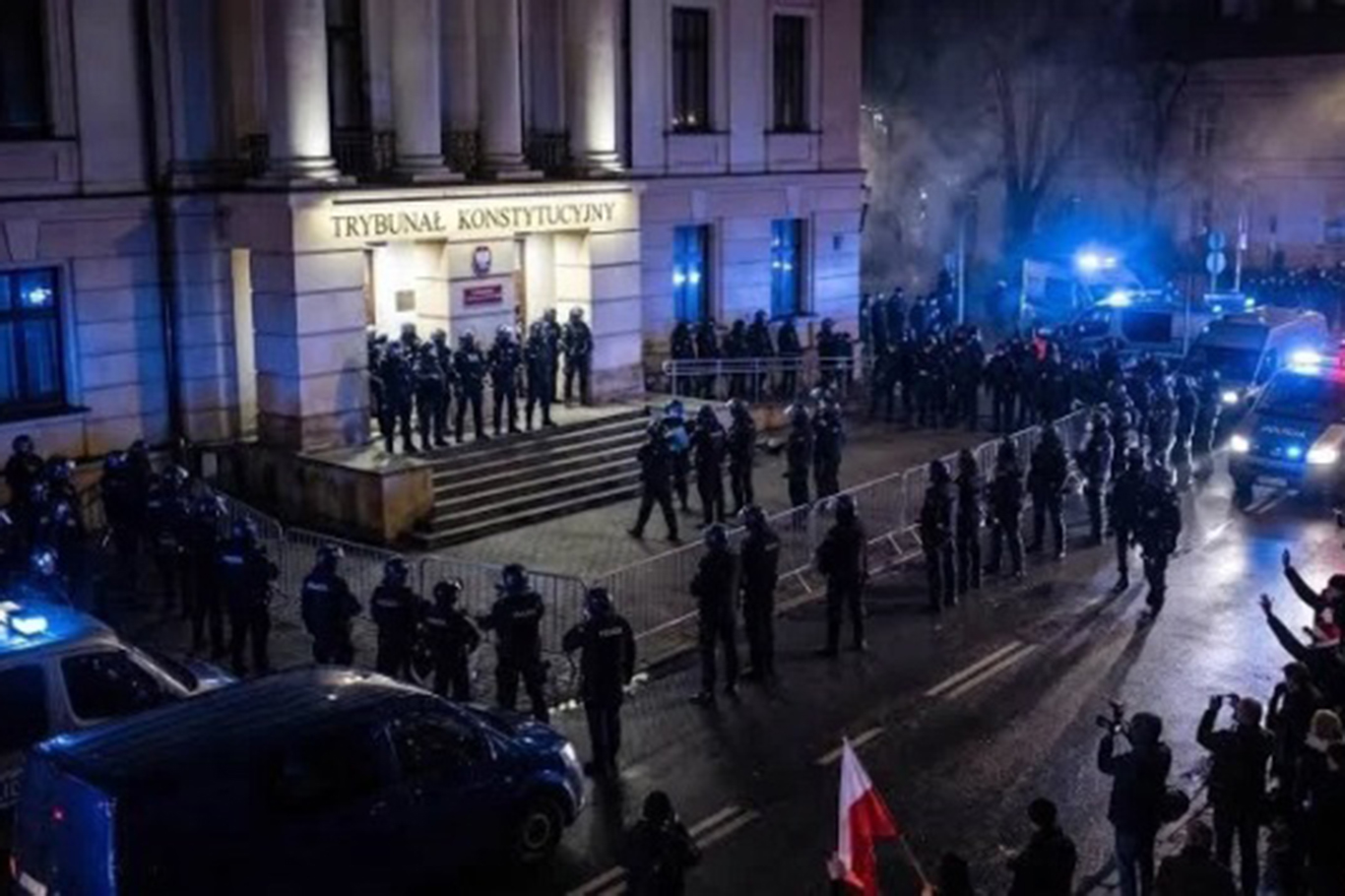
Poland’s political and constitutional crisis deepened on Friday after riot police were deployed at the Constitutional Tribunal in Warsaw amid a bitter confrontation between Prime Minister Donald Tusk’s government and opposition figures over control of the country’s highest constitutional court.
The confrontation escalated after a judge ordered the temporary suspension of Tribunal President Bogdan Święczkowski and Vice-President Bartłomiej Sochański, while Justice Minister Waldemar Żurek sought to lift their legal immunity to pursue criminal charges against them.
President Karol Nawrocki, an ally of the opposition Law and Justice (PiS) party, abruptly cut short his trip to Senegal and returned to Warsaw as protesters gathered outside the court. Police detained three people following clashes around the building, with some demonstrators reportedly attempting to breach security barriers and throwing objects at officers.
The dispute has exposed deep divisions over judicial independence, the authority of state institutions and efforts by Tusk’s pro-European government to reverse changes introduced during PiS’s eight years in power.
Rival claims over control of the court
Judge Anna Korwin-Piotrowska announced the temporary suspension of Święczkowski and Sochański, accusing the court’s leadership of obstructing the work of judges elected by the current parliamentary majority and preventing the tribunal from functioning properly.
The Constitutional Tribunal rejected the move, insisting that Święczkowski remained its legally appointed president and Sochański its vice-president. Its official social media account described the actions against the two judges as a “coup d’état,” warning that those involved were committing a criminal offence.
The competing claims have created uncertainty over who has the authority to direct the tribunal, with both sides accusing the other of undermining the constitutional order.
Police said their deployment was intended to protect public safety and maintain order amid reports of threats to judges and court employees. Authorities said officers had responded to incidents outside the building, including objects being thrown at police.
Żurek, who also serves as prosecutor-general, said he had requested the removal of the two senior judges’ immunity to enable criminal proceedings. He accused the tribunal’s leadership of obstructing the work of judges elected by parliament.
Tusk defended the government’s actions, arguing that restoring the rule of law after years of alleged abuses under PiS required decisive measures.
PiS leaders, however, condemned the intervention as an attack on the judiciary and urged supporters to resist what they described as an unlawful attempt to seize control of the court.
Nawrocki returns to Warsaw as tensions rise
Nawrocki abandoned his planned visit to Senegal while en route to the West African country, saying the situation required his presence in Poland.
After returning to Warsaw late on Friday, he met Supreme Court First President Zbigniew Kapiński as the dispute continued. The president’s intervention added another dimension to the confrontation, given his support for PiS and his opposition to several of Tusk’s judicial reforms.
The standoff also prompted concern beyond Poland. US Ambassador Tom Rose described the situation as serious and urged government officials, police and demonstrators to avoid actions that could trigger further escalation.
The immediate dispute comes against the backdrop of a prolonged struggle over appointments to the Constitutional Tribunal, which rules on whether legislation complies with Poland’s constitution.
Years of conflict over judicial independence
The roots of the crisis date back to 2015, when PiS came to power and moved to reshape Poland’s judicial institutions, including the Constitutional Tribunal.
The party’s judicial reforms triggered a prolonged confrontation with European institutions, which raised concerns about political influence over the courts and the independence of the judiciary.
The European Court of Human Rights and the Court of Justice of the European Union subsequently ruled that irregularities involving judicial appointments undermined the tribunal’s status as an independent and impartial court.
Tusk’s government, which took office in 2023, has pledged to restore judicial independence and reverse the changes introduced under PiS. However, its efforts have repeatedly encountered resistance from Nawrocki and his PiS-backed predecessor, Andrzej Duda, who used presidential powers to block key measures.
In March and June 2026, parliament elected judges to fill vacancies on the tribunal. Nawrocki has refused to swear in several of them, citing alleged flaws in their selection procedures. The dispute has left rival groups of judges contesting the legitimacy of appointments and the institution’s leadership.
The European Commission has continued to flag serious concerns about the tribunal’s independence, even as Poland has taken steps to address broader rule-of-law disputes.
The latest confrontation underscores the difficulty of restoring confidence in Poland’s judicial system when the government, president and rival groups within the judiciary disagree over the legitimacy of the institutions themselves.
With police deployed around the tribunal and both political camps accusing the other of violating the constitution, the dispute threatens to deepen an already entrenched political divide over the future of Poland’s democratic institutions. (ILKHA)
LEGAL WARNING: All rights of the published news, photos and videos are reserved by İlke Haber Ajansı Basın Yayın San. Trade A.Ş. Under no circumstances can all or part of the news, photos and videos be used without a written contract or subscription.

Israeli occupation authorities have intensified their campaign against Palestinian religious figures at Al-Aqsa Mosque, arresting, summoning and deporting preachers and imams in what Palestinian officials and observers describe as an effort to silence the Mosque’s Islamic pulpit and weaken its religious and national role.
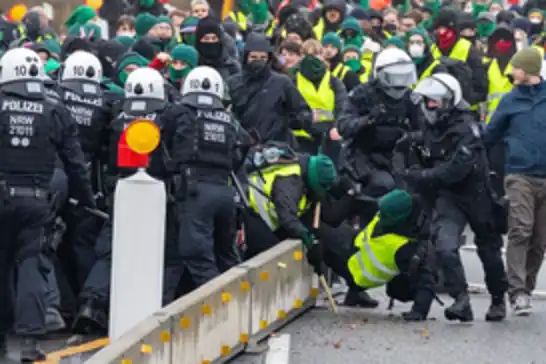
Young people across Germany are preparing to hold coordinated demonstrations in 32 cities on October 31, protesting the government's austerity measures, education policies and plans related to compulsory military service. Organisers say the nationwide mobilisation aims to defend young people's future and demand greater investment in education and social welfare.
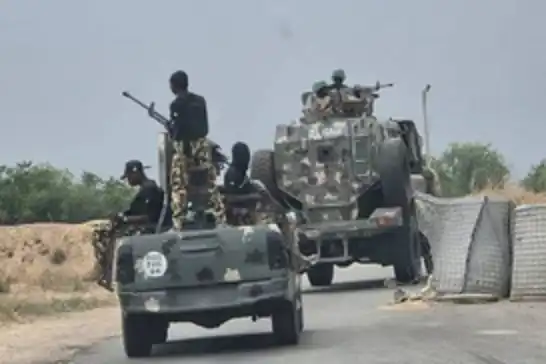
At least 12 people, including a police officer, were killed and several others injured after suspected Lakurawa militants launched a deadly attack on communities in Nigeria's northwestern Kebbi State, local authorities and security officials said.