Netanyahu faces political setback as Israeli election count leaves coalition race unresolved
 13 oC

Güneşli

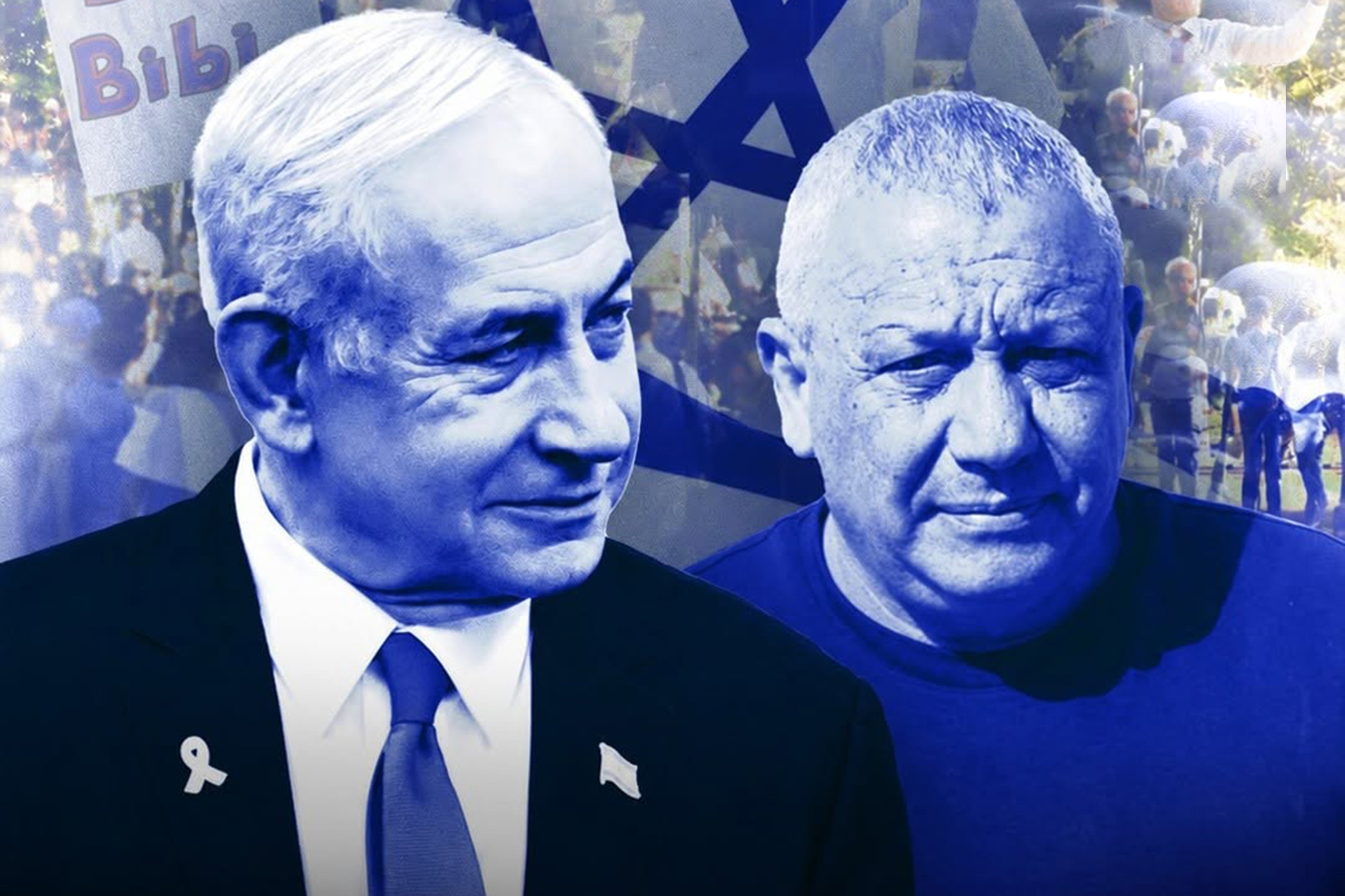
Israeli Prime Minister Benjamin Netanyahu faced mounting political uncertainty on Wednesday as preliminary election results put his Likud party ahead of Gadi Eisenkot’s Yashar party but left both rival blocs short of the parliamentary majority needed to form a government.
With roughly half of the votes counted, Likud had secured 27 seats, while the bloc led by Netanyahu held 57 seats in the 120-member Knesset, according to local reports. The rival coalition led by Eisenkot had won 49 seats, leaving neither side with the 61 seats required for a majority.
The preliminary figures differed from exit polls broadcast by Israeli television channels after polling stations closed on Tuesday, which had given the opposition-led Change camp a narrow lead.
The count remains incomplete, with votes cast by Israeli soldiers scheduled to be counted on Thursday. The final distribution of seats and the prospects for forming a government therefore remain uncertain.
The election has exposed divisions within Israeli politics over military conscription, the economy, security policy and Netanyahu’s continued leadership, amid the devastating consequences of Israel’s war on Gaza and mounting international condemnation of its military campaign.
Although Likud emerged as the largest individual party in the preliminary count, Netanyahu’s bloc remained below the parliamentary threshold needed to govern independently.
The Israeli newspaper Yedioth Ahronoth said the projected losses for the right-wing camp could open the door for the Change bloc to attempt to form a government. It also highlighted the influence of Arab parties, which were projected in the cited reports to hold 18 seats, although the figures remain subject to change as counting continues.
The newspaper pointed to the possibility of President Isaac Herzog seeking a unity government and warned that disputes over leadership, ministerial appointments and policy could undermine the opposition camp’s efforts.
Netanyahu could still seek the mandate to form a government, particularly if Likud remains the largest party, but the final outcome will depend on the distribution of seats and negotiations among political factions.
The preliminary results also indicated a decline for ultra-Orthodox parties, while the performance of Arab political lists remained mixed.
Speaking at his party headquarters on Tuesday, Eisenkot warned Netanyahu against using national security issues for political purposes and argued that holding another election would be a mistake.
“Millions of Israelis are fed up with the culture of lies,” Eisenkot said, pledging to pursue universal military service legislation and form what he described as a Zionist government committed to conscription.
He portrayed the election as a broader rejection of the existing political order, saying the outcome represented a victory for Israeli society rather than one political camp over another.
Eisenkot also reaffirmed his commitment to Israel’s designation as a Jewish and democratic state, the values of its Declaration of Independence, universal military service and the dismantling of Hamas.
His remarks underscored the limits of the political change being proposed: despite disagreements over Netanyahu’s leadership and the distribution of military-service obligations, the rival camp has also pledged to maintain Israel’s existing political framework and pursue its war aims against Hamas.
Eisenkot described Netanyahu as a caretaker prime minister who lacked a mandate and public trust.
Former Israeli military chief and security minister Moshe Ya’alon urged opposition leaders to move quickly to take control of the Knesset and establish a government, even before the vote count was complete.
In a social media post, Ya’alon denounced Netanyahu’s political camp, accusing it of corruption and evading military service. He called on opposition figures to coordinate with Arab political leader Mansour Abbas and Yoav Segalovitz.
Ya’alon also accused Netanyahu of potentially provoking a war with Iran to preserve his political position, an allegation that was not independently substantiated in the reports.
Warning against delays, he argued that the outgoing government could continue its policies toward Palestinians in the occupied West Bank, where Israeli military operations, settlement expansion and settler violence have remained central sources of tension.
The election’s outcome could reshape Israel’s domestic political leadership, but the competing camps’ positions suggest that a change of government would not necessarily bring a fundamental shift in policy toward Palestinians.
Eisenkot has explicitly pledged to dismantle Hamas, while his commitment to maintaining Israel as a Jewish state places his political programme within the existing Zionist political framework.
For Palestinians, the central questions extend beyond which Israeli bloc ultimately forms a government. They include whether the next administration will continue military operations in Gaza, maintain policies in the occupied West Bank and sustain restrictions affecting Palestinian freedom of movement and political rights.
The preliminary results have not resolved those questions. Instead, they have opened a period of political bargaining in which rival Israeli factions must seek parliamentary support while attempting to reconcile disagreements over military service, leadership and government policy.
With the count still underway, Netanyahu’s political future remains uncertain, but the election has yet to demonstrate that a change in Israel’s leadership would translate into a change in the policies affecting Palestinians. (ILKHA)
LEGAL WARNING: All rights of the published news, photos and videos are reserved by İlke Haber Ajansı Basın Yayın San. Trade A.Ş. Under no circumstances can all or part of the news, photos and videos be used without a written contract or subscription.

A Nigerian government inquiry has concluded that 33 miners arrested on suspicion of illegal gold mining died from suffocation after being held in an overcrowded and poorly ventilated detention cell, with investigators describing the conditions as "cruel, inhuman and degrading treatment."

US President Donald Trump suggested on Tuesday that Venezuela could become the 51st US state, citing expanding oil cooperation between the two countries and saying Washington stood to benefit from the South American nation's vast petroleum reserves.

Syria has reopened the Nasib border crossing with Jordan to passenger and commercial traffic after a one-day closure triggered by Jordanian airstrikes in southern Syria, while the two countries agreed to establish a joint security committee to strengthen border coordination and address the aftermath of the incident.