Most-wanted Israeli collaborator Yasser Abu Shabab reportedly killed in Rafah

 13 oC
13 oC 
Güneşli

Yasser Abu Shabab, one of the most notorious Israeli collaborators in Gaza and the militia leader most sought by Hamas, was reportedly killed on Thursday in the southern city of Rafah, according to local Palestinian media.
Several Israeli outlets echoed the reports but offered no details about who killed him or how the incident occurred. The killing allegedly took place in Rafah, an area under the full control of Israeli occupation forces.
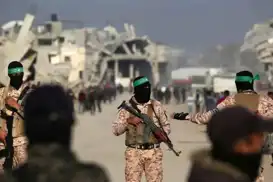
Abu Shabab became infamous among Palestinians for his collaboration with Israel throughout its two-year genocidal campaign against Gaza. Backed directly by Israeli forces, he played a central role in looting humanitarian aid, abducting and killing civilians, and targeting Hamas fighters. Israeli troops had armed and protected him, providing him with air cover as he operated freely in areas under occupation.
Since rising as the leader of the so-called “Popular Forces,” Abu Shabab ran his operations from eastern Rafah, an area sealed off and tightly controlled by the Israeli military.
Following early reports of his death, scenes of celebration erupted across Gaza. Crowds took to the streets, distributing sweets and firing celebratory gunfire into the air—viewed as a symbolic victory over a figure seen by Palestinians as a traitor who aided the occupier’s crimes.
Hamas security forces had previously vowed to pursue him throughout the war, but the group issued no immediate statement confirming or commenting on the reported killing.
Israeli Channel 12 initially claimed that Abu Shabab had been evacuated by Israeli forces to Soroka Hospital, where he was pronounced dead. The hospital later denied the report, adding further confusion to Israel’s conflicting narrative.
Prominent Israeli journalist Amit Segal described the reported killing as a “bad development for Israel,” acknowledging Abu Shabab’s role as a useful proxy force for the occupation.
For months, Abu Shabab’s group has been widely condemned by Palestinian factions as a “traitorous militia” for its attacks on civilians, its theft and resale of humanitarian aid, and its collaboration with Israel. The militia has also been accused of maintaining links to the Islamic State group (IS).
Although Abu Shabab attempted to frame his militia as a “popular force” opposed to Hamas’ governance in Gaza, numerous testimonies and reports portray the group as a criminal network engaged in extortion, looting, and direct coordination with Israeli and American officials.
An internal 2024 United Nations report identified Abu Shabab’s militia as “the most influential stakeholders behind the systematic and massive looting of humanitarian convoys,” enabling the group to access aid and resources that remain denied to most of the besieged Gaza population.
Earlier this year, Abu Shabab was quoted in an interview with Makan, Israel’s state-run Arabic-language radio station, boasting that his group operates “with ease” inside areas held by the Israeli army. He was reportedly heard claiming that his militia informed the Israeli military about upcoming operations and received “external support.” He later denied giving any such interview.
Israel’s own leadership has acknowledged its link to the group. Prime Minister Benjamin Netanyahu previously admitted that Israeli forces had armed Abu Shabab’s militia.
A Palestinian source told Kan News last month that members of his network even participated in meetings with senior American officials.
The reported killing comes amid the continued collapse of the so-called ceasefire agreement, which Israel has violated nearly 600 times since October. According to Palestinian officials, these Israeli breaches have killed more than 360 people and wounded over 900.
Israel also continues to block and restrict humanitarian aid, allowing roughly 200 aid trucks per day—far below the 600 trucks agreed upon—and continues to prevent the movement of patients and civilians through the Rafah crossing, deepening Gaza’s humanitarian catastrophe.
Abu Shabab’s reported death is widely seen among Palestinians as the fall of a symbol of treachery who enabled Israel’s oppression and suffering in Gaza. (ILKHA)
LEGAL WARNING: All rights of the published news, photos and videos are reserved by İlke Haber Ajansı Basın Yayın San. Trade A.Ş. Under no circumstances can all or part of the news, photos and videos be used without a written contract or subscription.
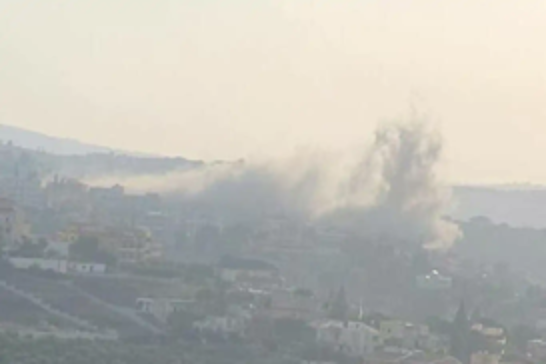
Israeli warplanes carried out a new wave of attacks on southern Lebanon on Thursday, striking several towns and heightening concerns that Israel is deliberately undermining the fragile ceasefire reached in November 2024.

Rescuers across South and Southeast Asia continued to battle treacherous conditions on Wednesday as catastrophic floods and landslides left more than 1,400 people dead and close to 1,000 missing.

The Orphans Foundation (Yetimler Vakfı) has successfully delivered much-needed aid packages containing coats, boots, and a variety of winter clothing items to vulnerable children across Afghanistan.