Iran elects Sayyed Mojtaba Khamenei as new leader after assassination of Ayatollah Ali Khamenei
 13 oC
13 oC 
Güneşli

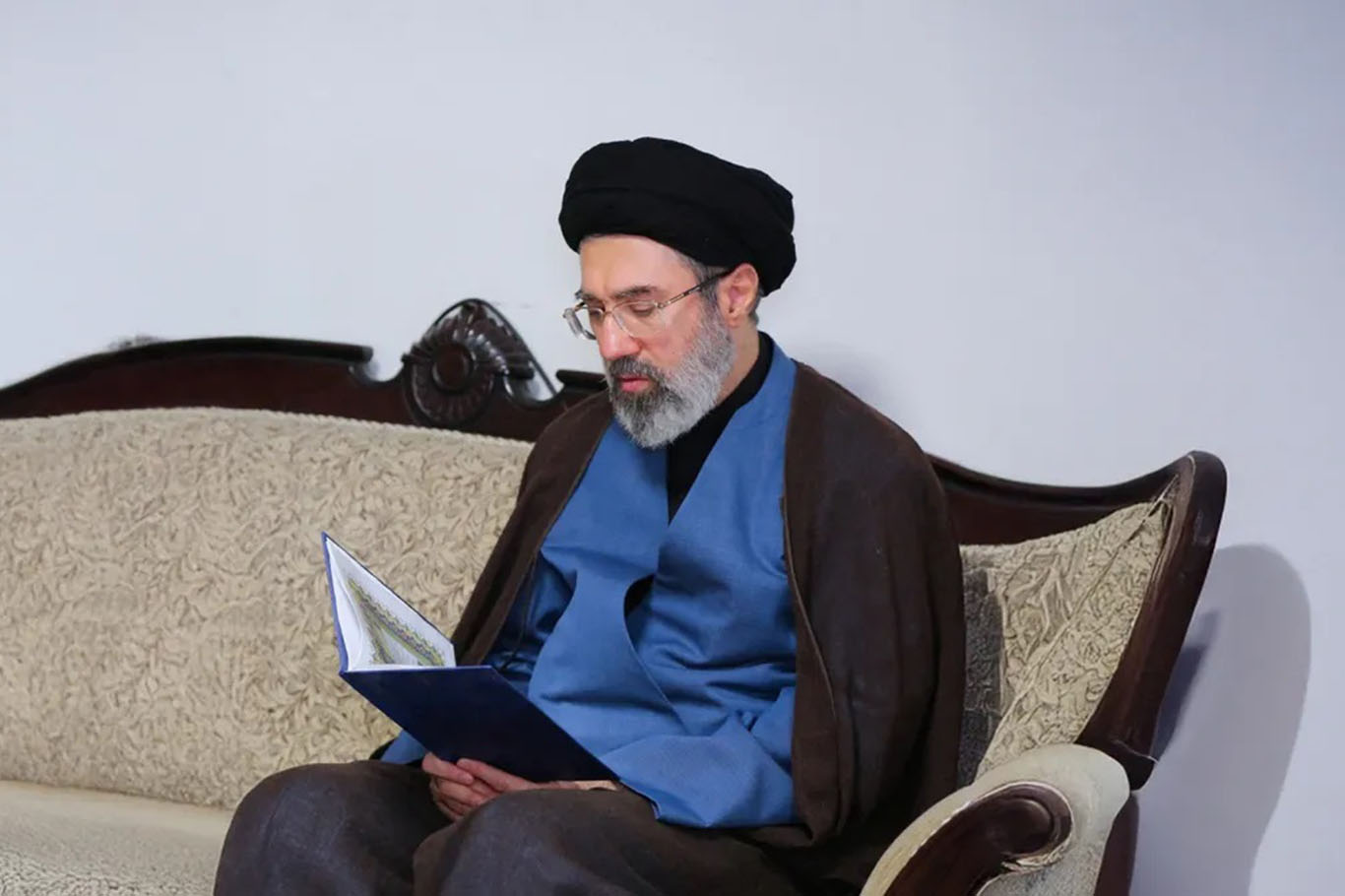
Iran’s Assembly of Experts has elected Sayyed Mojtaba Khamenei as the new Leader of the Islamic Republic, following the assassination of his father, Ayatollah Sayyed Ali Khamenei, during the opening phase of the United States and Israeli military strikes on Iran on February 28.
The leadership transition comes at a moment of extraordinary tension for the Islamic Republic, as Tehran confronts an existential war triggered by the joint American-Israeli aggression against the country. Iranian authorities say the killing of the long-serving leader was part of a coordinated “decapitation strike” aimed at destabilizing the country’s political system and weakening its ability to respond to the escalating conflict.
A Leader Shaped by Revolution
Sayyed Mojtaba Khamenei, 56, was born in 1969 in the holy city of Mashhad, only months before the 1979 Islamic Revolution transformed Iran’s political order. Raised in one of the most influential families of the revolution, he grew up in a deeply religious and political environment closely tied to the formation of the Islamic Republic’s institutions.
From an early age, Mojtaba Khamenei was exposed to the inner workings of governance and revolutionary politics, experiences that provided him with a unique perspective on Iran’s political structure. Rather than pursuing a conventional political career, he focused on religious scholarship and seminary studies.
He enrolled in the religious seminaries of Qom, widely regarded as the leading center of Shiite theological learning. There, he studied Islamic jurisprudence and the principles of Islamic law, advancing to the highest stages of seminary education, a level that precedes the rank of marja, or source of emulation. His academic work and years of teaching advanced religious courses later earned him recognition among clerical circles.
Wartime Bonds and Security Networks
Mojtaba Khamenei’s political trajectory was also shaped by the Iran-Iraq War during the 1980s. During that period, he developed close ties with the Islamic Revolutionary Guard Corps (IRGC), serving alongside fighters who would later rise to senior command positions within Iran’s military and security apparatus.
Those wartime relationships forged a network of trust between Mojtaba Khamenei and key figures in Iran’s defense establishment. Analysts say those ties have played a crucial role in consolidating his position as the country navigates a new war environment.
The generation shaped by what Iran calls the “Sacred Defense” against Iraq remains influential within the country’s leadership. Shared wartime experiences have created strong bonds among senior commanders and political figures, many of whom now form the core of the Islamic Republic’s strategic decision-making circles.
Influence Behind the Scenes
Unlike many prominent Iranian politicians, Mojtaba Khamenei rose to influence largely outside formal government positions. For decades he remained relatively absent from the public spotlight, yet his role within Iran’s power structure gradually became more visible.
Observers say he played a behind-the-scenes role in facilitating communication between key state institutions and the Office of the Supreme Leader. His name surfaced repeatedly in political analyses, particularly during the internal political tensions that followed Iran’s disputed 2009 presidential election.
Alongside his political influence, Mojtaba Khamenei maintained an active presence in the religious sphere. For more than 17 years, he taught advanced courses in Islamic jurisprudence and legal principles in Qom’s seminaries, gaining respect among clerics for his scholarly engagement with Islamic sciences.
This combination of religious credentials and extensive political-military connections ultimately positioned him as a potential candidate for the country’s top leadership role.
Succession Amid Conflict
The Assembly of Experts’ decision to appoint Mojtaba Khamenei marks one of the most dramatic leadership transitions in the Islamic Republic’s history. While Iran’s political system has generally avoided hereditary succession, the extraordinary circumstances surrounding the assassination of Ayatollah Ali Khamenei have reshaped the debate.
Iranian officials argue that the killing of the longtime leader was intended to create political chaos and force a leadership outcome favorable to Western interests. The swift selection of a successor by the Assembly of Experts has been presented domestically as a demonstration of institutional resilience.
During the succession debate, U.S. President Donald Trump publicly dismissed Mojtaba Khamenei as an “unacceptable lightweight” and suggested that Iran should choose a leader more aligned with Western priorities. Iranian leaders have rejected those remarks, framing the appointment as a sovereign decision that reflects national unity in the face of foreign pressure.
In his acceptance, Sayyed Mojtaba Khamenei pledged to continue the revolutionary path established by Ayatollah Ruhollah Khomeini and maintained by his father during more than three decades in power.
Broad Domestic Support
Following the announcement, senior Iranian officials and political figures expressed support for the new leader.
President Masoud Pezeshkian described the selection as the beginning of a new stage for Iran’s development and self-sufficiency. First Vice President Reza Aref called Mojtaba Khamenei “a sincere and capable person for leadership,” emphasizing his deep familiarity with the country’s political system.
Support also emerged from across Iran’s political spectrum. Reformist-leaning intellectual Atta’allah Mohajerani publicly backed the appointment, while the judiciary praised the Assembly of Experts for selecting the new leader with what it described as an overwhelming majority.
Iran’s armed forces likewise reaffirmed their loyalty. The Khatam al-Anbiya central command announced that the military stands ready for “complete obedience” to the new leader and renewed its commitment to the principles of the Islamic Revolution.
Regional Allies React
Iran’s regional allies also responded quickly to the announcement.
Mahdi al-Mashat, chairman of Yemen’s Supreme Political Council, described the leadership transition as a sign of Iran’s strength and cohesion despite the ongoing war. Yemen’s Ansar Allah movement said it was confident that Iran would emerge stronger in its confrontation with what it called global arrogance.
In Iraq, the armed group Kata’ib Hezbollah welcomed the decision, with Secretary-General Abu Hussein al-Hamidawi praising the Assembly of Experts for selecting a leader capable of guiding the broader resistance movement during what he described as a critical period for the region.
Resilience in the Face of Crisis
Ali Larijani, secretary of Iran’s Supreme National Security Council, emphasized the symbolic significance of the rapid leadership transition. According to Larijani, Iran’s adversaries had expected the assassination of the country’s leader to paralyze the state’s decision-making structure.
Instead, he argued, the swift election of Mojtaba Khamenei demonstrated the durability of the Islamic Republic’s political institutions.
International observers have also highlighted the broader geopolitical implications. Several Western media outlets have suggested the appointment signals Iran’s intention to maintain its strategic direction despite pressure from the United States and Israel.
A Defining Moment Ahead
As Iran enters a new era under Sayyed Mojtaba Khamenei’s leadership, the country faces a series of critical decisions. Military strategy in the ongoing conflict, the future of Iran’s nuclear program, and the possibility of diplomatic negotiations will all shape the trajectory of the Islamic Republic in the months ahead.
With strong backing from key state institutions and regional allies, Mojtaba Khamenei begins his leadership at a moment that could redefine Iran’s political landscape and its role in the wider Middle East. (ILKHA)
LEGAL WARNING: All rights of the published news, photos and videos are reserved by İlke Haber Ajansı Basın Yayın San. Trade A.Ş. Under no circumstances can all or part of the news, photos and videos be used without a written contract or subscription.
A Russian attack on Kyiv overnight killed one person and injured two others after a strike damaged a 25-story residential building in the capital’s Darnytskyi district, Ukrainian authorities said early Friday.
Iran’s Persian Gulf Strait Authority (PGSA) said Thursday that three tankers owned or chartered by the United Arab Emirates that were hit in the Strait of Hormuz in recent days had previously been placed on its non-compliance list.
Seven miners have died after a suspected toxic gas incident inside an underground gold mining tunnel in the northern Philippine province of Benguet, prompting authorities to launch an investigation into the cause of the tragedy.
Greece has assumed the rotating presidency of the United Nations Security Council (UNSC) for October, unveiling a programme focused on the protection of children in armed conflict, maritime security, emerging technologies, the Middle East and the role of women in peacebuilding.