Global rivers endure one of their driest years in decades, WMO says
 13 oC
13 oC 
Güneşli

Rivers around the world experienced one of their driest years in more than three decades in 2025, while freshwater storage and glaciers continued to decline, highlighting growing instability in the global water cycle, the World Meteorological Organization (WMO) said on Thursday.
The WMO’s State of Global Water Resources 2025 report found that river discharge was below normal across 36% of the world’s river-basin area last year, making 2025 one of the driest years for global river flows since 1991.
The report also found that the past seven years have seen the fewest rivers with “normal” flows since records began in 1991. Between 2021 and 2025, recurring below-normal river discharge was recorded across major parts of the Amazon and La Plata basins, North America, Central and East Africa, Central Asia and the Middle East.
The findings point to a water cycle increasingly characterized by swings between drought and flooding, with potentially serious consequences for agriculture, energy production, ecosystems, economies and communities.
Freshwater reserves under pressure
The WMO said terrestrial water storage — including groundwater, lakes, rivers, soil moisture, vegetation, snow and ice — has been declining since around 2014-2016.
Groundwater showed a similar pattern. Nearly two-thirds of monitored wells worldwide recorded conditions outside their historical norms in 2025, with the balance shifting further toward deficits rather than recovery.
WMO Secretary-General Celeste Saulo said the planet's slow-moving water reserves, including groundwater, glaciers and seasonal snowpack, had traditionally acted as a buffer during dry periods.
“We are depleting that savings account,” Saulo said, warning that the decline in freshwater storage represented a persistent, decade-long trend.
The report found persistent groundwater deficits in parts of the Americas, Europe, the Middle East, India, southern Africa and Australia between 2022 and 2025.
Glaciers lose mass for fourth consecutive year
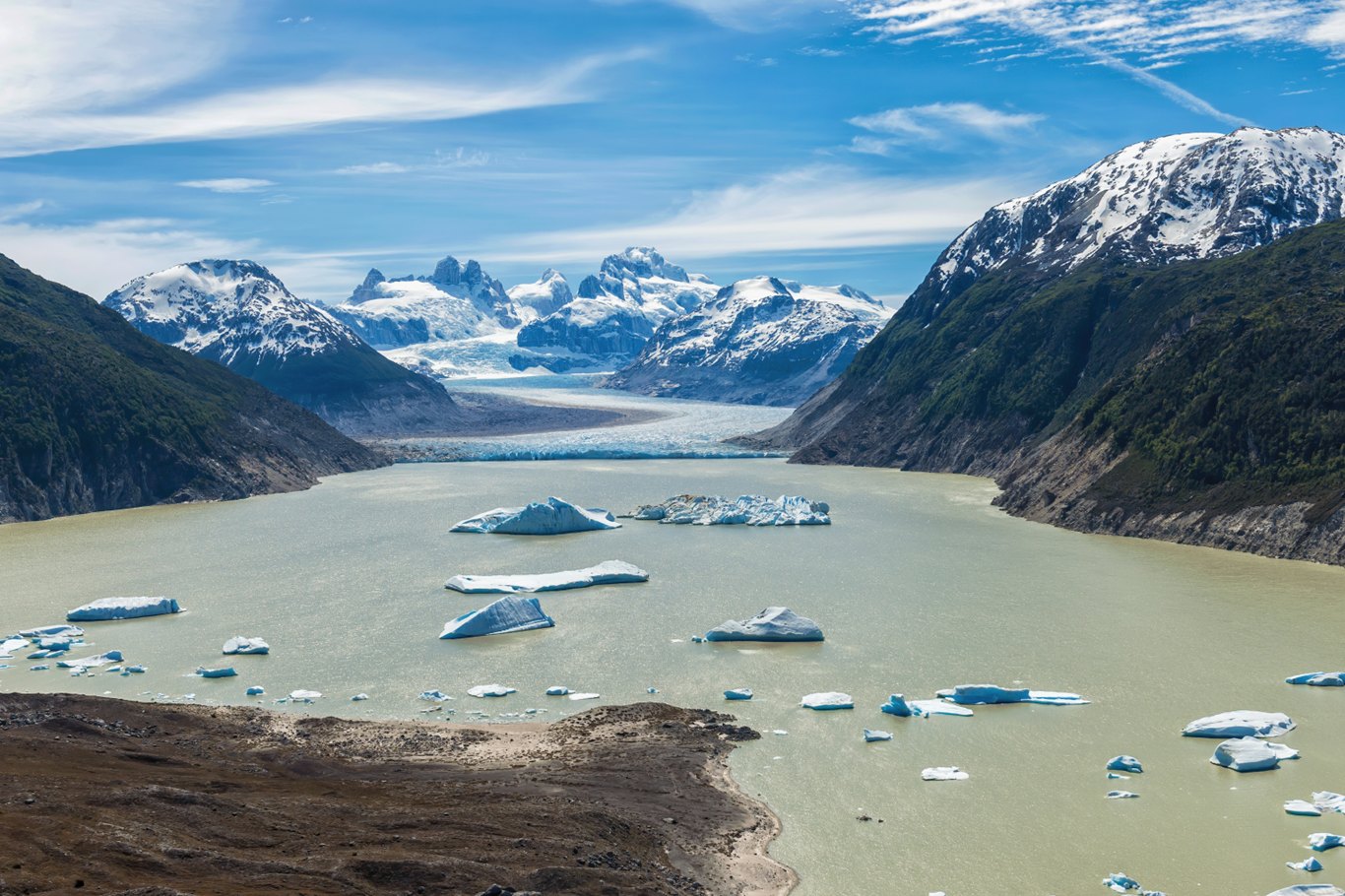
Glacier loss also continued across every major glaciated region for a fourth consecutive year.
During the 2025 hydrological year, glaciers lost an estimated 408 gigatonnes of mass, with an uncertainty of 132 gigatonnes, equivalent to about 1.1 millimetres of sea-level rise.
Between 2023 and 2025, cumulative global glacier mass loss reached about 1,400 gigatonnes of water, according to the report.
Central Asia, western Canada and the United States, the Russian Arctic, Iceland and South Asia West recorded particularly severe annual losses, with several regions registering one of their three most negative years on record.
The WMO said some regions dominated by smaller glaciers may already have reached or passed “peak water” — the point at which glacier meltwater runoff reaches its maximum before declining as ice reserves diminish.
Extremes of drought and flooding
The report also highlighted the increasing frequency and severity of water-related extremes.
Over the five years from 2021 to 2025, the La Plata and Amazon basins in South America, the Middle East and the Greater Horn of Africa experienced persistent multi-year drought conditions, while severe flooding repeatedly affected parts of West and Central Africa and Southeast Asia.
Asia and Africa were the regions most affected by extreme hydrometeorological events in 2025. Together, they accounted for at least half of recorded water-related extreme events and more than 80% of reported associated deaths over the previous five years.
South and Southeast Asia were hit by a combination of tropical cyclones and intense monsoon rainfall that caused up to 3,600 deaths across several countries, including Sri Lanka, Pakistan, Vietnam, Indonesia, Thailand, Malaysia and the Philippines.
In Africa, major flooding affected some countries for consecutive years, including Nigeria, which experienced significant flooding for a second straight year, and the Democratic Republic of Congo, where major flooding was reported for a third consecutive year.
Water-related disasters also carried major economic costs. Jamaica estimated losses from Hurricane Melissa at the equivalent of 41% of its gross domestic product, while Cyclone Ditwah caused losses in Sri Lanka estimated at about 4% of GDP.
Regional disparities
River conditions varied sharply across regions.
South and Southeast Asia and parts of northern South America recorded above-normal to much-above-normal river flows in 2025. Several African basins, including the Senegal, Niger, Lake Chad, Orange and Limpopo, also recorded above-normal flows.
At the same time, the Nile, Congo and Zambezi basins experienced much-below-normal discharge.
Much of North America, the La Plata and São Francisco basins in South America, parts of Eastern Europe, the Middle East and Central Asia also experienced below-normal or much-below-normal river flows.
The WMO said terrestrial water storage remained below normal across areas including northern and southwestern North America, Patagonia, Eastern Europe, the Middle East, Central Asia, eastern Brazil, northern India, parts of Northern Europe, China and North Africa.
Call for better monitoring and cooperation
The 2025 report expanded significantly from its first edition in 2021. It now incorporates 15 hydrological variables and data from 68 countries and more than 3,000 observation stations, compared with seven countries and 14 river stations in the first report.
However, the WMO said major gaps remain in hydrological observations, particularly in Africa and Asia, despite those regions being among the hardest hit by water-related extremes.
Saulo called for greater international cooperation, including shared data, common standards and improved early-warning systems.
“Water respects no borders,” she said, noting that conditions in one country can affect river basins and water availability hundreds of kilometres downstream.
The WMO said the findings called for urgency rather than panic, emphasizing the need to expand early-warning coverage, strengthen hydrological monitoring networks and improve water-management policies.
The report comes after the WMO confirmed that 2025 was one of the three warmest years on record globally, with the past 11 years ranking as the 11 warmest years in the observational record.
The organization said the combination of rising temperatures, changing precipitation patterns and increasingly erratic water cycles is placing additional pressure on freshwater systems already facing long-term depletion. (ILKHA)
LEGAL WARNING: All rights of the published news, photos and videos are reserved by İlke Haber Ajansı Basın Yayın San. Trade A.Ş. Under no circumstances can all or part of the news, photos and videos be used without a written contract or subscription.

The death toll from Israel’s military offensive on the Gaza Strip has risen to 73,821 Palestinians, with 174,897 others wounded, Palestinian medical sources said Thursday, as rescue teams continue to struggle to reach people trapped beneath the rubble.

The Palestinian Prisoners’ Society (PPS) said Thursday that at least 92 Palestinian prisoners and detainees whose identities have been confirmed have died in Israeli custody since October 2023, including 53 from the Gaza Strip.

Morocco and Israel have agreed to elevate their diplomatic representation to full embassy level and exchange ambassadors, further deepening ties that were restored in 2020 under a US-backed normalization process.