Türkiye, Canada sign agreement to evaluate CANDU technology for new nuclear power plant
 13 oC

Güneşli

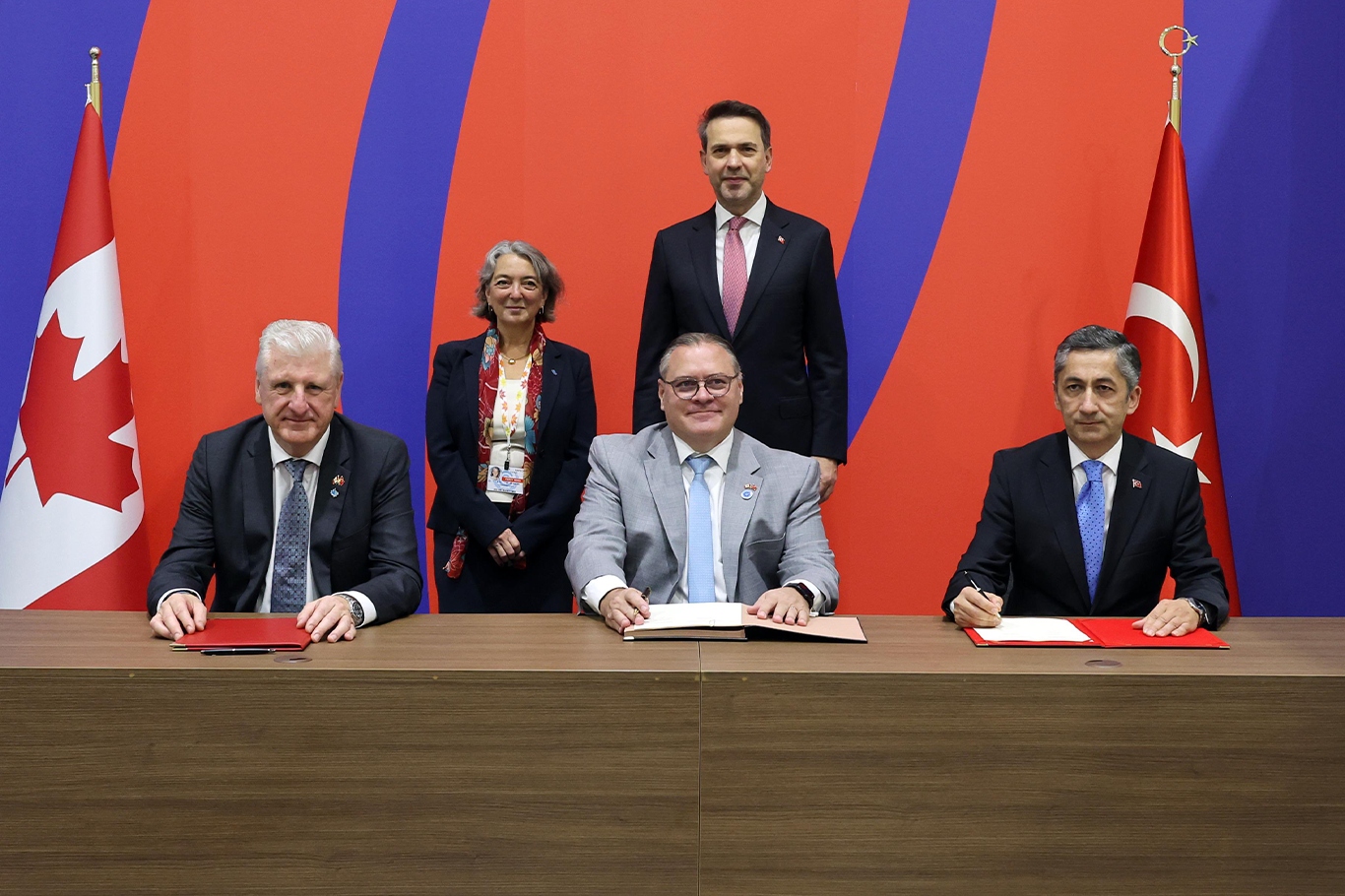
Türkiye and Canada have taken a major step forward in nuclear energy cooperation after Türkiye Nuclear Energy Inc. (TÜNAŞ) and Candu Energy Inc., a subsidiary of Canadian engineering and nuclear technology company AtkinsRéalis, signed a CANDU Feasibility and Front-End Engineering Design (FEED) Memorandum of Agreement during the 31st United Nations Climate Change Conference (COP31) in Antalya.
The agreement covers comprehensive feasibility studies and preliminary engineering work for CANDU reactor technology, including site selection, reactor adaptation, plant operation, financing models, project implementation, cost estimates, localization, workforce development, and risk assessments. The studies are intended to provide the technical and commercial foundation for a future investment decision on a new nuclear power plant.
Builds on cooperation launched earlier this year
The latest agreement follows the Memorandum of Understanding on Nuclear Energy Cooperation signed by TÜNAŞ and AtkinsRéalis during Energy and Natural Resources Minister Alparslan Bayraktar's visit to Canada in March.
That earlier memorandum established a framework for assessing the applicability of Canada's CANDU reactor technology in Türkiye, including technical cooperation, regulatory requirements, financing options, localization opportunities and human resource development.
The new memorandum was signed in the presence of Türkiye's Minister of Energy and Natural Resources Alparslan Bayraktar and Canada's Minister of Environment, Climate Change and Nature Julie Dabrusin.
Witnessed by AtkinsRéalis President and Chief Executive Officer Ian L. Edwards, the agreement was signed by TÜNAŞ General Manager Necati Yamaç and Joe St. Julian, President of AtkinsRéalis Nuclear.
Technical, financial and industrial evaluation
Under the agreement, the parties will conduct an extensive assessment of the proposed nuclear power plant project, examining the suitability of the selected site, the adaptation of CANDU technology, operational requirements, financing mechanisms and the project's overall economic viability.
A key objective is to maximize the participation of Türkiye's domestic industry through localization and technology transfer while strengthening the country's qualified nuclear workforce through dedicated training and human resource development programmes.
The studies will also cover project organization, implementation schedules, cost estimates and comprehensive risk analyses to support future investment decisions.
Bayraktar: A reliable basis for final investment decisions
Commenting on the agreement, Minister Bayraktar said the FEED process would enable the project to mature both technically and commercially.
"This process, covering feasibility and Front-End Engineering Design, will ensure the technical and commercial maturity of the project and provide an extremely reliable basis for our final investment decisions," Bayraktar said.
He added that expanding the participation of Türkiye's domestic industry and developing a highly qualified workforce remain among the country's highest priorities, noting that the agreement would help strengthen Türkiye's long-term nuclear energy roadmap and reinforce its energy supply security.
Feasibility study targeted for completion by 2027
According to AtkinsRéalis, the comprehensive feasibility study and FEED work are expected to be completed by the end of 2027.
Joe St. Julian, President of AtkinsRéalis Nuclear, told Reuters that discussions are currently focused on a six-unit nuclear power plant with an installed capacity of approximately 4.5 gigawatts. He said the engineering design phase is targeted for completion in 2028, after which the parties would seek a final investment decision. He also confirmed that both sides have agreed on a roadmap for financing the project.
Türkiye is seeking to expand its nuclear energy programme beyond the 4.8-gigawatt Akkuyu Nuclear Power Plant currently under construction. Ankara is evaluating potential projects in Sinop and the Thrace region while also holding nuclear cooperation talks with Canada, South Korea, Russia, Japan and China. The government aims to increase the country's nuclear generation capacity to 10 gigawatts by 2040, with nuclear power expected to meet around 11 per cent of Türkiye's electricity demand.(ILKHA)
LEGAL WARNING: All rights of the published news, photos and videos are reserved by İlke Haber Ajansı Basın Yayın San. Trade A.Ş. Under no circumstances can all or part of the news, photos and videos be used without a written contract or subscription.
Türkiye has vowed to continue standing firmly with the Palestinian people and defending their struggle for freedom, justice and independence, as it strongly condemned the Israeli Foreign Ministry's latest remarks targeting President Recep Tayyip Erdoğan.
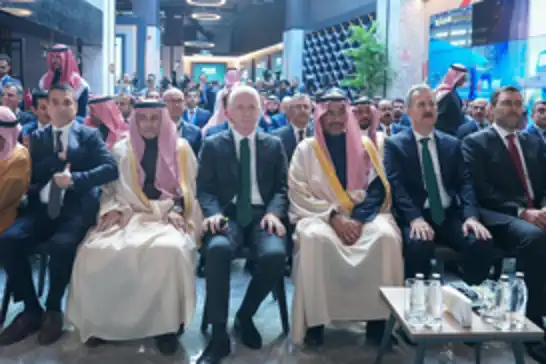
A total of 102 defence industry companies from Türkiye and Saudi Arabia gathered in Istanbul to explore new cooperation opportunities and hold bilateral business meetings.
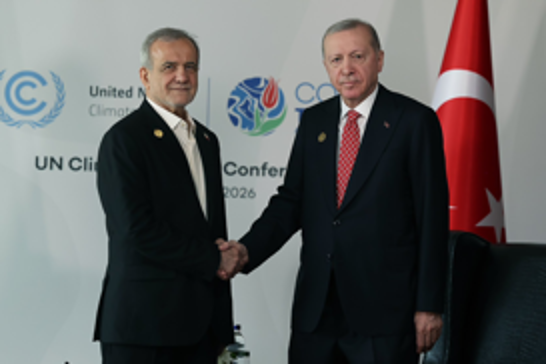
Turkish President Recep Tayyip Erdoğan met with his Iranian counterpart, Masoud Pezeshkian, on the sidelines of the 31st Conference of the Parties to the UN Framework Convention on Climate Change (COP31) in Antalya, where the two leaders discussed bilateral relations and regional and international developments.