Tunisian diplomat: Unity was the key to Salahaddin’s success
 13 oC
13 oC 
Güneşli

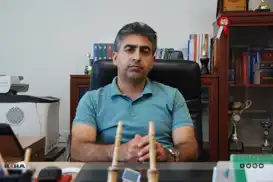
Tunisia’s Ambassador Dr. Rıza Bukadi highlighted unity, economic independence, legitimacy, institutional strength and diplomatic flexibility as key factors behind Salahaddin Ayyubi’s success, drawing lessons for the Muslim world at the “International Salahaddin and Jerusalem Panel” in Şanlıurfa, Türkiye.
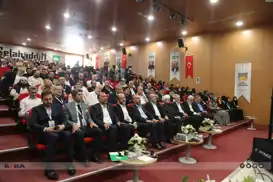
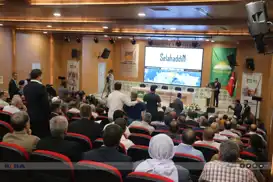
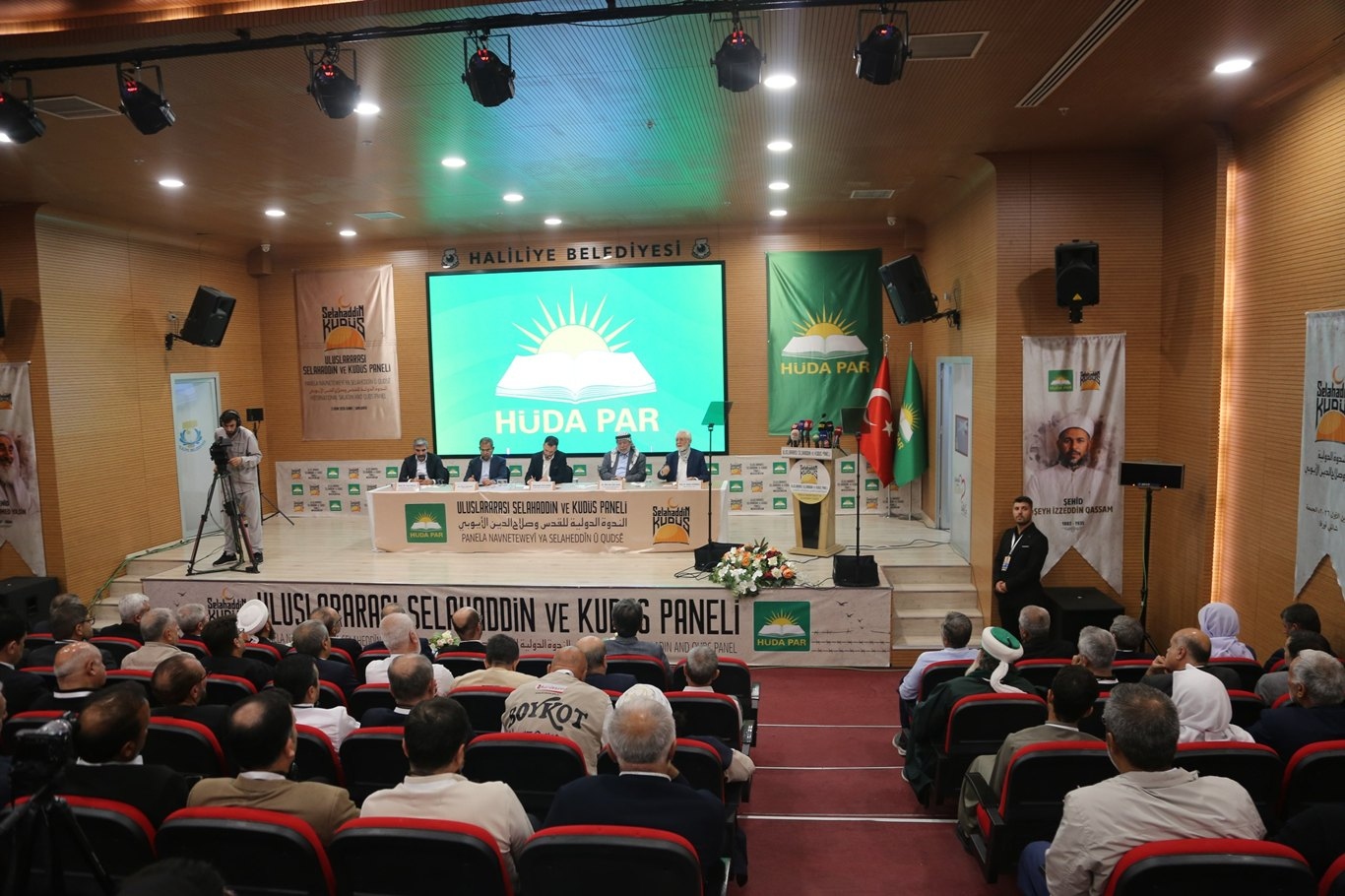
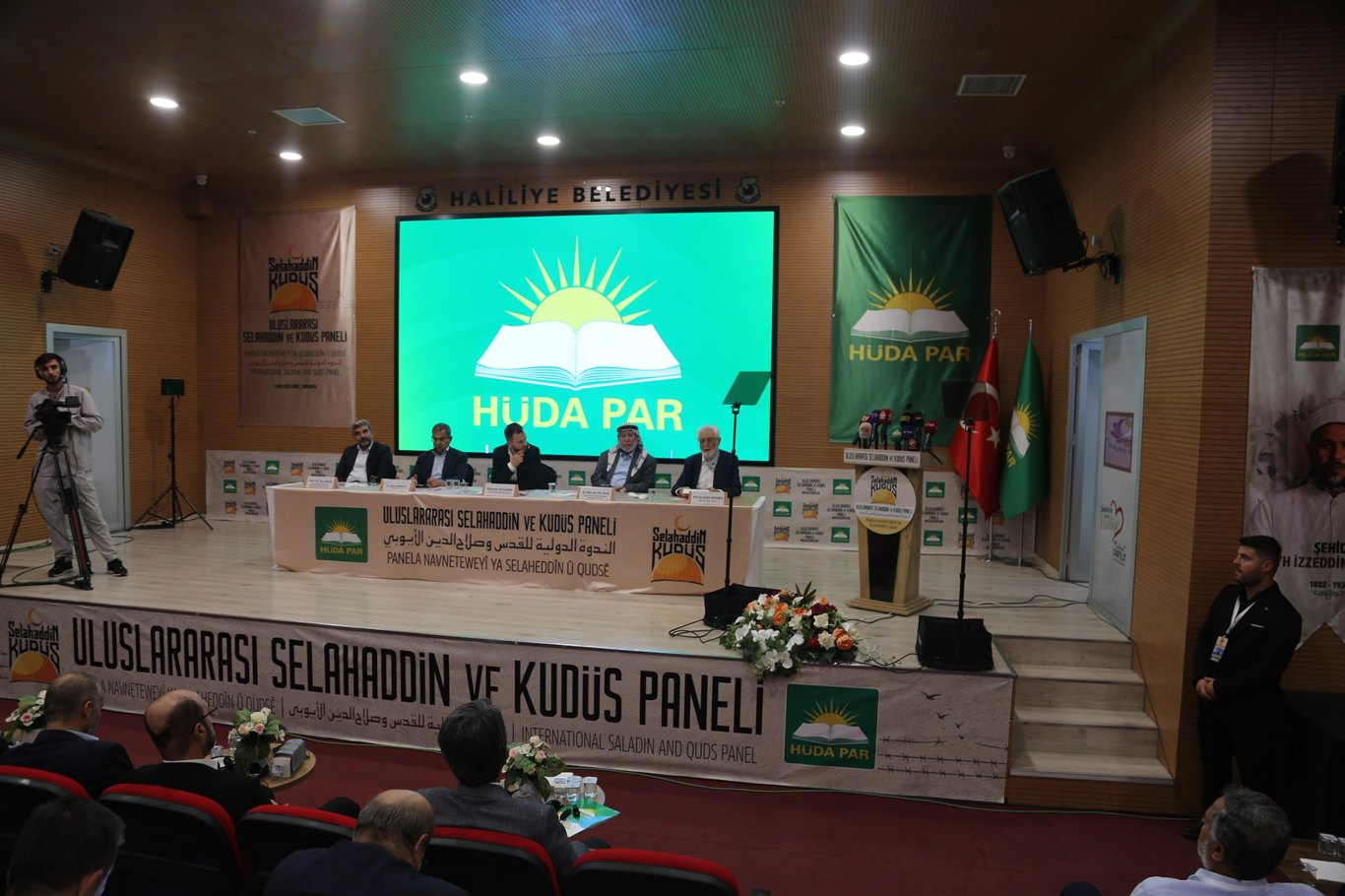
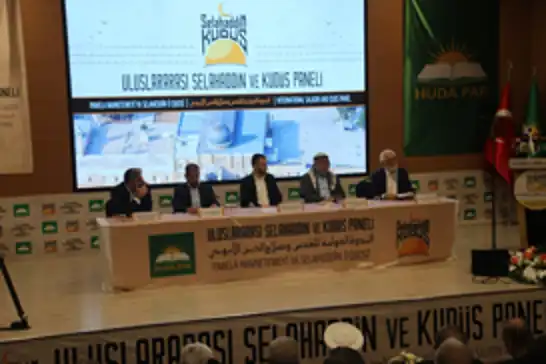
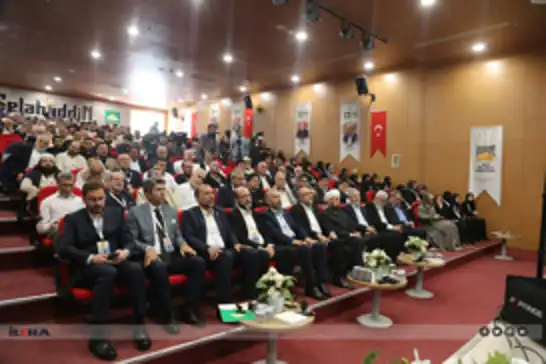
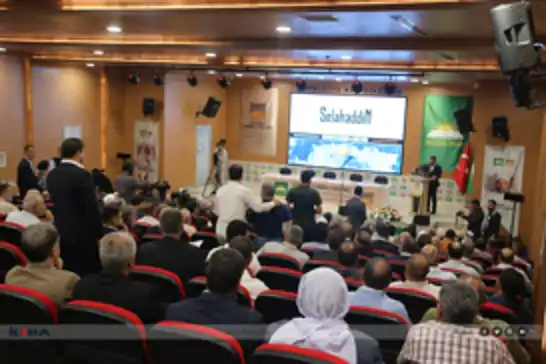
The “International Salahaddin and Jerusalem Panel,” organized by HÜDA PAR to mark the anniversary of the liberation of Jerusalem, was held at the Haliliye Municipality Youth and Culture Center Conference Hall in Şanlıurfa.
HÜDA PAR Chairman Zekeriya Yapıcıoğlu, along with local and foreign academics, researchers, scholars, community leaders and representatives of civil society organizations, attended the program.
Following the opening and presentation, the program began with a recitation of the Holy Quran by Imam Mehmet Hayati Baybostancı and continued with a welcoming speech by HÜDA PAR Deputy Chairman İshak Sağlam.
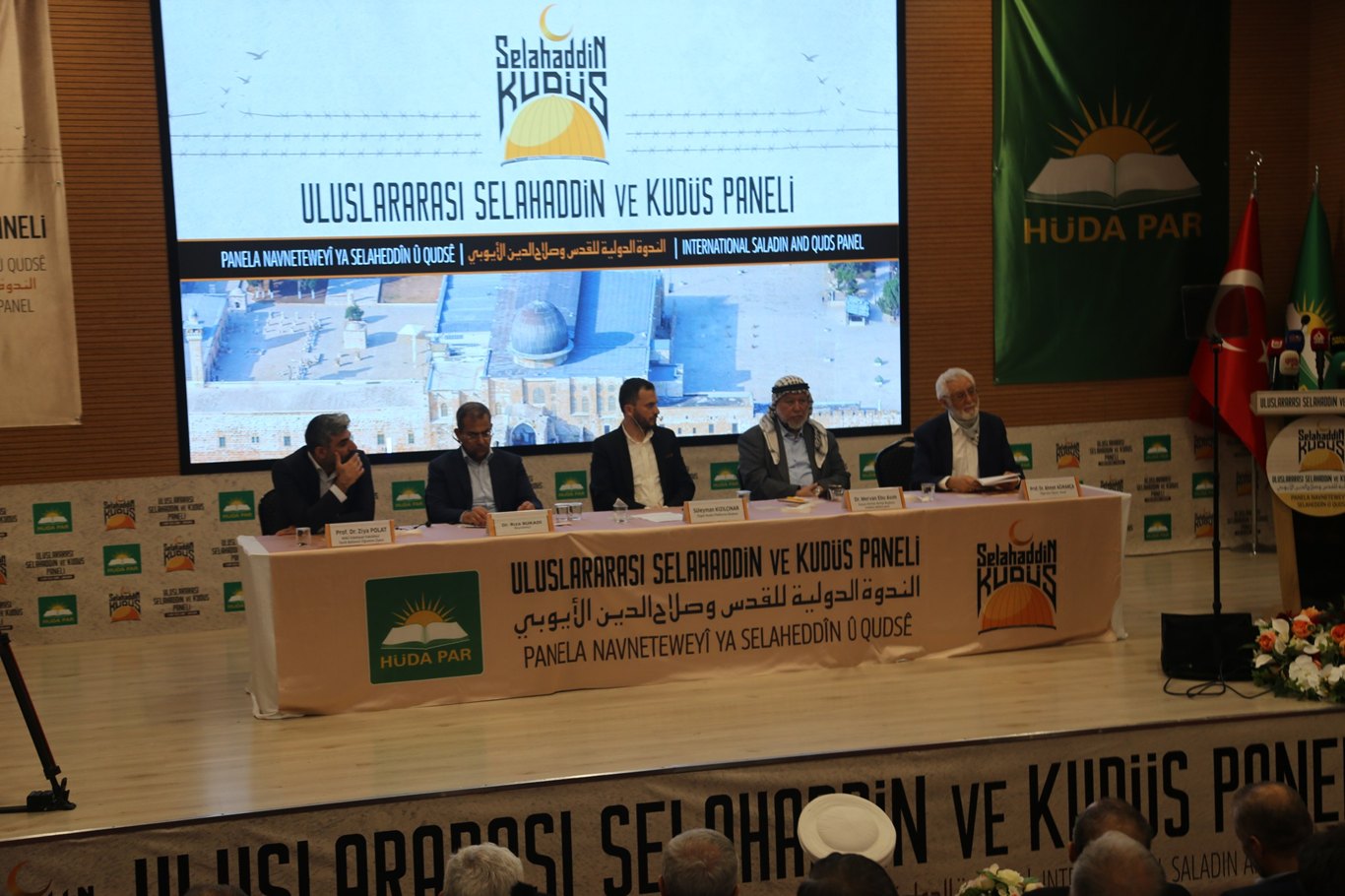
The panel sessions were then held under the moderation of Süleyman Kızılçınar, Chairman of the Free Jerusalem Platform.
Prof. Dr. Ahmet Ağırakça, an academic and author, delivered a presentation titled “Salahaddin’s Justice in Jerusalem and the International System’s Test in Gaza.”
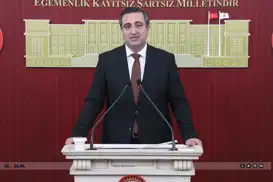
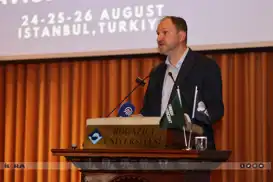
Tunisia’s Ambassador Dr. Rıza Bukadi then delivered his presentation.
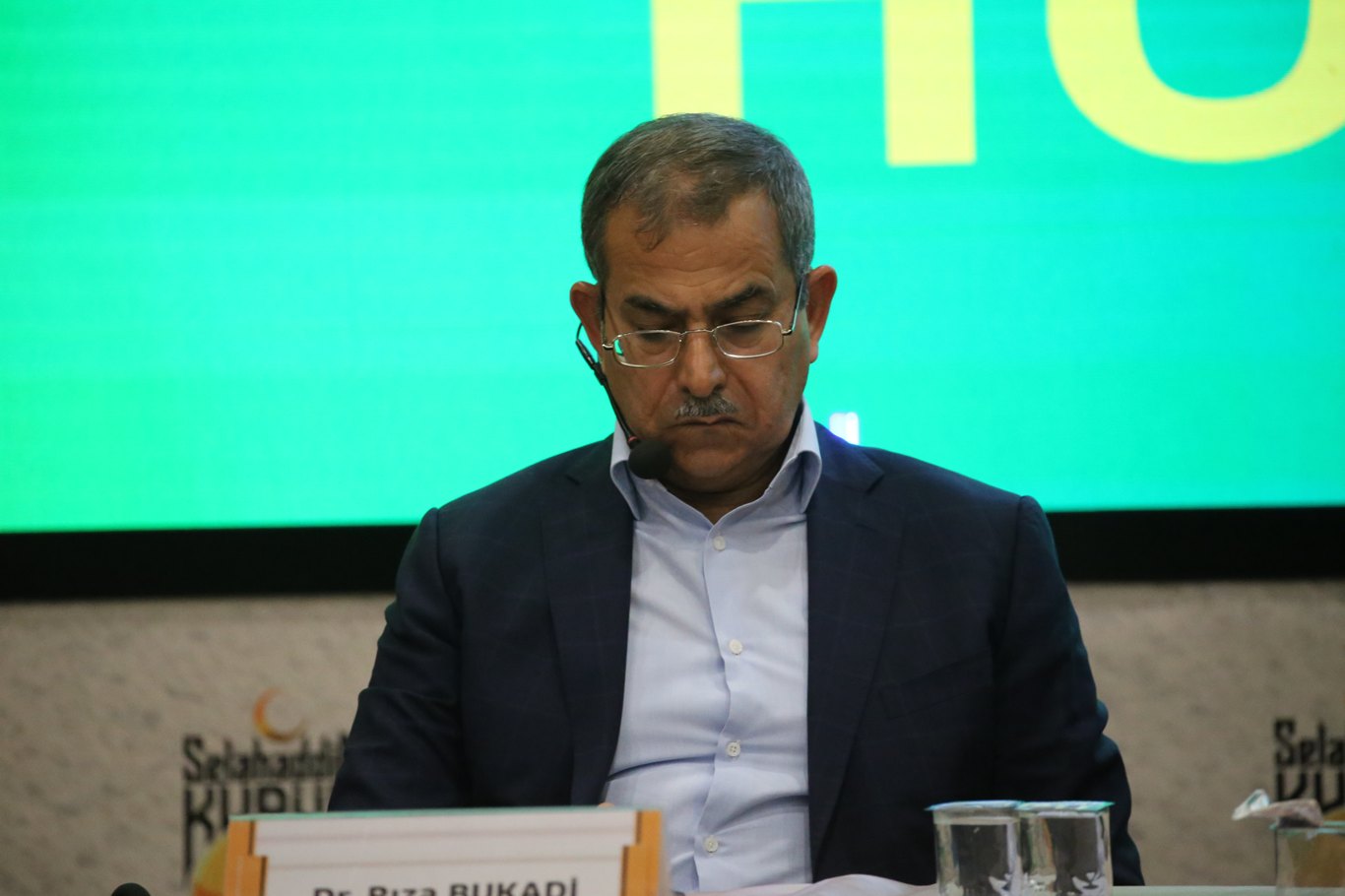
“What did Salahaddin really do?”
Bukadi based his assessment on the questions, “What did Salahaddin really do? And what can we learn from him without falling into the trap of compensatory or unhealthy nostalgia for the past?”
He said:
“First: The political context. Let us return to the 12th century AD. The Abbasid Caliphate in Baghdad was still in existence, but only symbolically. The Seljuks had fragmented into atabegates. In Cairo, the Fatimids were gradually disappearing, consumed by conflicts among the viziers. In the eastern Mediterranean, the County of Edessa, the Principality of Antioch, the County of Tripoli and the Kingdom of Jerusalem had been established from 1099 onward.
“The question is: How did the Muslims unite?
“The process began with Imad al-Din Zengi. Then came his son Nur al-Din, who united Mosul, Aleppo and Damascus. He sent Shirkuh and his nephew Salahaddin to Egypt. Thus, Salahaddin became vizier in 1169, ended the Fatimid Caliphate in 1171, and after Nur al-Din’s death, incorporated Damascus into his territories. Then came Hattin in July 1187, followed by Jerusalem.
“Pay attention to the sequence: First unity, then struggle. This was not a coincidence; it was a prerequisite.”
Bukadi said that today’s Muslim world, by contrast, consists of a system of fragmented nation-states.
“Most of these states are preoccupied with their internal affairs. Most experience political authoritarianism, economic failure, financial and administrative corruption, moral decline, and scientific and technological backwardness,” he added.
“Salahaddin derived his legitimacy from many sources”
Drawing a comparison under the heading of “Mobilization and legitimacy,” Bukadi asked where Salahaddin derived his legitimacy from and said it came not from a single source but from many.
“First, the caliphate: symbolic authorization from Baghdad. Second, the Sunni revival: through madrasas and khanqahs along the line initiated by Nizam al-Mulk. Third, jihad: This was a discourse that brought those in disagreement together against a common enemy. Historians have written that this did not emerge suddenly; it had been prepared by al-Sulami, then Ibn Asakir, and later by the Zengids. Fourth, scholars and scribes: Qadi al-Fadil, Imad al-Din al-Isfahani and Ibn Shaddad. They were also both a mechanism of administration and a mechanism of propaganda. Fifth, family and mawali: the Ayyubids and Mamluks. Sixth and most importantly, victory: Because legitimacy is renewed through victory.”
“What, then, is our reality?” Bukadi asked, noting that the legitimacy provided by international recognition is fragmented and that there is no unifying point of reference.
“There is an absence of the centrality of Islamic belonging; even religious discourse itself has become an area of contention,” he added.
Military and logistical organization
Assessing the mixed structure of Salahaddin’s army under the heading of “Military and logistical organization,” Bukadi said:
“This army had two aspects. A flexible aspect and a fragile aspect. Loyalty was personal, and soldiers would request leave after a campaign ended. This was a real limitation for his leadership.”
Qualities needed by young people and future generations of the Ummah
Bukadi said there were qualities that Allah had enabled Salahaddin Ayyubi to possess and that he wanted young people and future generations of the Ummah to possess as well.
He continued:
“1. A deep historical consciousness based on four fundamental pillars: A sound foundation of faith. A strategic outlook. Understanding the position and the existing reality. The ability to identify centers of gravity within the local society and among the enemy.
“2. Prudence, perseverance and patience in the face of the deterrent conditions of the internal situation, and acting while taking reality into account.”
Resources and economic independence in Salahaddin’s era
Under the heading of “Resources and economic independence,” Bukadi listed “the agricultural wealth of the Nile, Red Sea trade, iqta lands and endowments” as among the resources of Salahaddin’s period.
He noted that Salahaddin gained social legitimacy in his own era by abolishing illegitimate taxes.
“Today, however, some states have oil, while others have indebtedness, international financing and aid,” Bukadi said, drawing a comparison and emphasizing that whoever possesses economic power also possesses independence in political decision-making.
A successful diplomat
Describing the era of Salahaddin Ayyubi through the lens of “alliances and diplomacy,” Bukadi said Salahaddin was not only a man who fought wars but also a successful diplomat.
“Today, there are multi-axis networks, organizations such as the Arab League and the Organization of Islamic Cooperation. There are security alliances with major powers and more institutionalized diplomacy. However, regional organizations have weak binding power. We produce more statements than decisions,” Bukadi said.
Under the heading of “Division and identity,” Bukadi said:
“The 12th century was divided: Sunni and Shiite, Arabs, Turks and Kurds, rival emirs. The deepest lesson here is this: Before Hattin, Salahaddin spent years uniting the Islamic front through power and politics. Some of his contemporaries criticized him for fighting Muslims more than he fought the Franks. However, he saw unity not as an alternative to jihad, but as a prerequisite for jihad.
“Today, our divisions are sectarian and ideological: Islamist, secularist and nationalist. There are also state-driven divisions: borders and national interests. Above this, there is also sharp regional polarization.”
Pointing to the “symbol and media” of the period, Bukadi said Jerusalem was a unifying symbol and that when Salahaddin entered the city, this was accompanied by the symbol of “mercy.”
In terms of media, he said the tools of mobilization at the time were “sermons, poetry and official letters.”
“Today, channels and platforms create an instantaneous and transnational public opinion. However, they also spread disinformation and polarization,” he said.
6 factors that determined Salahaddin’s success
Bukadi said there were six factors that determined Salahaddin’s success and listed them as follows:
“First: Unity of the internal front before the struggle.
Second: An independent economic foundation.
Third: A composite legitimacy — religious, political and moral.
Fourth: An intellectual and administrative structure.
Fifth: Military intelligence in the choice of time and place.
Sixth: Taking advantage of the enemy’s division and diplomatic flexibility.”
Bukadi then asked, “What are the differences that prevent the transfer of this experience?” and answered:
“An established international system, states with different interests, external technical and financial superiority, open media, and the absence of a unifying point of reference.”
Bukadi’s recommendations
Bukadi listed his recommendations as follows:
“Economic integration before military integration: Common markets, food and energy security.
Building institutions instead of waiting for a savior.
Investing in education and research based on the madrasa model.
Using diplomacy and international law as instruments of power.”
Bukadi concluded his speech with assessments and comparisons concerning “the Crusades, colonialism and Sykes-Picot.”(ILKHA)
LEGAL WARNING: All rights of the published news, photos and videos are reserved by İlke Haber Ajansı Basın Yayın San. Trade A.Ş. Under no circumstances can all or part of the news, photos and videos be used without a written contract or subscription.
Gaza Scholars Union chairman called on the Muslim world to unite against Israeli occupation, warning of efforts to alter Jerusalem’s demographic structure and undermine the Islamic identity of Masjid al-Aqsa
HÜDA PAR Deputy Chairman İshak Sağlam has called on Muslims to draw lessons from the liberation of Jerusalem by Saladin Ayyubi in 1187 and intensify efforts to end the occupation of Jerusalem and protect Masjid al-Aqsa.
An international panel examining Saladin Ayyubi’s legacy, the struggle over Jerusalem and the ongoing crisis in Gaza has begun in southeastern Türkiye’s Şanlıurfa province, bringing together scholars, religious figures and civil society representatives to discuss the defense of Al-Aqsa Mosque and the future of Palestine.