Palestinian scholar warns of Israeli efforts to change Jerusalem’s demographic structure
 13 oC
13 oC 
Güneşli

Gaza Scholars Union chairman called on the Muslim world to unite against Israeli occupation, warning of efforts to alter Jerusalem’s demographic structure and undermine the Islamic identity of Masjid al-Aqsa
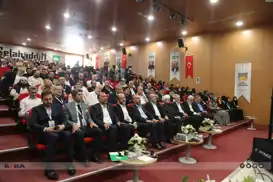
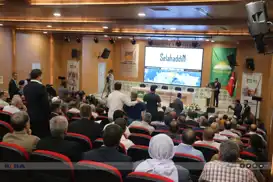
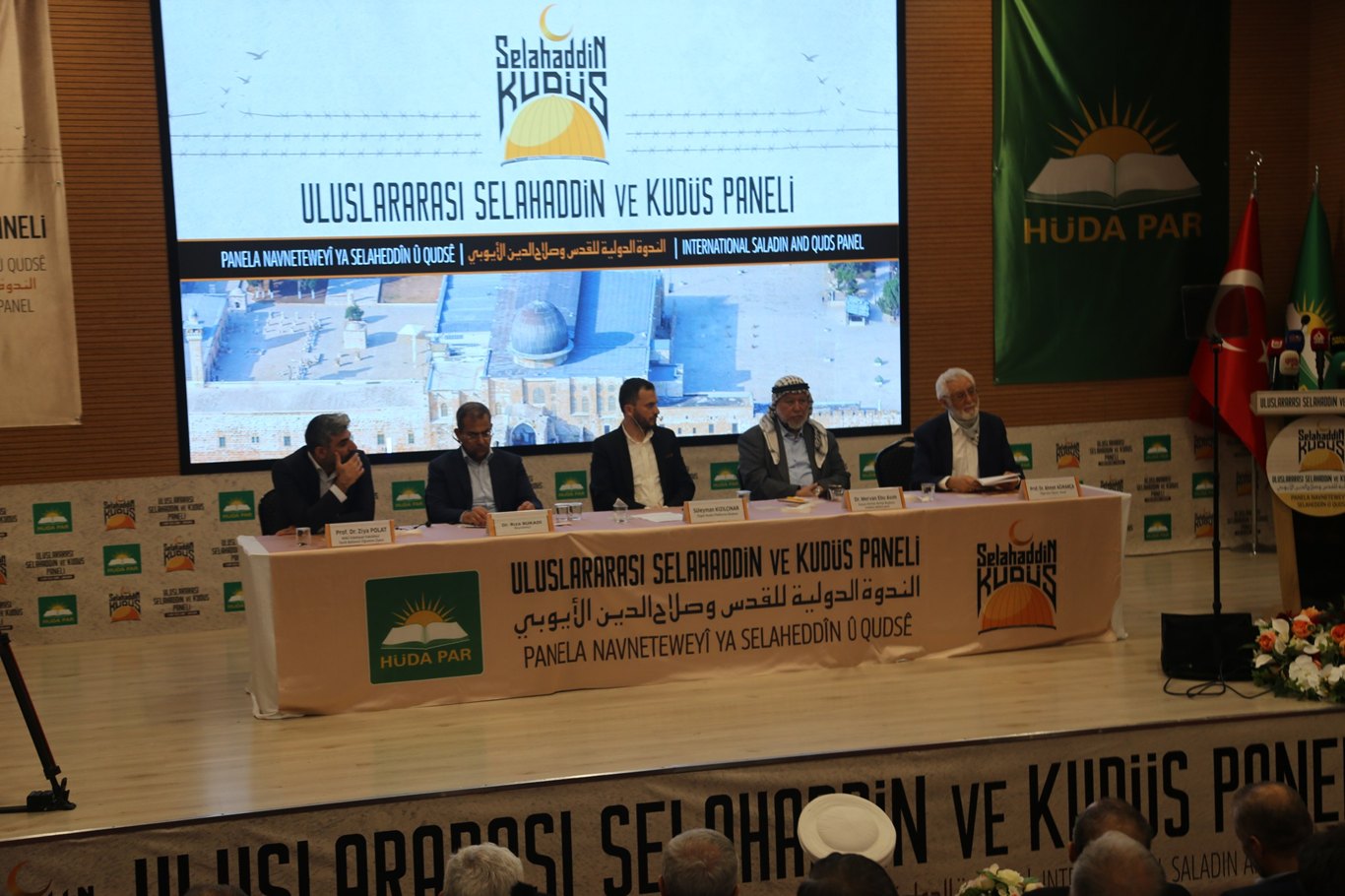
The International Saladin and Jerusalem Panel, organized by HÜDA PAR to mark the anniversary of Jerusalem’s liberation by Saladin Ayyubi, brought together academics, researchers, scholars and civil society representatives to discuss the historical significance of Jerusalem and the ongoing challenges facing the occupied holy city and Masjid al-Aqsa.
The event was held at the Haliliye Municipality Youth and Culture Center Conference Hall, with the participation of HÜDA PAR Chairman Zekeriya Yapıcıoğlu, alongside local and international academics, researchers, religious scholars, opinion leaders and representatives of civil society organizations.
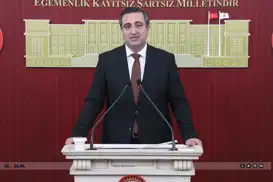
Following a recitation of the Holy Qur’an by Mehmet Hayati Baybostancı, HÜDA PAR Deputy Chairman İshak Sağlam delivered the welcoming address. The panel sessions were moderated by Süleyman Kızılçınar, chairman of the Free Jerusalem Platform.
Academic and writer Prof. Dr. Ahmet Ağırakça delivered a presentation titled “Saladin’s Justice in Jerusalem and the International System’s Gaza Test,” followed by remarks from Tunisian Ambassador Dr. Rıza Bukadi.
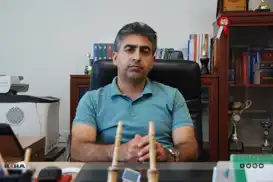
Dr. Marwan Abu Asim, chairman of the Gaza Scholars Union, subsequently addressed the gathering with a presentation titled “The Situation of Masjid al-Aqsa and Interventions Targeting the Demographic Structure of Jerusalem.”
‘Demographic change aims to drive Palestinians from Jerusalem’
Abu Asim outlined what he described as Israeli occupation policies aimed at changing Jerusalem’s demographic structure, restricting Palestinian residents and undermining the city’s historical and religious identity.
He said Jerusalem had been divided into eastern and western sections and accused Israeli authorities of expanding settlements on strategically important hills while occupying agricultural land, further altering the city’s physical and demographic landscape.
Abu Asim also highlighted restrictions on Palestinian movement, saying numerous military checkpoints control access to areas surrounding Masjid al-Aqsa. He said a wall and controlled entry points further restrict access to the occupied holy city.
According to Abu Asim, Palestinian residents face severe economic pressure, including high taxes and restrictions that make it increasingly difficult for them to remain in their homes and businesses.
He said that while substantial sums of money were reportedly offered to persuade residents to sell their properties, many refused to abandon their homes despite the pressure.
“They aim to reduce the population in the region and achieve a general demographic change,” Abu Asim said.
He argued that these measures were part of a broader effort to displace Palestinians and change the character of Jerusalem.
‘They are trying to empty Jerusalem’s neighborhoods’
Abu Asim also criticized policies affecting Palestinian communities across Jerusalem and the occupied West Bank, saying restrictions on construction and heavy financial burdens were placing residents under growing pressure.
He referred to what he described as an Israeli project to establish Jerusalem as the sole capital, accusing the authorities of seeking to empty Palestinian neighborhoods by making life increasingly difficult for their inhabitants.
“They have a project titled ‘Jerusalem is the sole capital.’ They are trying to empty the neighborhoods of Jerusalem,” he said.
Abu Asim added that Palestinian Muslims faced serious obstacles when seeking permission to build homes and claimed that properties belonging to Palestinians forcibly displaced since 1967 had been confiscated.
His remarks underscored the central concern raised throughout his presentation: that restrictions on housing, movement and property ownership threaten the continued presence of Palestinian communities in Jerusalem.
‘They want to seize the rest of Masjid al-Aqsa’
Turning to Masjid al-Aqsa, one of Islam’s holiest sites, Abu Asim warned of what he described as efforts to alter its historical and religious character.
He said the demolition of historic areas surrounding the sanctuary and attempts to take control of the Moroccan Quarter, near the Buraq Wall, threatened Jerusalem’s Islamic heritage.
Abu Asim also recalled the 1969 arson attack that severely damaged the historic pulpit of Saladin Ayyubi inside Masjid al-Aqsa, an incident that remains a painful episode in the history of the holy site.
He further denounced restrictions on Muslim worshippers seeking access to the sanctuary, saying such measures undermined their religious rights.
Referring to the compound’s dimensions, Abu Asim said the entire Al-Aqsa sanctuary covers approximately 144,000 square meters, while the Qibli Mosque occupies around 5,000 square meters.
He warned that attempts to portray only the Qibli Mosque building as Masjid al-Aqsa could mislead the public about the extent of the sacred compound.
“By spreading the lie that ‘only this is Masjid al-Aqsa,’ they want to seize the rest,” he said.
Abu Asim also referred to the reported closure of Masjid al-Aqsa for 40 days during Ramadan, describing it as an unprecedented development since Salahuddin’s liberation of Jerusalem. His remarks highlighted continuing concerns among Palestinians and Muslims over access to the sanctuary and the preservation of its Islamic identity.
Red heifer preparations raise concerns over Al-Aqsa
Abu Asim also addressed preparations associated with the red heifer ritual, which has drawn concern among Palestinians and Muslim communities because of its perceived connection to certain religious groups’ ambitions concerning the Temple Mount, the site of Masjid al-Aqsa.
He said preparations were underway to sacrifice imported red heifers and use their ashes in religious rituals. He also criticized Israeli Prime Minister Benjamin Netanyahu’s statements concerning the site, interpreting them as a message asserting Israeli ownership over the area.
The issue remains particularly sensitive because Masjid al-Aqsa is a central symbol of Islamic faith and Palestinian national identity, while the sanctuary’s status and access arrangements are among the most contentious issues in Jerusalem.
‘There is a single enemy in front of us’
Concluding his remarks, Abu Asim called on Muslims to overcome their divisions and take a united stand in support of Palestinians, particularly those facing the ongoing Israeli assault on Gaza.
He questioned the response of the wider Muslim world as Palestinians continue to be killed and wounded, emphasizing the need for solidarity with Gaza and the protection of Jerusalem and Masjid al-Aqsa.
“Where is the Ummah? Gaza is bleeding, martyrs are being given every day. Where is the Ummah?” he asked.
“There is a single enemy in front of us. We must all stand against him as one body,” he added.
Abu Asim’s remarks placed the struggle for Jerusalem and Masjid al-Aqsa within a broader call for Muslim solidarity, urging the Ummah to remain attentive to the plight of Palestinians and the future of Islam’s holy sites.
The panel sought to draw lessons from Saladin Ayyubi’s liberation of Jerusalem while examining contemporary challenges facing the city, including restrictions on Palestinian residents, access to Masjid al-Aqsa and the preservation of Jerusalem’s historic and religious character. (ILKHA)
LEGAL WARNING: All rights of the published news, photos and videos are reserved by İlke Haber Ajansı Basın Yayın San. Trade A.Ş. Under no circumstances can all or part of the news, photos and videos be used without a written contract or subscription.
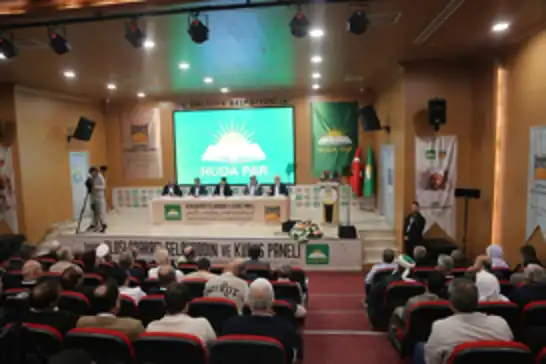
Tunisia’s Ambassador Dr. Rıza Bukadi highlighted unity, economic independence, legitimacy, institutional strength and diplomatic flexibility as key factors behind Salahaddin Ayyubi’s success, drawing lessons for the Muslim world at the “International Salahaddin and Jerusalem Panel” in Şanlıurfa, Türkiye.
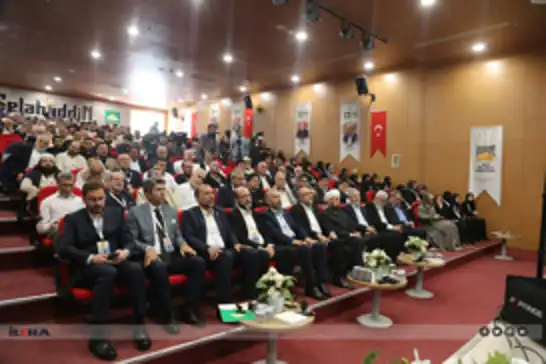
HÜDA PAR Deputy Chairman İshak Sağlam has called on Muslims to draw lessons from the liberation of Jerusalem by Saladin Ayyubi in 1187 and intensify efforts to end the occupation of Jerusalem and protect Masjid al-Aqsa.
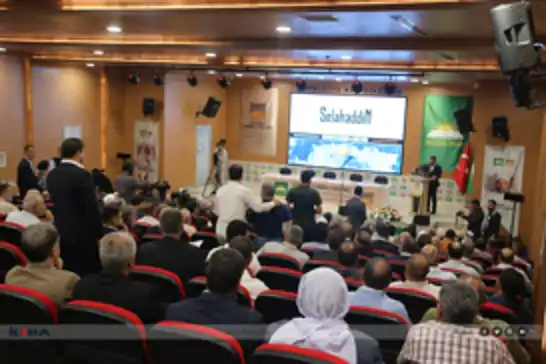
An international panel examining Saladin Ayyubi’s legacy, the struggle over Jerusalem and the ongoing crisis in Gaza has begun in southeastern Türkiye’s Şanlıurfa province, bringing together scholars, religious figures and civil society representatives to discuss the defense of Al-Aqsa Mosque and the future of Palestine.