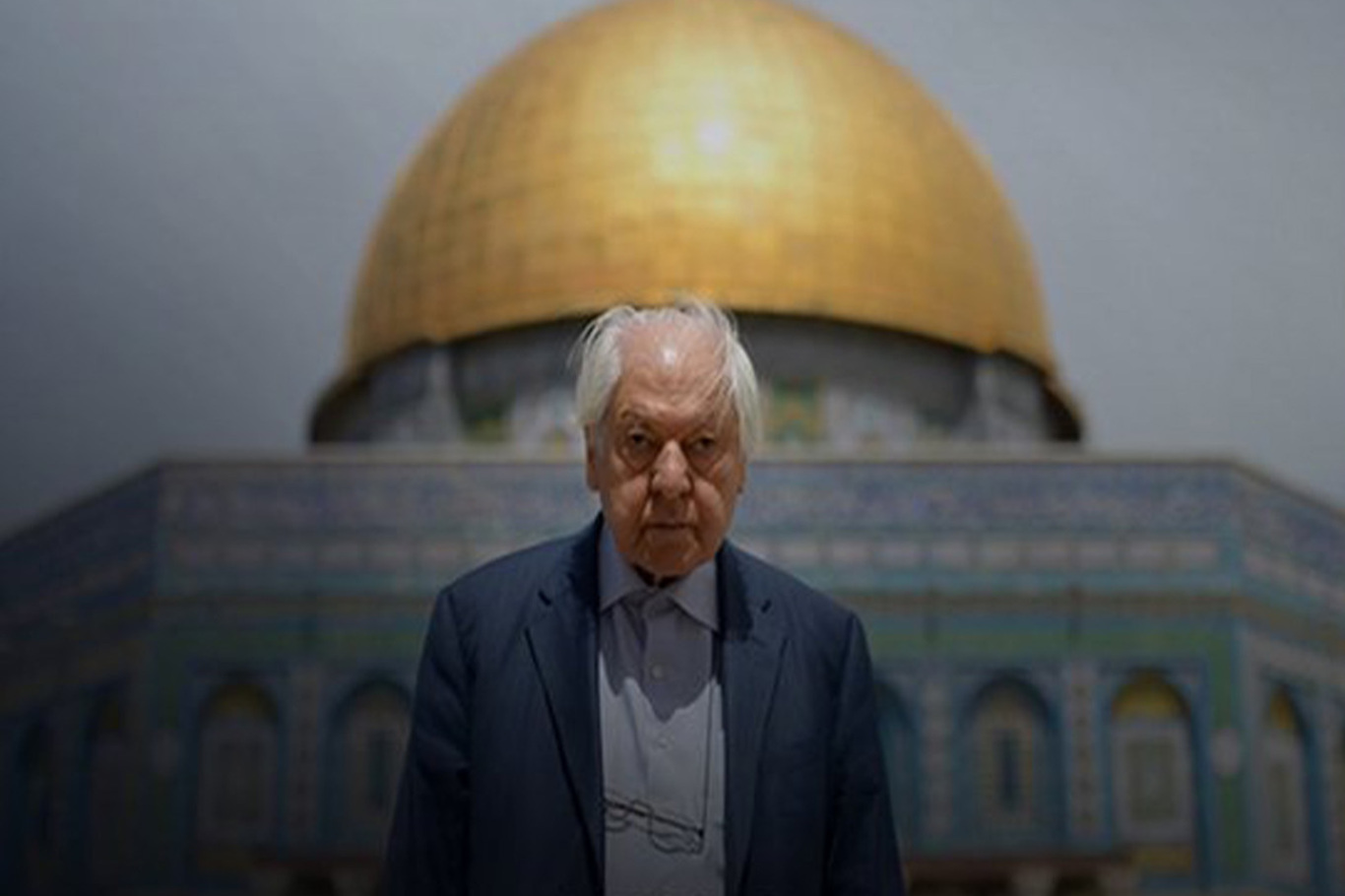
Nuri Pakdil, the ‘Poet of Jerusalem,’ remembered on seventh anniversary of his death
 13 oC
13 oC 
Güneşli

The seventh anniversary of the death of Nuri Pakdil, the renowned Turkish poet, writer and intellectual whose literary legacy was deeply rooted in his love for Jerusalem and solidarity with Palestine, is being commemorated on Sunday, October 18.
Pakdil, widely known as the “Poet of Jerusalem” (Kudüs Şairi), died in Ankara on October 18, 2019, at the age of 85. Through his poetry, essays and political writings, he championed Jerusalem as a symbol of Islamic identity, resistance to oppression and the enduring struggle of the Palestinian people.
His words continue to resonate among readers who regard Jerusalem not merely as a geographical place but as a sacred city whose freedom and dignity remain central to the conscience of the Muslim world.
“I carry Jerusalem like a wristwatch. Without adjusting yourself to Jerusalem, you waste your time, you freeze, and your eyes lose their sight,” Pakdil wrote in one of his best-known expressions, capturing the profound spiritual and intellectual place the holy city occupied in his life.
A literary voice devoted to Jerusalem and Palestine
Pakdil was one of the influential figures in modern Turkish Islamic literature and was associated with the literary generation known as the “Seven Beautiful Men” (Yedi Güzel Adam).
His writings brought together literature, faith, cultural identity and opposition to imperialism. He consistently emphasised the importance of preserving spiritual values and resisting systems of domination, while placing Jerusalem and the Palestinian cause at the heart of his intellectual vision.
For Pakdil, solidarity with Palestine was not simply a political position but a moral responsibility shaped by his religious convictions and understanding of justice.
His literary legacy continues to inspire readers who view the Palestinian struggle as a demand for freedom, dignity and the protection of the rights of an oppressed people.
Edebiyat journal shaped generations of writers
In 1969, Pakdil founded the influential monthly Edebiyat journal alongside fellow writers and intellectuals, including Rasim Özdenören, Erdem Bayazıt and Akif İnan.
Describing the publication as a “base of patience,” Pakdil used the journal to promote a literary vision grounded in Islamic values, intellectual independence and cultural renewal. It became an important platform for emerging Turkish writers and poets before ceasing publication in 1984.
Throughout his career, Pakdil produced more than 40 works encompassing poetry, essays, plays, letters and diaries. He also translated works from Arabic and French, contributing to the exchange of literary and intellectual ideas across cultures.
His distinctive use of language, typography and page layout reflected his belief that literature could serve as a form of intellectual resistance, challenging established conventions while expressing deeply rooted cultural and spiritual commitments.
A legacy that keeps Jerusalem in the Muslim conscience
Seven years after his death, Pakdil's writings remain a reminder of the enduring place of Jerusalem in Islamic thought and the importance of standing with the Palestinian people in their pursuit of freedom and justice.
His work challenged readers to move beyond symbolic expressions of solidarity and to consider the moral responsibilities that accompany faith, conscience and a commitment to the oppressed.
For Pakdil, Jerusalem was never a distant concern. It was a spiritual compass, a measure of intellectual integrity and a cause that demanded unwavering attention.
As his anniversary is marked across Türkiye's literary and cultural circles, the legacy of the “Poet of Jerusalem” continues to speak to generations who share his conviction that the liberation of Jerusalem and justice for Palestine remain enduring moral imperatives. (ILKHA)
LEGAL WARNING: All rights of the published news, photos and videos are reserved by İlke Haber Ajansı Basın Yayın San. Trade A.Ş. Under no circumstances can all or part of the news, photos and videos be used without a written contract or subscription.
HÜDA PAR Chairman Zekeriya Yapıcıoğlu has called for sweeping economic and social reforms, stronger protection for families and greater unity among Muslim countries, arguing that Türkiye must prioritize justice and human dignity over political interests and financial gain.
Orphans Foundation (Yetimler Vakfı), a humanitarian organization supporting orphaned children and vulnerable families in Türkiye and abroad, has launched a campaign to provide baby formula to infants facing hunger and malnutrition amid the humanitarian crisis in Gaza.
Turkish President Recep Tayyip Erdoğan and Cambodian Prime Minister Hun Manet have pledged to strengthen bilateral ties, with a focus on trade, defence, energy, education and cultural cooperation.