HÜDA PAR: 6-8 October attacks targeted Muslims and Islamic organizations
 13 oC
13 oC 
Güneşli

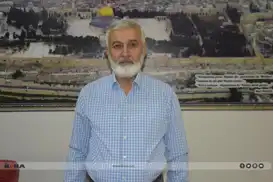
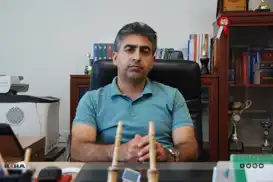
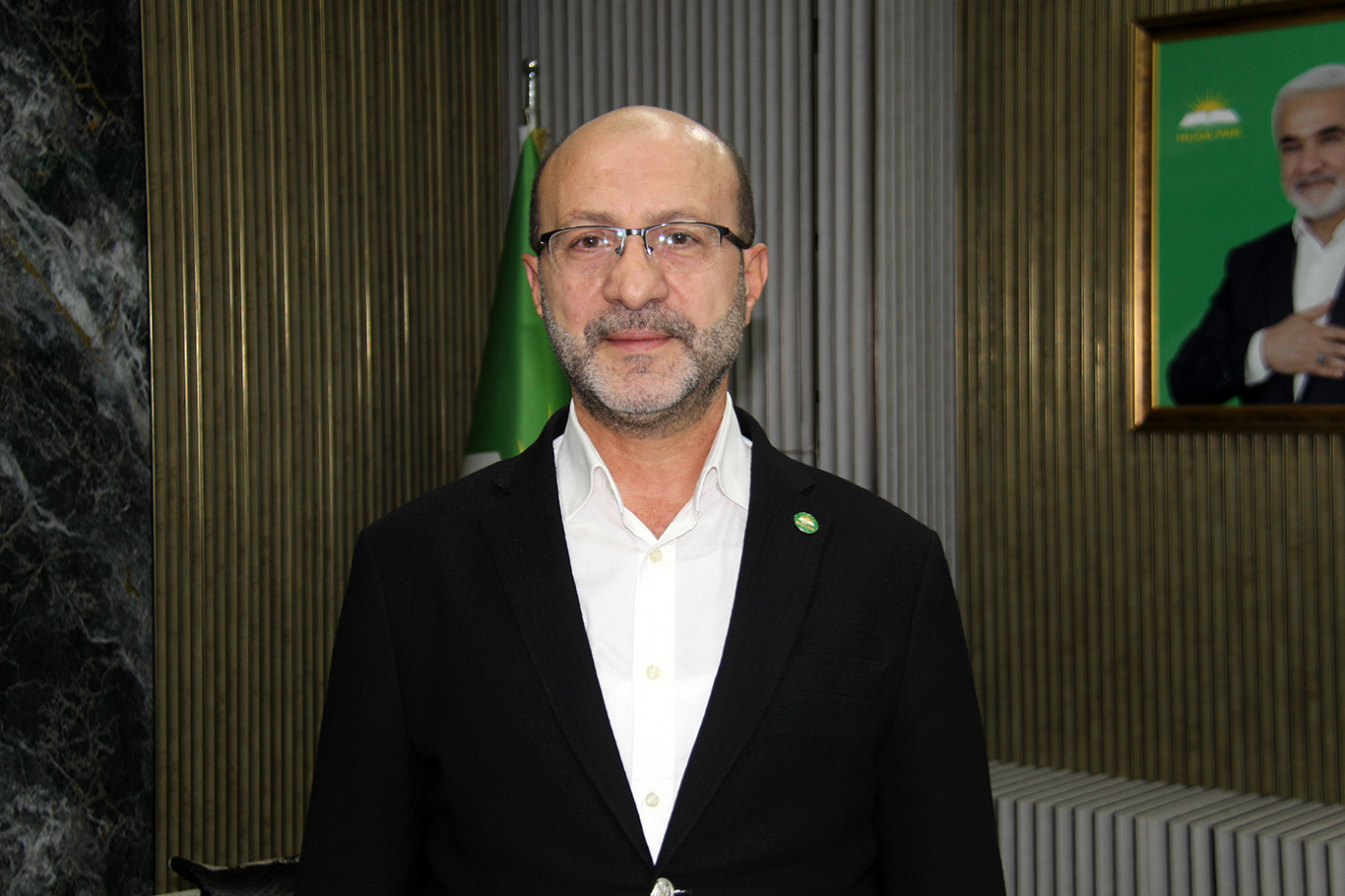
Twelve years after the Oct. 6-8, 2014 violence that left dozens dead across southeastern Türkiye, HÜDA PAR General Administrative Board member Şeyhmus Tanrıkulu said the events represented one of the most serious attacks faced by the region's Islamic community in modern history.
Tanrıkulu, who was HÜDA PAR's Diyarbakır provincial chairman at the time, spoke to İLKHA about the violence, the groups he said were targeted and the political forces he believes sought to create chaos and suppress Islamic identity in the region.
He said the passage of 12 years had not diminished the pain of the victims and their families.
“Yes, 12 years have passed. The pain is still as fresh as on the first day,” Tanrıkulu said.
He described the events as what he considered an attempted campaign to suppress the Islamic movement and Muslims in the region.
‘The Islamic community was targeted as a whole’
Tanrıkulu said attacks against Muslims had begun before the October 2014 violence, arguing that HÜDA PAR members and Islamic civil society organizations had increasingly become targets during the period known as the “solution process.”
According to Tanrıkulu, the PKK and affiliated structures had identified Muslims and Islamic organizations as an obstacle to their political and ideological objectives.
“The first among their targets in the cities was HÜDA PAR and its circle, that is, the Islamic segment,” he said.
He said the events surrounding Kobani were subsequently used as a pretext for attacks on Muslim communities, businesses and property.
“They embarked on efforts to neutralize the Muslims in the region and to loot their homes, workplaces and cars,” he said.
Tanrıkulu said more than 200 HÜDA PAR provincial and district organizations, along with party members, were targeted during the violence.
“Savage, barbaric murders were committed,” he said. “The Islamic segment was targeted as a whole. The symbols of Islam were targeted. Mosques, madrasas, civil society organizations and, at the same time, more than 200 of our party's provincial and district organizations, along with our members, were targeted.”
He argued that the violence was not simply a political confrontation but also an attempt to intimidate people who openly identified with Islam.
‘They failed to silence the Islamic community’
Despite the attacks, Tanrıkulu said Islamic organizations in the region refused to abandon their principles or submit to intimidation.
“Thank God they failed to achieve their goals,” he said.
He attributed this in part to what he described as the restraint and prudence shown by the Islamic community in the face of violence.
“Through the prudent approach of the Islamic segment, their tricks and traps were completely neutralized,” he said.
Tanrıkulu argued that HÜDA PAR and other Islamic organizations continued their activities despite the violence and did not abandon their commitment to serving the people.
Tanrıkulu accuses foreign powers of seeking to reshape the region
Tanrıkulu also alleged that foreign powers sought to influence the region's political and social structure and weaken Islamic consciousness among Kurds.
Referring to the political environment of 2013-2014, he alleged that contacts between US officials and representatives of the HDP and PKK were followed by renewed targeting of HÜDA PAR and Islamic civil society organizations.
“America wanted the region to be de-Islamized, for there to be no Islamic consciousness, and for a communist and materialist mindset ... to spread among the Kurds,” Tanrıkulu said.
He argued that Islamic identity represented a major obstacle to such efforts.
“Those who would stand against this were the Muslims who embraced an Islamic identity,” he said.
Tanrıkulu also pointed to the large quantities of weapons and military equipment transferred to armed groups in Syria during the period, arguing that these developments had broader political consequences for the region.
‘There has been no genuine reckoning’
Tanrıkulu criticized what he described as the failure of the PKK and HDP political tradition to offer a comprehensive apology or conduct a serious internal reckoning over the October 2014 violence.
“The PKK-HDP has not apologized to the Muslim Kurdish people, nor has it engaged in self-criticism,” he said.
While acknowledging that some individuals associated with the HDP line had expressed regret, he argued that this had not amounted to a broader institutional reckoning.
“No apology was made to the Muslim Kurdish people,” he said. “They did not engage in reckoning, or in their own terminology, self-criticism.”
Tanrıkulu said the burning of workplaces and vehicles, destruction of property and attacks against neighbors had left a lasting impact on Kurdish society.
“I do not believe they have engaged in any serious reckoning of this kind. We have not seen it either,” he said.
‘Nearly 100,000 Kurds paid a heavy price’
Tanrıkulu also questioned the long-term consequences of decades of armed conflict and the political strategy pursued by the PKK.
“What is the result of trying to impose your ideology on others through the weapons and military power in your hands, and trying to eliminate those who do not accept it?” he asked.
He argued that the movement had failed to deliver the objectives it had promised its supporters.
“In return for what they promised people, nearly one hundred thousand Kurds lost their lives, and very heavy prices were paid,” he said.
Tanrıkulu said the consequences of the conflict should not be forgotten as Türkiye enters a new phase in its efforts to resolve the country's longstanding security and political problems.
‘Laying down arms does not erase the past’
Assessing the current process, Tanrıkulu said HÜDA PAR supports an end to violence but warned against complacency.
He said the PKK's ideological background and history meant that society should remain cautious despite developments concerning disarmament and dissolution.
“Let us not forget that an organization like the PKK, which has a Jacobin, despotic and Marxist mindset, is ready to engage in similar street clashes or savage murders whenever it gets the opportunity,” he said.
“The fact that they dissolve themselves or lay down their arms today does not mean that they will not commit such savage, barbaric murders again tomorrow.”
Tanrıkulu emphasized that HÜDA PAR and the Islamic community oppose violence and conflict, arguing that lasting change should be pursued through intellectual, social and political engagement rather than force.
He concluded by remembering those killed during the October 6-8 violence.
“Once again, I pray to Allah for mercy upon our martyrs, and patience to their families, loved ones and fellow travelers in the cause,” he said.
Twelve years on, the October 6-8 events remain a deeply contested chapter in Türkiye's recent history. For HÜDA PAR and many members of the region's Islamic community, however, the events are remembered not simply as political unrest but as a period in which Muslims, Islamic institutions and HÜDA PAR supporters faced targeted violence — a memory the party says must remain part of any discussion about reconciliation, justice and the region's political future. (ILKHA)
LEGAL WARNING: All rights of the published news, photos and videos are reserved by İlke Haber Ajansı Basın Yayın San. Trade A.Ş. Under no circumstances can all or part of the news, photos and videos be used without a written contract or subscription.
Eight students were injured in a stabbing at a middle school in Istanbul's Başakşehir district on Tuesday, with one in critical condition and two others in serious-to-moderate condition, according to Turkish authorities.
The Oct. 7, 2023 Operation Al-Aqsa Flood transformed the Palestinian struggle from a regional issue into a global cause, challenged perceptions of Israel's military dominance and forced Muslims to reconsider their responsibilities toward Palestine, Turkish theologian Prof. Dr. Abdurrahman Ateş said.
Türkiye's Ministry of Foreign Affairs has expressed condolences following the deadly crash of a Nigerian military aircraft in Ondo State, extending sympathies to the victims' families and the Nigerian people.