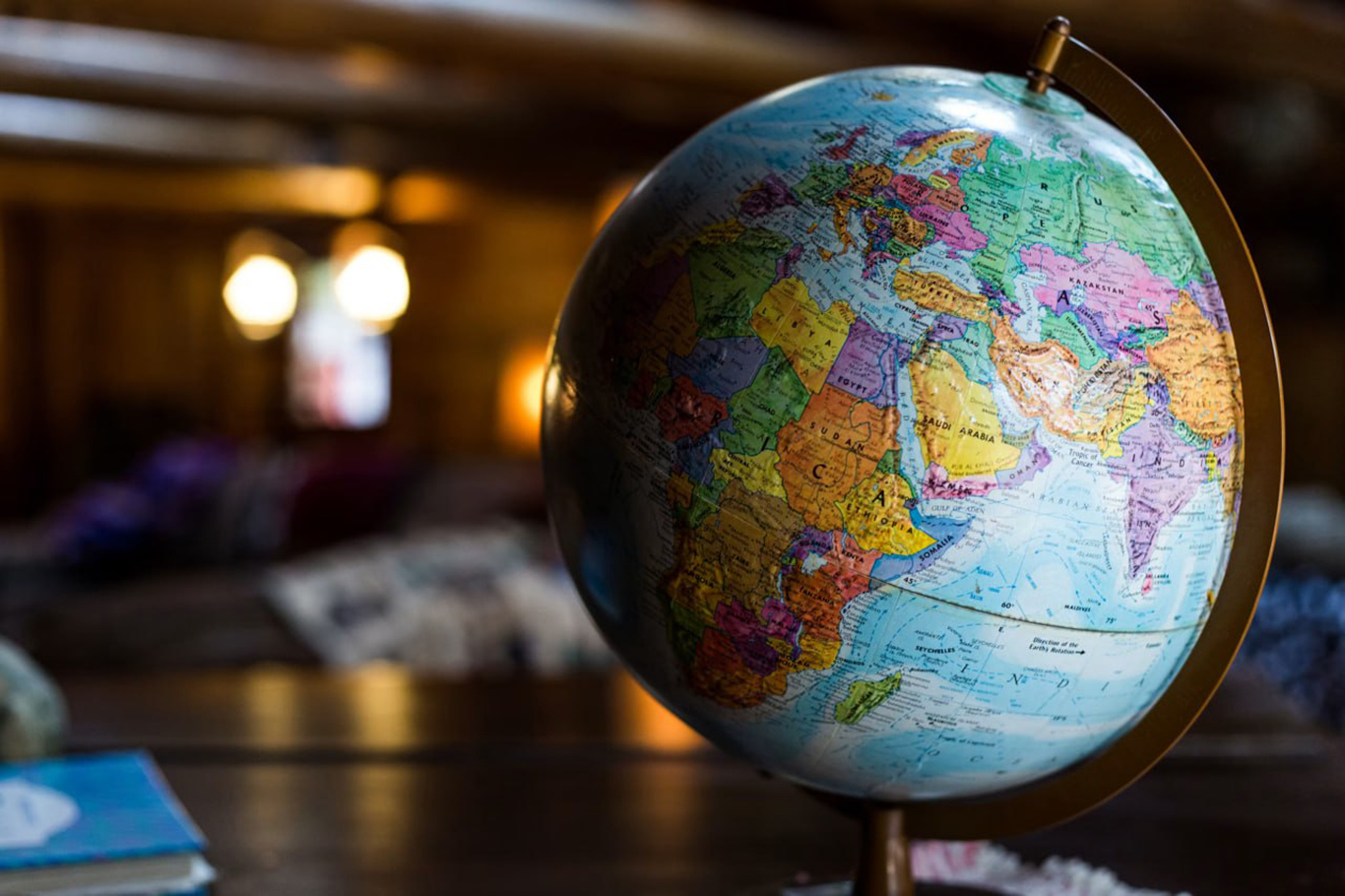
UN backs new world map to better reflect Africa’s true size
 13 oC
13 oC 
Güneşli

The United Nations General Assembly has voted in favor of replacing the traditional world map with a projection that more accurately reflects the actual size of Africa and other continents.
The resolution, known as “Correct the Map,” was sponsored by Togo and supported by members of the African Union (AU). It received the backing of 164 countries, including France and the United Kingdom. The United States was the only country to vote against the resolution, while six countries abstained.
Although the General Assembly resolution is non-binding, the vote is expected to encourage UN agencies, educational institutions and other organizations around the world to adopt maps that provide a more accurate representation of continental size.
Mercator projection criticized for distorting Africa’s size
The move focuses largely on the long-standing use of the Mercator projection, a map developed in 1569 by Flemish cartographer Gerardus Mercator primarily to assist European navigators.
While the projection has been widely used for centuries, it has faced increasing criticism because of the way it distorts the relative size of land masses.
On a Mercator map, countries and regions closer to the North and South Poles appear significantly larger than they actually are, while areas around the equator appear comparatively smaller.
One of the most striking examples is the comparison between Africa and Greenland. On the Mercator projection, Greenland can appear similar in size to Africa, despite Africa being approximately 14 times larger in actual area.
Critics argue that such distortions can shape public perceptions of the world and contribute to an underestimation of Africa’s geographic scale, population, resources and economic potential.
Equal Earth projection offers an alternative
The controversy stems from a fundamental challenge in cartography: it is impossible to accurately transfer the curved surface of the Earth onto a flat, two-dimensional map without introducing some form of distortion.
Different map projections therefore make different compromises, prioritizing factors such as shape, distance, direction or area.
Seeking to address the problem of continental size distortion, a team of cartographers developed the Equal Earth projection in 2018. Unlike the Mercator projection, Equal Earth is designed to preserve the relative areas of continents more accurately while maintaining a visually familiar representation of the globe.
The projection has gained growing support in Africa. In February, the African Union’s 54 member states adopted the Equal Earth projection, saying it provides a more accurate representation of the size of all continents, particularly Africa.
The UN General Assembly’s latest vote could further accelerate efforts to replace distorted world maps in classrooms, official publications and institutional materials.
The debate over the world map is therefore not simply a question of cartographic design. Supporters of the change argue that how the world is visually represented can influence how people understand the geographic importance, scale and potential of different regions. (ILKHA)
LEGAL WARNING: All rights of the published news, photos and videos are reserved by İlke Haber Ajansı Basın Yayın San. Trade A.Ş. Under no circumstances can all or part of the news, photos and videos be used without a written contract or subscription.
The Pentagon has administered polygraph tests to around 50 military officers and civilian officials as part of an investigation into leaks about declining U.S. munitions stocks amid the ongoing war with Iran, according to multiple U.S. media reports.

Iran has completed a significant part of the reconstruction of oil refineries and energy facilities damaged during the conflict that began on February 28, Iranian Oil Minister Mohsen Paknejad said, adding that the country's crude oil exports continued despite attacks on key infrastructure.

Greece's Athens Medical Association (ISA) has warned that the risk of West Nile virus transmission remains high despite the end of the summer season, urging residents of the Attica region to continue taking protective measures throughout September.