Trump suffers crushing midterm defeat as voters reject his aggressive policies, including war on Iran
 13 oC

Güneşli

Republicans lost Senate seats in traditionally conservative strongholds, including Texas and South Carolina, while Democrats made gains in districts that had long been considered safely Republican. The results also dealt a serious blow to the party's efforts to maintain its grip on Congress.
US President Donald Trump's Republican Party has suffered a devastating setback in the 2026 midterm elections, with Democrats making historic gains in both chambers of Congress in a powerful rejection of the administration's domestic and foreign policies, particularly its confrontational approach towards Iran.
The scale of the Republican defeat has exposed growing public frustration with Trump's leadership, as voters delivered a sharp rebuke to an administration increasingly associated with economic hardship, military escalation and controversial political deciThe outcome represents one of the most significant electoral setbacks for a sitting US president in decades, raising questions about the future of Trump's political movement and the direction of the Republican Party.
Iran war and economic hardship fuel voter backlash
The backlash came after months of growing dissatisfaction over rising living costs, Trump's trade policies and his administration's military confrontation with Iran.
Trump returned to the White House promising economic stability and an end to costly foreign conflicts. Instead, his administration pursued an increasingly aggressive Middle East policy, escalating tensions with Tehran and exposing the American public to the economic and security consequences of another regional war.
Critics argue that Trump's approach has undermined regional stability, threatened international energy supplies and diverted attention and resources from pressing domestic problems.
The election results suggest that a significant section of the American electorate has grown increasingly unwilling to support a foreign policy built around military pressure, threats and confrontation rather than diplomacy.
Democratic victories reshape the political map
One of the most striking developments was the Democratic victory in Texas, where James Talarico secured a Senate seat, ending a Republican hold on the state's Senate representation that had lasted for decades.
The result could have far-reaching implications for future presidential elections, given Texas's importance in determining the balance of power in the Electoral College.
Democrats also made significant gains in other Republican strongholds, demonstrating that Trump's political influence has not translated into lasting electoral loyalty, even in traditionally conservative states.
The Republican defeat is also likely to intensify internal divisions over whether the party should continue embracing Trump's confrontational MAGA agenda or seek a different political direction ahead of the 2028 presidential election.
Congressional defeat may not end Trump's Middle East agenda
Despite the electoral setback, Trump remains president until January 2029 and retains considerable authority over US foreign policy.
The Democratic victories will give the party greater control over congressional investigations, legislation and oversight of the administration. However, the new majorities will not automatically prevent Trump from pursuing military operations or maintaining pressure on Iran.
Congress could investigate the administration's handling of the Iran conflict, its military decisions and the financial interests of senior officials. Democrats are also expected to scrutinise Defence Secretary Pete Hegseth's management of the Pentagon.
Nevertheless, major efforts to restrict presidential powers, cut off funding for military operations or reverse tariff policies could face significant obstacles, particularly if Republicans remain united behind Trump.
The administration's ability to continue its Middle East policy will therefore depend heavily on Trump's decisions and whether Republican lawmakers become willing to challenge him.
A wounded Trump could pose further risks to regional stability
The election defeat may also make Trump's foreign policy more unpredictable. Historically, presidents weakened by domestic electoral setbacks have sometimes sought to demonstrate strength abroad, although there is no certainty that Trump will follow that pattern.
For Iran and other countries in the region, the prospect of an embattled US president continuing his policy of military pressure remains a major concern.
Rather than reassessing the consequences of confrontation, Trump could double down on the approach that has contributed to regional instability. Such a course would risk further escalation and deepen the costs of Washington's policies for both the Middle East and the American public.
The midterm results have sent a clear political warning: Trump's domestic and foreign policy choices have come at a substantial electoral cost. Whether he responds by reconsidering his approach towards Iran or intensifying his confrontational agenda remains an open question. (ILKHA)
LEGAL WARNING: All rights of the published news, photos and videos are reserved by İlke Haber Ajansı Basın Yayın San. Trade A.Ş. Under no circumstances can all or part of the news, photos and videos be used without a written contract or subscription.

A wave of suspected bomb threats targeting seven passenger aircraft across Europe has triggered emergency security checks, flight diversions and temporary airport disruptions, although no explosives have been found.
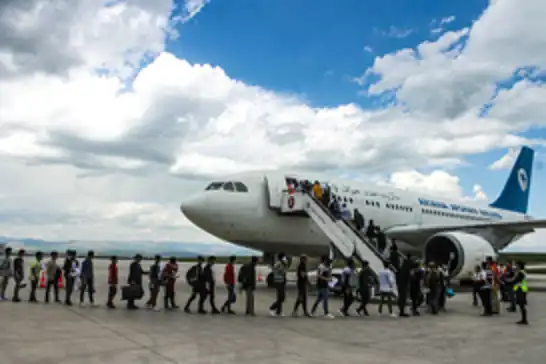
A federal court in the United States has temporarily blocked the Trump administration's plan to transfer a group of Afghan migrants through Pakistan to Afghanistan, suspending the proposed deportations until Saturday.

Indian naval forces have rescued an Iranian fishing boat and its 20 crew members after they were hijacked by suspected Somali pirates, following an operation lasting more than 48 hours, India's Defense Ministry said on Tuesday.