Trump declares Strait of Hormuz ‘American territory’
 13 oC
13 oC 
Güneşli

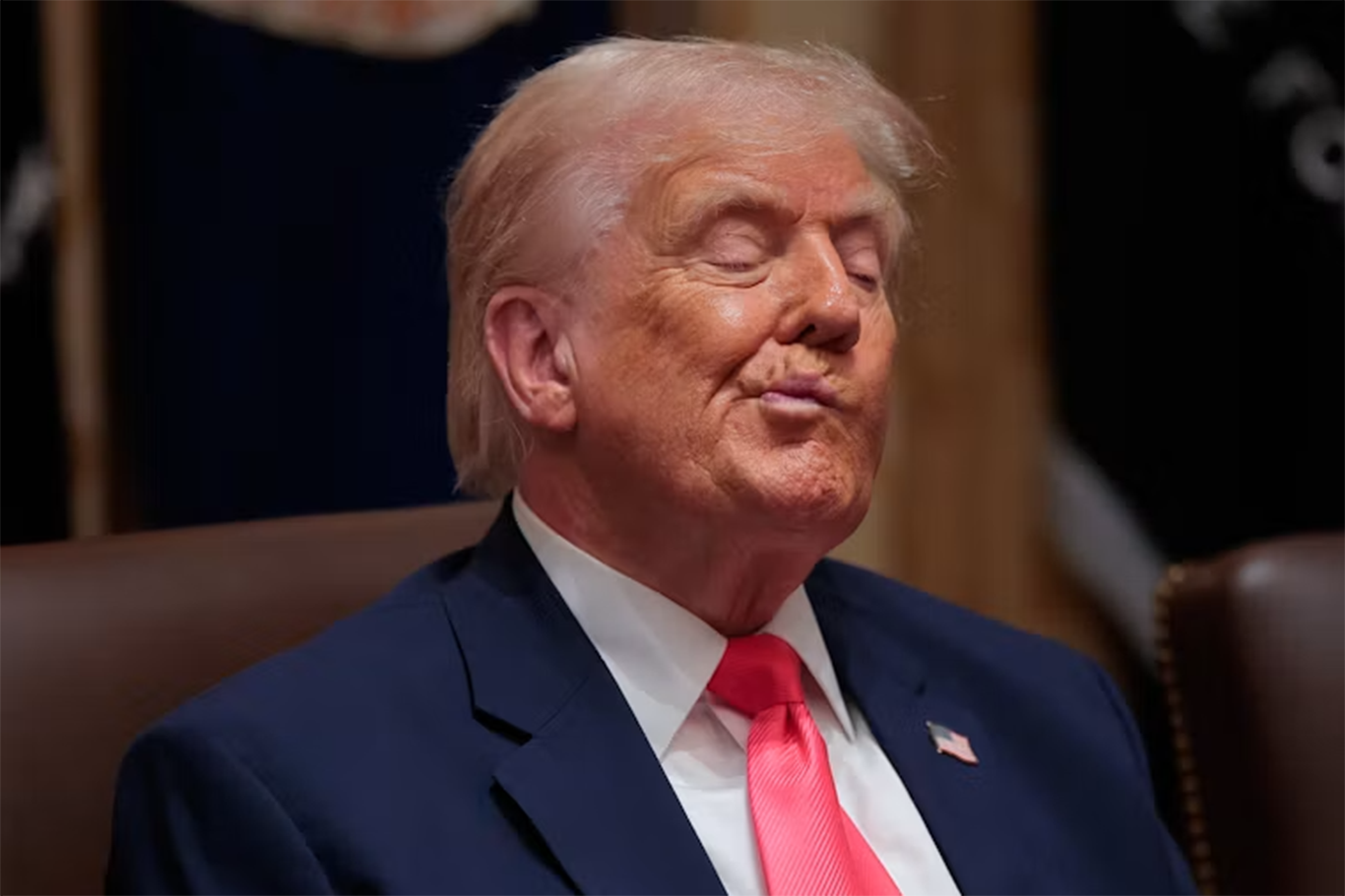
US President Donald Trump has escalated tensions with Iran by declaring that he now views the strategically vital Strait of Hormuz as “American territory.”
Speaking at a campaign event in South Carolina on Friday, Trump claimed that the United States effectively controls the waterway and questioned whether Washington had even “won” the conflict with Iran.
“We don’t even know if we won, because I view the Strait of Hormuz as an American territory right now,” Trump told supporters while campaigning for Republican Senate candidate Darline Graham.
Trump’s extraordinary assertion comes amid an increasingly aggressive US effort to economically and militarily pressure Iran by restricting maritime traffic through the Strait of Hormuz, one of the world's most important energy corridors.
Iran has firmly rejected Washington’s attempt to portray the strategic waterway as an American possession.
Iranian Deputy Foreign Minister Kazem Gharibabadi has dismissed Trump’s statements as “delusions,” insisting that the Strait of Hormuz is and will remain under Iranian control.
“The Strait of Hormuz has been Iranian, is Iranian, and will remain Iranian,” Gharibabadi said in response to Trump’s earlier threats. He also stressed that the waterway could not be seized through social-media posts, military force or political declarations.
Tehran’s position reflects its longstanding argument that Washington has no legitimate basis for attempting to claim sovereignty over a waterway located between Iran and Oman.
Trump had already suggested last week that he intended to declare the strait a US territory after what he described as an American victory over Iran. He subsequently posted a map on social media labeling the waterway as a “new U.S. territory.”
The territorial rhetoric comes as the Trump administration continues its campaign to squeeze Iran economically.
US forces have reportedly redirected 68 commercial vessels as part of the blockade, according to US Central Command. The restrictions have severely disrupted Iranian oil exports and maritime trade.
The consequences are already being felt in international energy markets. Reuters reported Friday that Iranian oil offers to Chinese buyers have fallen sharply as the US blockade restricts Tehran’s ability to export crude through Hormuz. Iranian oil shipments have dropped dramatically from their 2025 average, while Chinese refiners have been forced to seek alternative supplies.
For Tehran, the blockade represents not merely an economic measure but an attempt to impose Washington’s will on Iran through military pressure and collective economic punishment.
Iranian officials have repeatedly condemned the US sanctions and blockade as unlawful measures designed to undermine the country’s sovereignty and economy.
The Strait of Hormuz is one of the world's most strategically important maritime passages. Before the current conflict, roughly one-fifth of global seaborne oil supplies passed through the waterway.
Its importance means that attempts by Washington to exercise unilateral control over the strait have consequences far beyond Iran and the United States.
Any prolonged disruption threatens energy supplies, raises shipping costs and can send oil prices sharply higher. Reuters reported that the conflict has already severely reduced tanker traffic through the waterway and increased uncertainty across global energy markets.
The strait lies between Iran and Oman, making Trump's characterization of it as US territory particularly provocative from Tehran's perspective.
Trump's remarks were accompanied by another provocative reference to military action.
During his South Carolina speech, he joked about bombing Iran again, asking: “What the hell do I have to do? Go back and bomb Iran a little bit more?”
His comments came as diplomatic efforts between Washington and Tehran remain stalled after months of confrontation.
Despite the Trump administration's repeated claims of military and economic pressure against Iran, negotiations have failed to produce a durable peace agreement. Iran has continued to reject demands that it considers an infringement on its sovereignty.
Iranian officials have repeatedly warned that the country will not surrender its strategic interests under military or economic coercion.
Iran's position has hardened as Washington has expanded sanctions and maritime restrictions. Tehran has argued that the United States cannot simultaneously wage economic warfare against Iran, impose a naval blockade and demand that Iran accept American terms for the future of the region.
Iranian officials have also emphasized that the Strait of Hormuz cannot simply be transformed into US territory through a presidential declaration.
The confrontation has therefore evolved beyond a dispute over shipping. It has become a broader struggle over Iranian sovereignty, regional security and Washington's attempt to establish unilateral control over a strategic waterway.
Trump's latest statement risks adding a new and potentially explosive dimension to the conflict.
By describing the Strait of Hormuz as “American territory,” the US president has moved beyond threatening to control maritime traffic and into openly asserting a territorial claim over a waterway bordered by Iran and Oman.
For Iran, such declarations reinforce the argument that Washington's campaign is aimed not merely at limiting Tehran's military capabilities but at imposing American dominance over Iran and its surrounding strategic environment.
With diplomacy stalled, sanctions tightening and maritime traffic through Hormuz severely disrupted, the dispute now carries significant risks for both regional stability and the global economy.
Iran, meanwhile, has made clear that it will not accept Trump's territorial claims and continues to insist that the Strait of Hormuz is not Washington's to seize, claim or rename. (ILKHA)
LEGAL WARNING: All rights of the published news, photos and videos are reserved by İlke Haber Ajansı Basın Yayın San. Trade A.Ş. Under no circumstances can all or part of the news, photos and videos be used without a written contract or subscription.
Abu Obeida, spokesperson for the Al-Qassam Brigades, the armed wing of the Hamas movement, has called on Palestinians in the occupied West Bank and Jerusalem to stand against the escalating Israeli attacks on Al-Aqsa Mosque, Palestinian land and their rights.
United Nations Special Rapporteur Francesca Albanese has sharply condemned Israel’s ongoing military actions in Gaza and the occupied West Bank, describing the Israeli army as the “MOST IMMORAL ARMY” and accusing it of continuing to inflict death, destruction and deprivation on Palestinians.
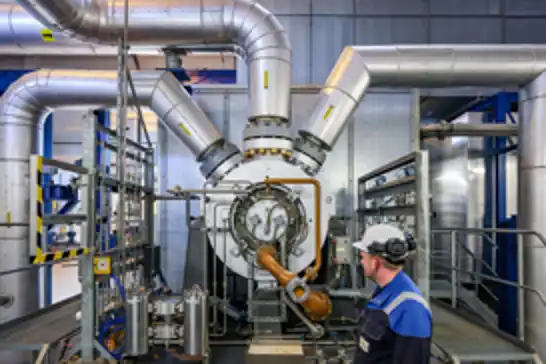
Germany's failure to refill its natural gas storage facilities at the expected pace is raising concerns over energy security ahead of the winter season. Storage levels remain at around 50 percent, making it increasingly difficult to meet legally required targets, while opposition parties and industry representatives have criticized the government's energy policy.