Syria’s ousted regime mufti sentenced to life for war crimes
 13 oC
13 oC 
Güneşli

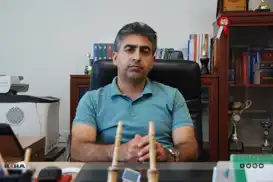
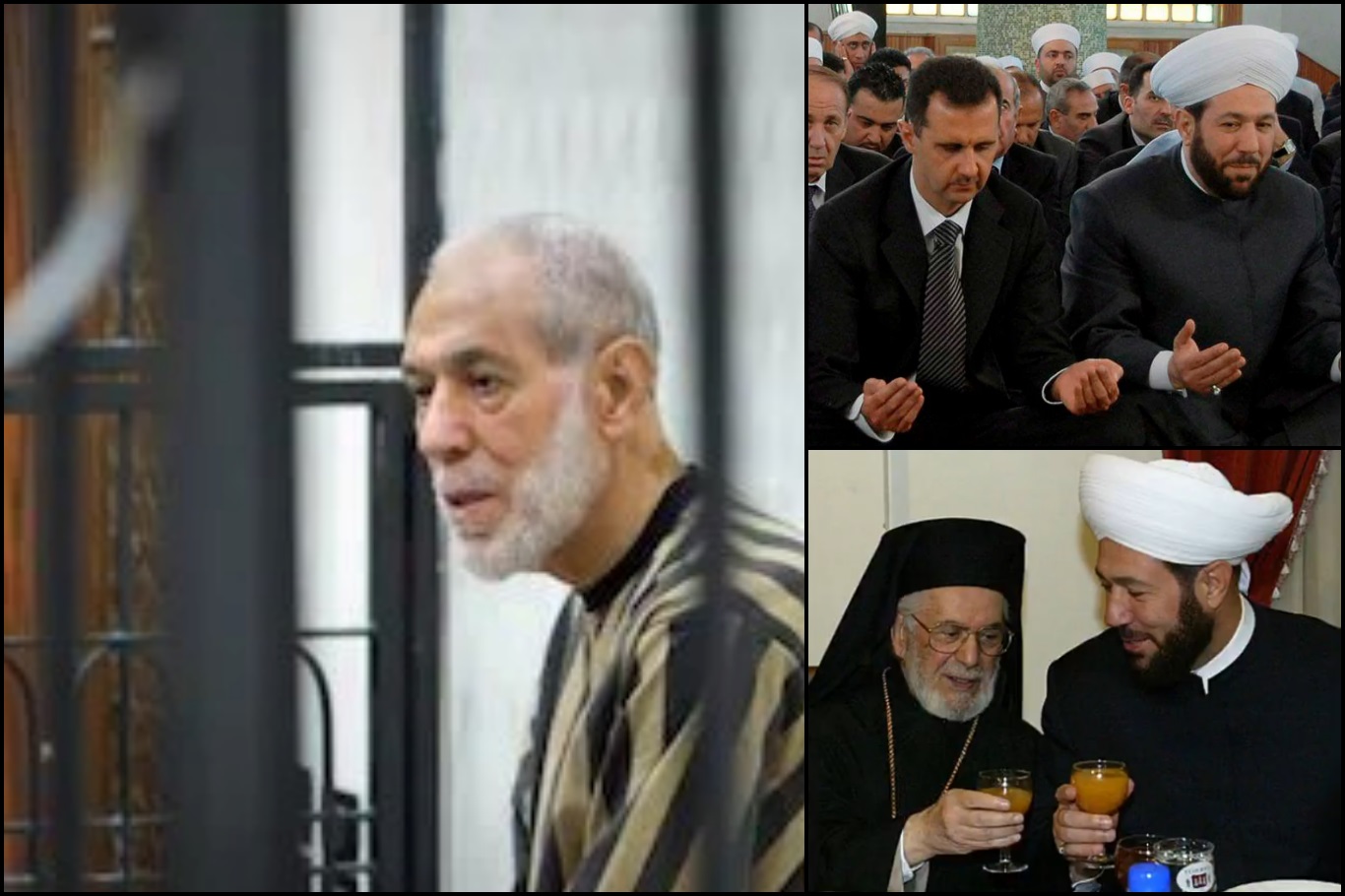
The Fourth Criminal Court in Damascus has sentenced Ahmad Badr al-Din Hassoun, the former mufti of Syria’s ousted regime, to life imprisonment after convicting him of war crimes and crimes against humanity committed against the Syrian people.
The court also ordered the confiscation of his movable and immovable assets and stripped him of his civil rights. The verdict was issued Monday during the sixth session of Hassoun’s trial, chaired by Judge Fakhr al-Din al-Aryan in the presence of members of the National Commission for Transitional Justice and representatives of international legal and humanitarian organizations.
Judge al-Aryan said the case was examined in the context of events that began in 2011, when peaceful demonstrations calling for political reform were met with lethal force by security and military forces.
According to the court, civilians were subjected to widespread killings, torture, sexual violence, looting, destruction of property, forced displacement and enforced disappearance.
The court found that the official religious establishment under Hassoun’s leadership was used to provide religious justification and public cover for military and security operations carried out by the former regime.
The ruling also cited the use of barrel bombs against populated areas and found that Hassoun had received money and gifts in exchange for intervening in efforts to secure the release of civilians detained by security agencies.
The court further found that Hassoun regularly provided financial support to the leadership and members of Liwa al-Quds, an armed formation that participated in military operations during which serious violations against civilians were committed.
Al-Aryan said the financial assistance went beyond social or charitable support and contributed to the group's ability to continue its military activities.
The court also cited Hassoun’s public support for Russian and Iranian military intervention in Syria, as well as statements that it said encouraged violence and the use of force against specific groups.
According to the verdict, Hassoun’s actions constituted aiding, abetting and moral support for acts amounting to war crimes and crimes against humanity.
Hassoun received several sentences under the ruling, including life imprisonment for an offense involving incitement to civil war and sectarian fighting.
He was also sentenced to 20 years for incitement to intentional killing, 10 years for principal participation in intentional killing and three years for abuse of office.
The court imposed an additional six-month sentence for provoking sectarian and racial tensions, along with a fine of 1,000 Syrian pounds.
For abuse of office, it ordered a separate fine equivalent to three times the value of the benefits Hassoun received, calculated at $195,000.
The court merged the prison sentences and ordered the enforcement of the most severe penalty — life imprisonment — while combining the financial penalties.
It ruled that Hassoun would not be eligible for general or special amnesty, conditional release or suspension of his sentence because the crimes established in the case constitute war crimes and crimes against humanity.
The court ordered compensation for plaintiffs whose claims were accepted and preserved the right of other victims, missing persons and their families to pursue claims before the competent courts.
It also converted the precautionary seizure of Hassoun’s assets into an enforceable seizure ahead of their confiscation for the public treasury, after outstanding civil obligations are addressed.
Witness-protection measures imposed during the proceedings will remain in effect. The identities of protected witnesses will be kept in a sealed and confidential court file, while publication of information that could reveal their identities or locations is prohibited.
The prosecution also retained the right to pursue other officials, contributors and accomplices not covered by the current case if sufficient evidence emerges.
Hassoun’s trial began on June 25 as part of Syria’s transitional justice process aimed at holding individuals accused of serious crimes during the ousted regime accountable.
The verdict follows a series of high-profile rulings by the Fourth Criminal Court.
On August 18, the court sentenced Waseem al-Assad to death and ordered the confiscation of his assets after convicting him of war crimes and crimes against humanity.
Earlier, on August 11, the court sentenced Atif Najib to death in person and issued death sentences in absentia against Bashar al-Assad, Maher al-Assad and five other fugitives after convicting them of murder, torture, unlawful deprivation of liberty, crimes against humanity and war crimes.
The proceedings represent a major component of Syria’s emerging transitional justice efforts, with authorities seeking to establish legal accountability for alleged abuses committed during the country's long-running conflict. (ILKHA)
LEGAL WARNING: All rights of the published news, photos and videos are reserved by İlke Haber Ajansı Basın Yayın San. Trade A.Ş. Under no circumstances can all or part of the news, photos and videos be used without a written contract or subscription.

The United States is preparing to impose an additional 7.5 percent tariff on Chinese goods over allegations of excess manufacturing capacity, according to people familiar with the discussions, in a move that could raise tensions with Beijing ahead of a planned September summit between US President Donald Trump and Chinese President Xi Jinping.
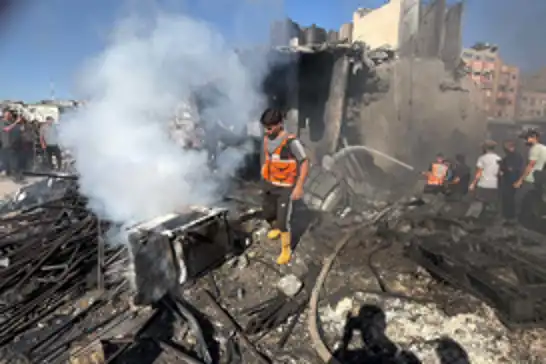
The Hamas Movement has condemned Israel’s bombing of a water desalination plant in Gaza City’s Sheikh Radwan neighborhood, saying the attack and continued strikes on displaced Palestinians represent an ongoing assault on Gaza’s civilian population and a violation of the ceasefire agreement.

The death toll from Israel’s ongoing assault on the Gaza Strip has risen to 73,431 Palestinians, while 174,437 others have been injured since October 7, 2023, according to medical sources in Gaza.