US imposes visa restrictions on South Africans over alleged anti-white discrimination
 13 oC
13 oC 
Güneşli

The United States has imposed visa restrictions on South Africans it accuses of promoting racial discrimination, inciting violence and supporting land expropriation without compensation, escalating an already strained relationship with Pretoria.
Secretary of State Marco Rubio announced the measures Tuesday, saying the South African government had failed to adequately address Washington's concerns.
The restrictions target people whom the administration says are responsible for or complicit in policies involving “race-based discrimination,” incitement of violence or land confiscation without compensation. Rubio did not identify any individuals affected by the policy.
The US Embassy in Pretoria described the restrictions as the first in a potential series of measures, saying Washington believed diplomatic efforts had failed to resolve its concerns.
South Africa has repeatedly rejected US claims that its government is persecuting white South Africans or arbitrarily confiscating their property.
Pretoria says its land reform policies are designed to address racial and economic inequalities created under apartheid, when the Black majority was systematically dispossessed of land and denied political rights.
The government has also rejected claims of a “white genocide,” saying they are unsupported by reliable evidence.
Land ownership remains particularly sensitive. White South Africans make up just over 7% of the population but continue to own a large share of privately held farmland.
The dispute intensified after President Cyril Ramaphosa signed the Expropriation Act into law in January 2025.
The legislation provides a framework for expropriating property in the public interest and allows compensation to be set at zero in limited circumstances. It does not, however, provide for arbitrary seizure, and expropriation remains subject to constitutional and legal procedures.
South African authorities argue that the law is intended to advance land reform while protecting property rights. Opponents have challenged provisions of the legislation in court.
The land issue has become a central point of disagreement between Washington and Pretoria, with the Trump administration portraying the policy as discriminatory while South Africa presents it as part of its unfinished post-apartheid reform agenda.
The visa restrictions are the latest development in a broader deterioration in US-South African relations since Trump returned to office.
Trump has previously accused South Africa of failing to protect white farmers and offered refugee status to Afrikaners, claims Pretoria has rejected.
Washington has also criticized South Africa over its legal action against Israel at the International Court of Justice, where Pretoria has accused Israel of violating the Genocide Convention in Gaza.
In May, Ramaphosa traveled to the White House with a delegation that included white members of his coalition government in an effort to improve relations with Trump.
Those efforts have yet to prevent tensions from escalating.
Rubio said the latest restrictions were intended to pressure South African officials over what Washington calls “government-sponsored discrimination.” South African officials, meanwhile, have called for disagreements to be handled through diplomatic channels.
The immediate impact of the new policy remains unclear, as Washington has not disclosed the names of those subject to the restrictions. But the US warning that further measures could follow signals that the dispute over race, land reform and bilateral relations is far from settled. (ILKHA)
LEGAL WARNING: All rights of the published news, photos and videos are reserved by İlke Haber Ajansı Basın Yayın San. Trade A.Ş. Under no circumstances can all or part of the news, photos and videos be used without a written contract or subscription.
German Chancellor Friedrich Merz has canceled his planned trip to New York for next week’s United Nations General Assembly, saying his presence is required in Berlin as his government faces mounting political pressure ahead of two crucial state elections.
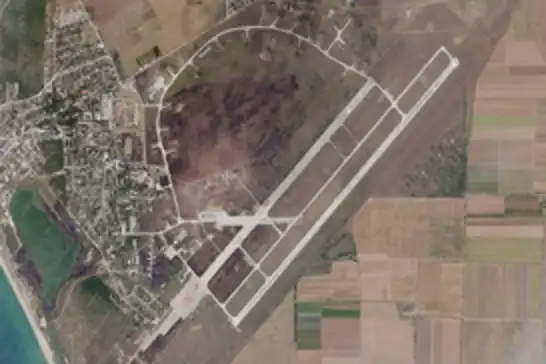
Ukrainian forces struck a Russian Su-24 bomber at the Saky air base in occupied Crimea, along with a number of other Russian military targets, during strikes conducted between September 15 and 16, Ukraine’s General Staff said on Wednesday.
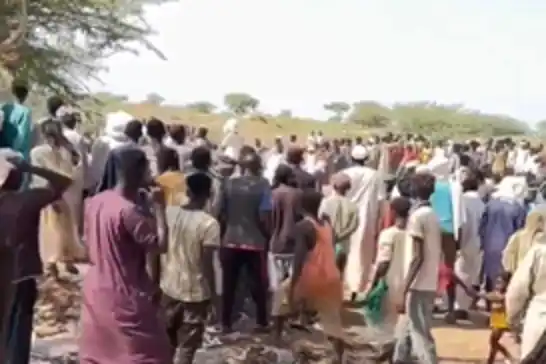
At least 67 people have been killed and many others remain missing after a gold mine collapsed in Sudan's West Kordofan state, according to a medical group and survivors.