Ukrainian forces strike oil terminal and military targets near St. Petersburg
 13 oC
13 oC 
Güneşli

Ukraine's military carried out a long-range drone operation targeting oil infrastructure and military facilities near Russia's second-largest city, St. Petersburg, in the early hours of Friday, according to Ukrainian President Volodymyr Zelensky.
In a statement posted on Telegram, Zelensky said Ukrainian forces struck port oil infrastructure in the St. Petersburg area as well as military targets in the nearby city of Kronstadt, describing the operation as part of Ukraine's efforts to undermine Russia's ability to sustain its war effort.
“Last night, our Ukrainian long-range sanctions against Russia over this war were carried out near St. Petersburg,” Zelensky said.
“The Ukrainian Defense Forces struck port oil infrastructure that is funding the Russian war; there were also strikes on Kronstadt — a key military target,” he added.
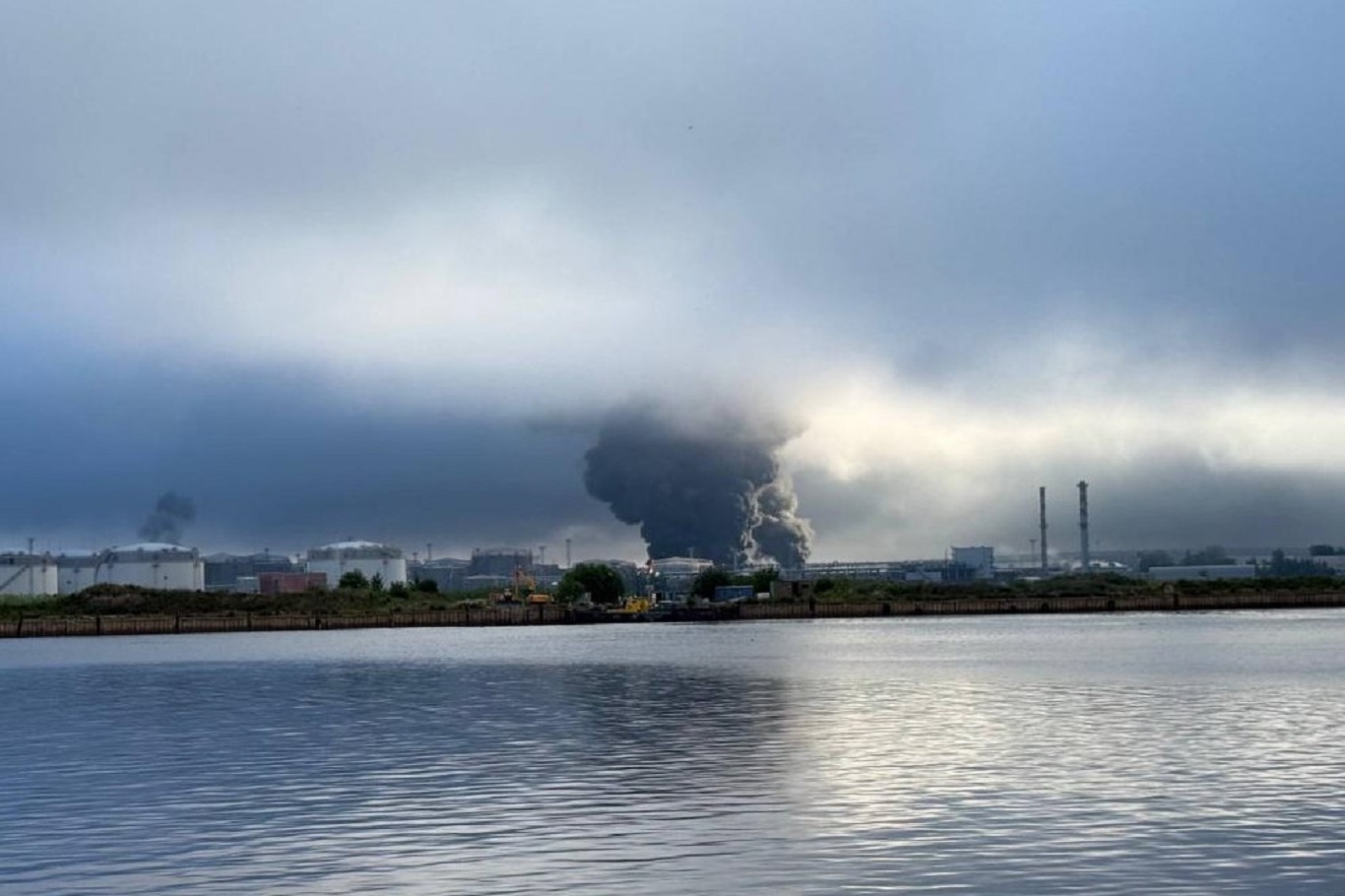
Videos and photographs circulating on social media appeared to show thick plumes of black smoke and fire rising from the port area of St. Petersburg, where one of Russia's largest fuel storage and export facilities is located. The authenticity of the footage could not be independently verified.
Residents reported hearing explosions across the city at around 6:30 a.m. local time, while independent Russian media outlets cited accounts of Ukrainian long-range drones operating over the region. Russian authorities said dozens of drones were intercepted and destroyed over Leningrad Oblast during the night.
The reported target, the St. Petersburg Oil Terminal, is situated on the Gulf of Finland within the city's major commercial port. The facility serves as a critical hub for the storage and export of petroleum products, handling fuel shipments by rail, road and river transport. It is considered one of Russia's largest oil terminals, with an annual throughput capacity reportedly reaching 12.5 million tons.
The extent of the damage caused by the strikes was not immediately known, and Russian authorities had not released detailed information regarding the condition of the targeted facilities.
The attack marks one of the most significant Ukrainian operations against the St. Petersburg region, located approximately 1,100 kilometers from Ukraine's border. The city, which is also the hometown of Russian President Vladimir Putin, has historically been protected by extensive air defense systems and has rarely been targeted during the war.
However, recent advances in Ukraine's long-range drone capabilities have enabled strikes deeper inside Russian territory, including attacks on strategic infrastructure in heavily defended areas such as Moscow and St. Petersburg.
The latest operation comes roughly one month after Ukrainian forces reportedly targeted the St. Petersburg area during the St. Petersburg International Economic Forum, which was attended by Putin. It also follows Russia's largest reported aerial assault on Kyiv earlier this month.
On July 3, Putin pledged to continue large-scale missile and drone strikes against Ukraine, days after a major Russian attack on Kyiv reportedly killed nearly 30 people and injured more than 90 others.
As Russia intensifies its aerial campaign against Ukrainian cities, Kyiv has increasingly focused on targeting Russian oil, fuel and energy infrastructure. Ukrainian officials argue that such facilities play a crucial role in financing Moscow's military operations and sustaining its war effort.
Recent strikes on Russian energy infrastructure have reportedly contributed to fuel supply disruptions in several regions of the country, with videos shared on social media showing long queues at fuel stations in a number of Russian cities.
The exchange of long-range attacks underscores the continuing escalation of the conflict, with both sides increasingly relying on drones and missile systems to strike strategic targets far from the front lines. (ILKHA)
LEGAL WARNING: All rights of the published news, photos and videos are reserved by İlke Haber Ajansı Basın Yayın San. Trade A.Ş. Under no circumstances can all or part of the news, photos and videos be used without a written contract or subscription.
The Lebanese Ministry of Public Health announced that the death toll resulting from ongoing Israeli aggression against Lebanon has risen to 4,301 civilians, while thousands more have been injured amid continued attacks across the country.

The death toll from devastating floods that swept across several regions of Ghana has risen to 34, authorities said, as rescue teams continue search operations and the government launches a nationwide recovery campaign to address the aftermath of the disaster.
Five people were killed after a landmine exploded in the vicinity of the T4 (Tiyas) Air Base in the eastern countryside of Homs province, local authorities confirmed on Friday.