Yapıcıoğlu says HÜDA PAR has not deviated from its principles in 13 years
 13 oC
13 oC 
Güneşli

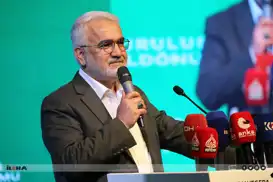
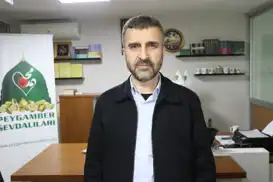
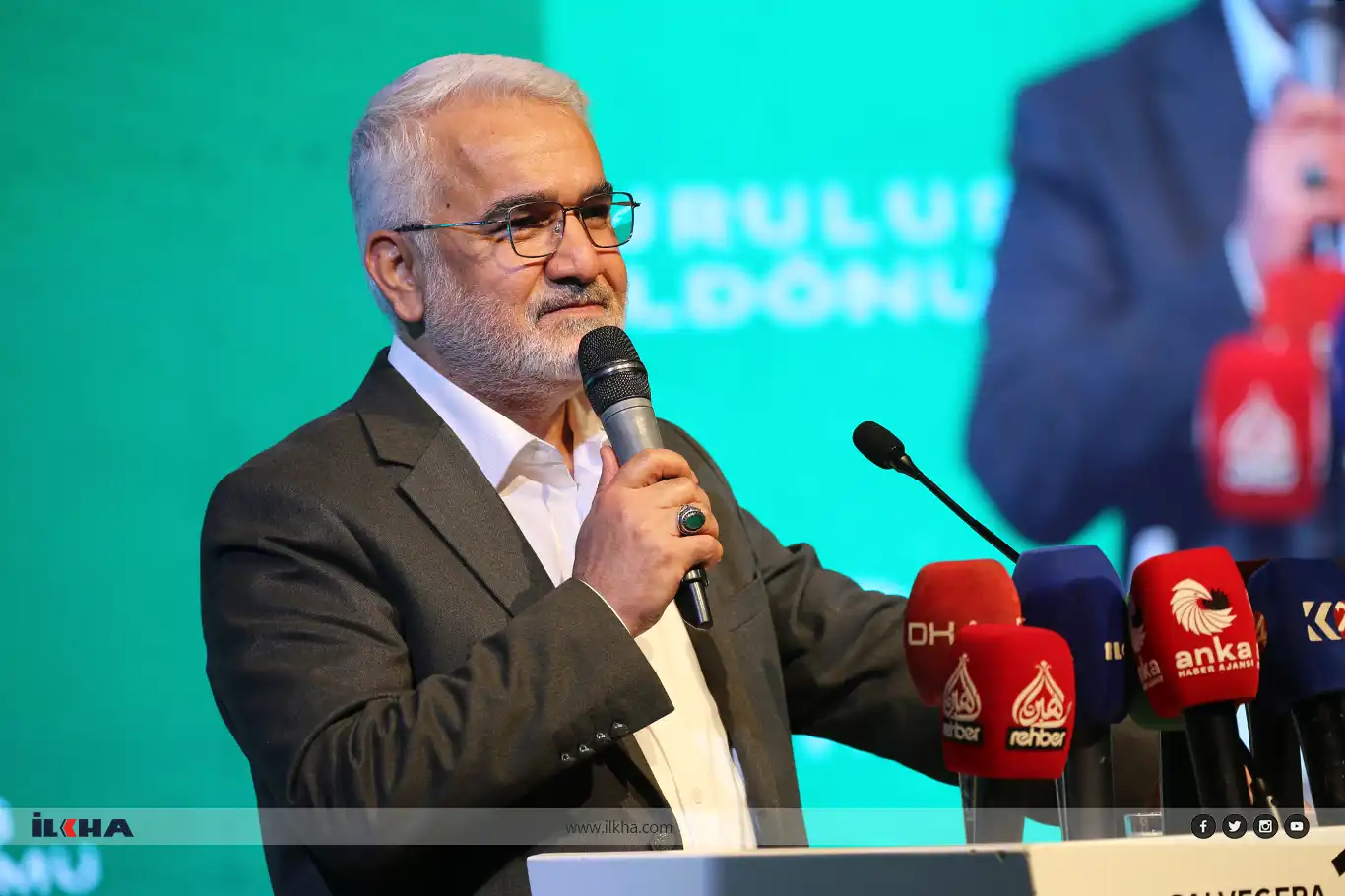
HÜDA PAR Chairman Zekeriya Yapıcıoğlu said his party has maintained a principled and consistent political stance since its founding and has increasingly shaped public debate by offering concrete and applicable solutions to Türkiye’s longstanding political, economic, and social challenges.
Speaking at an event marking the party’s 13th anniversary, Yapıcıoğlu also called for a new constitution, fiscal discipline, a just resolution to the Kurdish issue, and a fundamental transformation of what he described as an unjust global order, particularly in light of the ongoing humanitarian catastrophe in Gaza.
The anniversary program was held at the Conference Hall of the Selahaddin Eyyubi Mosque Complex in the Yenişehir district of Diyarbakır, a city that carries symbolic weight in Türkiye’s political history and Kurdish question. Party officials, members, and supporters from various provinces attended the event, reflecting HÜDA PAR’s growing organizational presence, particularly in southeastern Türkiye.
From Grassroots Skepticism to National Reference
Founded in December 2012, HÜDA PAR emerged at a time when Türkiye’s political scene was already dominated by well-established parties and deeply polarized debates. From the outset, the party faced skepticism regarding both its necessity and its prospects. Yapıcıoğlu recalled that many questioned why a new political party was needed at all.
“When we founded the party, people repeatedly asked us, ‘Why did you establish a party? What was the need?’” he said. “Today, those same people tell us, ‘You are the only ones who have not wavered. Do not stop, do not bow, do not give up.’”
Political analysts note that HÜDA PAR’s emphasis on ideological consistency, social conservatism, and an Islamic moral framework has allowed it to carve out a distinct niche, particularly among voters disillusioned with shifting alliances and pragmatic politics. While remaining a relatively small party in terms of parliamentary representation, HÜDA PAR has increasingly influenced public discourse, especially on issues related to family policy, social justice, and identity.
Yapıcıoğlu highlighted the party’s early grassroots efforts, saying that members once went door to door and village to village simply to explain who they were and what they stood for. Today, he said, the party has become a point of reference in national debates.
“Now, when a major issue arises in this country, many people ask: ‘What does HÜDA PAR say about this?’” he said.
Policy Impact Beyond Electoral Weight
One of the central themes of Yapıcıoğlu’s speech was the gradual implementation of policies long advocated by HÜDA PAR. He argued that political influence should not be measured solely by electoral strength, but also by the ability to shape policy agendas.
Among the examples he cited was the exemption of the minimum wage from income tax, a demand HÜDA PAR had raised for years before it was adopted. However, he said the party’s vision goes further, calling for a family-based minimum wage that reflects the realities of household life.
“The minimum wage cannot be calculated as if the worker lives alone,” he said. “A just wage must take the family into account.”
Yapıcıoğlu also emphasized policies aimed at strengthening the family institution, a core pillar of HÜDA PAR’s political philosophy. These include proposals for retirement rights for women married for 25 years, financial support for young people seeking to marry through grants rather than loans, dormitories for married students, and long-term strategies such as declaring a “Family Year” and a “Family Decade.”
In recent years, several of these ideas have entered the broader political agenda, reflecting what observers describe as a growing consensus around the importance of family-centered social policy amid declining birth rates and economic pressures.
Public Safety and Moral Courage in Policy Debates
Addressing the issue of stray dogs, Yapıcıoğlu said HÜDA PAR did not shy away from controversial topics when public safety was at stake. He argued that while animal welfare is important, the protection of human life must take precedence.
“We spoke openly when others preferred silence,” he said, adding that recent regulations have reduced risks to citizens.
This stance, while controversial in some circles, underscored the party’s broader claim of prioritizing moral clarity and public interest over political convenience.
Kurdish Issue: Identity, Justice, and the Ummah
A significant portion of Yapıcıoğlu’s speech focused on the Kurdish issue, a subject of enduring sensitivity in Türkiye. He reiterated that HÜDA PAR rejects narratives that portray Kurds as outsiders or guests in their own land.
“Kurds are not refugees, guests, or tenants,” he said. “They are one of the founding peoples of this country.”
Yapıcıoğlu described the party’s approach as “ummah-centered,” emphasizing shared faith, justice, and brotherhood rather than ethnic polarization. He noted that ideas once denied—such as Kurdish identity itself—are now widely acknowledged, even by those who previously opposed them.
Political analysts note that HÜDA PAR’s framing distinguishes it both from nationalist denialism and from ethnically exclusive narratives, positioning the party within an Islamic political tradition that emphasizes unity without erasing identity.
Economy, Inequality, and Structural Critique
On economic issues, Yapıcıoğlu offered a structural critique of Türkiye’s fiscal policies, arguing that rising deficits and interest payments reflect deeper systemic problems. He reiterated the party’s demand that a balanced budget be enshrined as a constitutional obligation.
According to Yapıcıoğlu, nearly 20 percent of projected tax revenues in the 2026 budget are expected to be spent on interest payments—an amount exceeding the budget of the Ministry of National Education.
“This is not a resource problem,” he said. “It is a distribution problem. This system makes the rich richer and the poor poorer.”
He also criticized the lack of effective worker representation in minimum wage negotiations, suggesting that existing mechanisms fail to adequately protect labor interests.
Legislative Initiative on Conflict Resolution
Yapıcıoğlu said HÜDA PAR has prepared a comprehensive report and draft legislation aimed at overcoming deadlocks in the peace and democratization process. The proposal seeks to replace ad hoc arrangements with clear, abstract, and equal legal principles.
“We want those who lay down arms to clearly know what awaits them,” he said. “But favorable legal provisions must be conditional upon the verified reality of disarmament.”
This approach, he argued, is intended to reduce mistrust and ensure that legal incentives are tied to concrete actions rather than political promises.
Renewed Demand for a New Constitution
Yapıcıoğlu renewed his call for a completely new constitution, describing the current 1982 constitution as a product of military rule that no longer reflects Türkiye’s social and cultural reality.
“Partial amendments are not enough,” he said. “Türkiye needs a constitution that is in harmony with its history, faith, culture, and roots.”
The call aligns with ongoing debates in Türkiye about constitutional reform, though consensus on the content and process of a new constitution remains elusive.
Gaza and the Crisis of the Global Order
Turning to international affairs, Yapıcıoğlu devoted a substantial part of his speech to Gaza, condemning what he described as ongoing Zionist atrocities and the severe humanitarian conditions faced by Palestinians due to blockade, bombardment, hunger, and cold.
He argued that Israel’s actions could not continue without unconditional support from the United States and Western powers, and sharply criticized the structure of the UN Security Council.
“Fourteen countries say ‘yes,’ one country says ‘no,’ and the decision becomes void,” he said. “This system is unjust and unsustainable.”
According to Yapıcıoğlu, the Gaza crisis has exposed the moral bankruptcy of the current international system and underscored the need for a new global order based on justice rather than power.
A Warning and a Vision
While suggesting that the sacrifices of the people of Gaza could catalyze global change, Yapıcıoğlu warned that history shows unjust systems can be replaced by equally unjust ones if vigilance and effort are lacking.
“If we do not act, work, and gather strength for justice, an even worse system may be established,” he said.
Concluding his address, Yapıcıoğlu called on party members to remain confident, patient, and steadfast, emphasizing that consistency has been HÜDA PAR’s defining characteristic since its founding.
“By Allah’s permission, we are on the right path and moving toward our goal,” he said. “We have prayed for steadfastness since the day we set out, and by Allah’s permission, we remain on the straight path.”
As HÜDA PAR enters its 14th year, Yapıcıoğlu’s speech reflected both a reaffirmation of ideological identity and an ambition to play a larger role in shaping Türkiye’s political and moral future. (ILKHA)
LEGAL WARNING: All rights of the published news, photos and videos are reserved by İlke Haber Ajansı Basın Yayın San. Trade A.Ş. Under no circumstances can all or part of the news, photos and videos be used without a written contract or subscription.
Türkiye has welcomed the United States’ decision to repeal sanctions imposed on Syria under the Caesar Act, describing the move as a positive step toward the country’s reconstruction and long-term stability.

Turkish security forces are investigating the discovery of a suspected Russian-made Orlan-10 reconnaissance drone in a rural area of northwestern Türkiye, marking the second such aerial incident reported in the country this week.
As the Islamic lunar calendar approaches the spiritually significant period known as the "Three Sacred Months," a senior Islamic scholar has issued a call for Muslims worldwide to engage in repentance, intensified worship, and charitable acts, while keeping the plight of Gaza firmly in their prayers.