Myanmar government says UN envoy illegitimate ahead of credentials decision
 13 oC
13 oC 
Güneşli

Myanmar’s military-backed government has stepped up its efforts to remove the country’s ambassador to the United Nations, Kyaw Moe Tun, accusing him of illegally occupying the post as the UN prepares to consider competing claims over who should represent Myanmar.
The renewed dispute comes as the 81st session of the UN General Assembly gets underway in New York, with Kyaw Moe Tun continuing to represent Myanmar more than five years after the military seized power from the elected government of Aung San Suu Kyi.
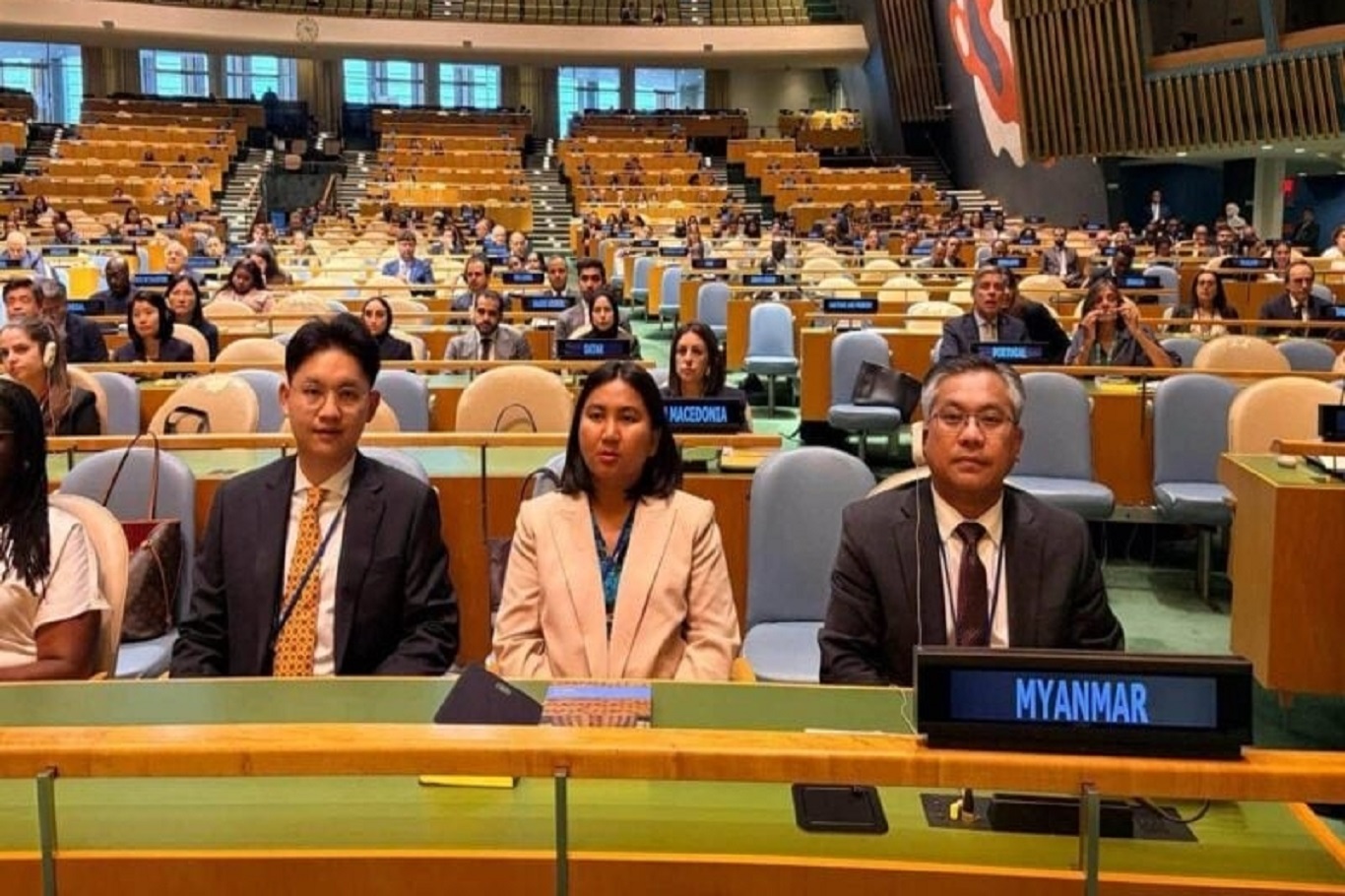
Kyaw Moe Tun attended the opening of the new General Assembly session on September 8, highlighting the unresolved diplomatic dispute over Myanmar’s representation at the world body.
Myanmar’s Foreign Ministry said the ambassador was dismissed from the civil service effective February 27, 2021, accusing him of disobeying government orders, committing treason and cooperating with organizations the military authorities have designated as terrorist groups.
The ministry also accused him of misusing state funds and property, including the premises of Myanmar’s permanent UN mission in New York, and of cooperating with the opposition National Unity Government (NUG).
But the dispute goes far beyond the status of one diplomat. At its core is a broader struggle over who has the legitimate authority to represent Myanmar internationally following the February 2021 military coup.
Kyaw Moe Tun was appointed Myanmar’s permanent representative to the UN by Suu Kyi’s civilian government in October 2020, just months before the military seized power.
In a dramatic challenge to the coup, he addressed the UN General Assembly in February 2021 and appealed to the international community to take the “strongest possible action” against the military takeover.
He subsequently refused to recognize the military authorities as Myanmar’s legitimate government and continued to represent the country at the UN, becoming one of the most prominent diplomatic voices opposing the junta.
The military government has repeatedly sought to replace him, but the UN has so far avoided making a definitive decision between the rival claims.
In December 2025, the General Assembly again deferred the issue after receiving competing credentials for Myanmar. The Credentials Committee recommended postponing consideration of the matter, allowing Kyaw Moe Tun and his delegation to continue participating in UN proceedings.
The arrangement has effectively enabled him to remain in his position without the UN formally recognizing either the military government’s nominee or the opposition’s claim to represent Myanmar.
The latest dispute could bring renewed attention to the issue as the General Assembly begins its 81st session.
The UN Credentials Committee, which examines the credentials of representatives of member states, includes the Bahamas, Belgium, Benin, China, Jamaica, Russia, Uganda, the United States and Vanuatu.
The committee is expected to consider whether Kyaw Moe Tun should continue representing Myanmar or whether a new representative backed by the military government should be accepted.
The composition of the committee also reflects the competing international positions surrounding Myanmar’s crisis. China and Russia have maintained close relations with the military authorities, including military and diplomatic cooperation, while the United States has imposed sanctions on senior figures linked to the junta.
Any decision on Myanmar’s credentials could therefore carry significance beyond the status of a single ambassador, potentially affecting perceptions of political legitimacy and international recognition.
The credentials dispute comes as Myanmar’s military leadership seeks to strengthen its claim to political authority.
Former junta chief Min Aung Hlaing became president in April 2026 after years at the center of the military government that seized power in 2021.
The military-backed authorities have also sought to use elections held in late 2025 and early 2026 to bolster their claims of political legitimacy. However, opponents and several Western governments have criticized the process, arguing that it was neither free nor inclusive and excluded major opposition forces.
With Min Aung Hlaing now serving as president, the authorities in Naypyidaw have intensified diplomatic efforts to gain greater international acceptance.
The dispute over Myanmar’s UN representation has consequently become an important test of those efforts.
Myanmar has remained locked in a devastating conflict since the 2021 coup. A violent military crackdown on mass protests eventually evolved into a nationwide armed struggle involving pro-democracy forces and numerous ethnic armed organizations.
The fighting has spread across large parts of the country, displacing millions of people and deepening an already severe humanitarian crisis.
Kyaw Moe Tun has repeatedly used his position at the UN to draw international attention to the military’s actions and the humanitarian consequences of the conflict.
The military government, meanwhile, has sought to portray him as a representative of the opposition rather than the Myanmar state.
For more than five years, the UN’s decision to defer the credentials dispute has allowed the competing sides to maintain their claims without a final ruling.
The latest move by Naypyidaw puts renewed pressure on the Credentials Committee as the 81st General Assembly begins its work.
At stake is not simply the future of one ambassador, but the larger question of who has the authority to speak for Myanmar at the United Nations while the country remains engulfed in political turmoil and armed conflict. (ILKHA)
LEGAL WARNING: All rights of the published news, photos and videos are reserved by İlke Haber Ajansı Basın Yayın San. Trade A.Ş. Under no circumstances can all or part of the news, photos and videos be used without a written contract or subscription.
Firefighters, military personnel and local residents are battling a rapidly worsening wave of forest and peatland fires across Indonesia, as an intense El Niño weather pattern fuels extreme heat and drought, sending hazardous smoke across Southeast Asia.
Israeli occupation forces carried out a series of raids across the occupied West Bank late Saturday and early Sunday, detaining at least 11 Palestinians, including two children, according to local sources.
Sweden is heading toward a closely contested election that could reshape the country’s political landscape and mark a major shift in the balance of power between the traditional parties and the far right.