EU agrees €3 customs duty on low-value e-commerce imports from July 2026

 13 oC
13 oC 
Güneşli

The European Union has formally agreed to introduce a fixed €3 customs duty per item on low-value e-commerce imports from non-EU countries, marking a major shift in the bloc’s approach to small parcels entering the Single Market.
Under the decision approved by the European Council and the European Commission on 12 December 2025, the new levy will take effect on 1 July 2026 and will apply to individual items with an intrinsic value of €150 or less, ending the long-standing duty-free treatment for low-value consignments.
The measure primarily targets the rapidly growing volume of goods sold by non-EU online sellers and shipped directly to EU consumers, a segment that now accounts for the vast majority of cross-border e-commerce imports into the bloc.
The €3 customs duty will apply mainly to goods sold by non-EU merchants registered under the Import One-Stop Shop (IOSS) system for VAT purposes. According to EU estimates, around 93% of all e-commerce parcels entering the EU fall under IOSS, meaning the new charge will have an immediate and wide-ranging impact.
Crucially, the levy will be calculated per item rather than per parcel, meaning shipments containing multiple products could incur multiple €3 charges. The customs duty will be separate from VAT, which will continue to be declared and paid through the IOSS system where applicable.
The European Commission has also indicated that it may assess whether the levy should eventually be extended to cover goods supplied by sellers not registered under IOSS.
EU officials stressed that the €3 levy is a transitional measure, designed to remain in place until the bloc’s broader Customs Reform Package comes into force. Central to that reform is the EU Customs Data Hub, scheduled to become operational in 2028.
Once the new system is fully implemented, low-value e-commerce imports will move to a permanent customs regime, under which standard EU tariffs will apply based on the type and classification of goods rather than a flat-rate fee.
The interim levy is intended to address what EU authorities describe as an urgent enforcement gap. The surge in low-value e-commerce shipments has placed heavy pressure on customs services, while EU retailers have repeatedly warned that duty-free imports create unfair competition for domestic businesses.
The agreement also reflects mounting pressure from EU member states, several of which had signaled plans to introduce unilateral fees from 2026 rather than wait for the scheduled March 2028 end of the €150 duty-free exemption. The bloc opted for a harmonized approach to avoid fragmentation of the Single Market.
EU officials emphasized that the €3 customs duty is distinct from a separate proposal for an EU-wide handling fee on e-commerce parcels, which remains under negotiation. That potential fee would be designed to cover administrative and supervisory costs incurred by customs authorities and could take effect in late 2026, subject to approval by the European Parliament and the Council.
If implemented as planned, the new customs duty will mark one of the most significant changes in EU e-commerce trade rules in years, directly affecting global online retailers and millions of European consumers. (ILKHA)
LEGAL WARNING: All rights of the published news, photos and videos are reserved by İlke Haber Ajansı Basın Yayın San. Trade A.Ş. Under no circumstances can all or part of the news, photos and videos be used without a written contract or subscription.
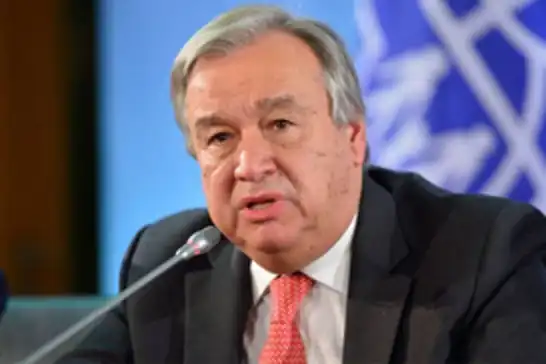
UN Secretary-General António Guterres has called for a permanent ceasefire in the Gaza Strip and the large-scale, unimpeded delivery of humanitarian aid, warning that Palestinians continue to endure intolerable conditions.

Ukrainian drones targeted a major oil facility in Moscow Oblast overnight on Oct. 6 as Kyiv launched one of its largest reported drone attacks on the Russian capital region in recent years, according to Russian officials and local monitoring channels.

A Nigerian Air Force aircraft crashed in southwestern Nigeria on Monday, killing all 32 people aboard, President Bola Tinubu said, declaring three days of national mourning for the victims.

Spain's two largest trade unions, the Workers' Commissions (CCOO) and the General Union of Workers (UGT), have agreed to stage a 24-hour general strike later this autumn in response to the country's deepening housing crisis, backing growing nationwide protests over soaring housing costs and inadequate wages.