Türkiye launches first national orbital transfer vehicle, marking historic leap in space technology
 13 oC
13 oC 
Güneşli

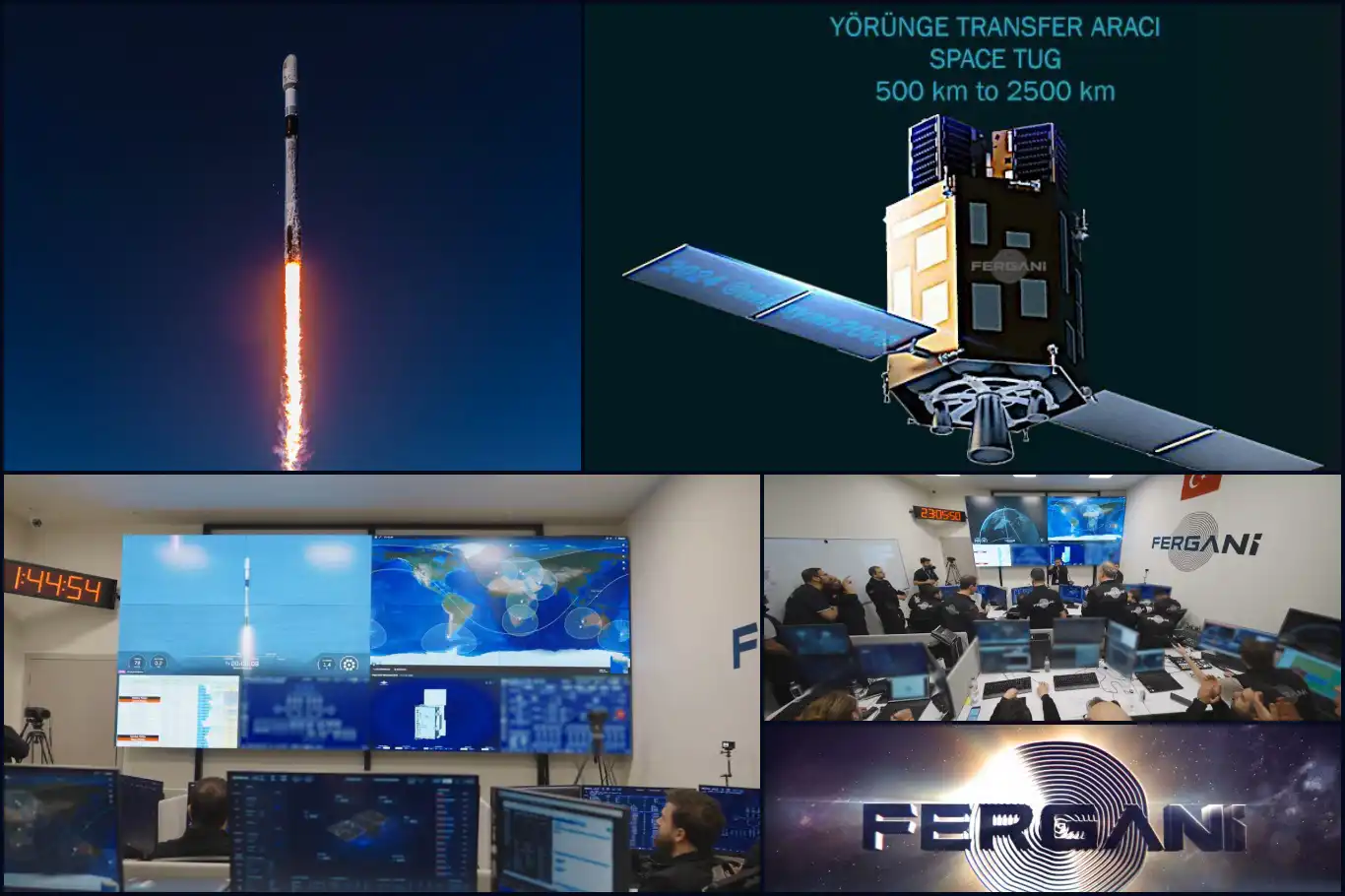
Türkiye has officially entered a new era in space technology with the successful deployment of FGN-TUG-S01, the country’s first orbital transfer vehicle (OTV), developed entirely with national resources by the Ankara-based aerospace company Fergani Space.
The vehicle, launched over the weekend, has begun operating in orbit and is expected to play a key role in positioning small satellites into their designated trajectories.
According to Fergani Space, the OTV carries the world’s first hybrid rocket engine designed to be fired in orbit, a milestone that places Türkiye among the few countries capable of producing advanced in-space propulsion technologies. The hybrid engine, developed domestically, is designed to enable precise orbital maneuvers, satellite deployment, and payload transfers between different orbital bands.
Industry officials say the mission represents one of the most important breakthroughs in Türkiye’s emerging space sector. The launch aligns with the objectives of the National Space Program, which prioritizes independent launch capabilities, satellite production, and the creation of a competitive Turkish aerospace ecosystem.
The Presidency of Defense Industries (SSB) and the Turkish Space Agency (TUA) both emphasized that in-space transportation technologies like FGN-TUG-S01 are essential for lowering the cost of satellite missions and strengthening Türkiye’s strategic autonomy.
Fergani Space announced that testing and calibration procedures for FGN-TUG-S01 have begun in orbit.
If the system performs as expected, the company plans to advance toward a scalable OTV family capable of deploying multiple small satellites in a single mission, conducting orbital servicing tasks, supporting Türkiye’s future low-Earth-orbit (LEO) satellite constellations, and enabling commercial payload transport for international customers.
The company has also stated that the hybrid propulsion system is designed for modular upgrades, allowing future versions to carry heavier payloads or perform longer-duration missions.
Türkiye has been rapidly expanding its space capabilities in recent years. In addition to the indigenous IMECE observation satellite and the planned lunar mission, OTV technologies like FGN-TUG-S01 offer new infrastructure for commercial space operations.
Experts say the vehicle could help Türkiye establish a foothold in the global market for orbital logistics—an area expected to grow significantly as satellite constellations become more widespread.
With FGN-TUG-S01 now active in orbit, Turkish officials describe the mission as a “historic step” toward building fully independent space systems.
“This project shows that Türkiye can design, produce, and operate advanced space technologies entirely with its own engineering,” a senior official familiar with the program said. “The hybrid engine test in orbit will be a milestone not only for Türkiye but for the global space community.”
The mission is expected to continue for several months as Fergani Space gathers performance data and prepares the vehicle for its next set of maneuvers. (ILKHA)
LEGAL WARNING: All rights of the published news, photos and videos are reserved by İlke Haber Ajansı Basın Yayın San. Trade A.Ş. Under no circumstances can all or part of the news, photos and videos be used without a written contract or subscription.

Kyodo News has lodged a formal protest against U.S.-based Perplexity AI Inc., accusing the fast-growing artificial intelligence firm of using Kyodo’s news articles without permission to generate content for its AI-powered search engine.

South Korean e-commerce giant Coupang is grappling with one of the country's largest data breaches after unauthorized access to its systems compromised the personal information of nearly 34 million customers.
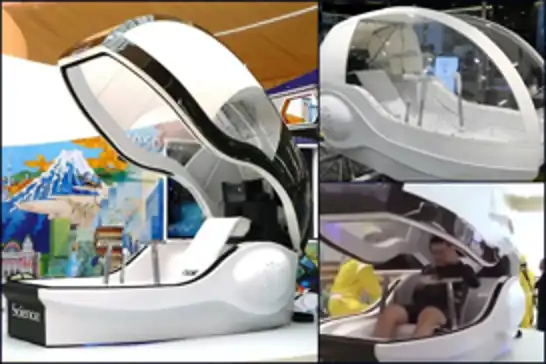
The high-tech capsule, which cleans the body with micro-bubbles while monitoring vital signs, drew global attention at the Osaka Expo and is now entering limited commercial production.